
5 Immediate Takeaways from Testimony of David Holmes and David Hale

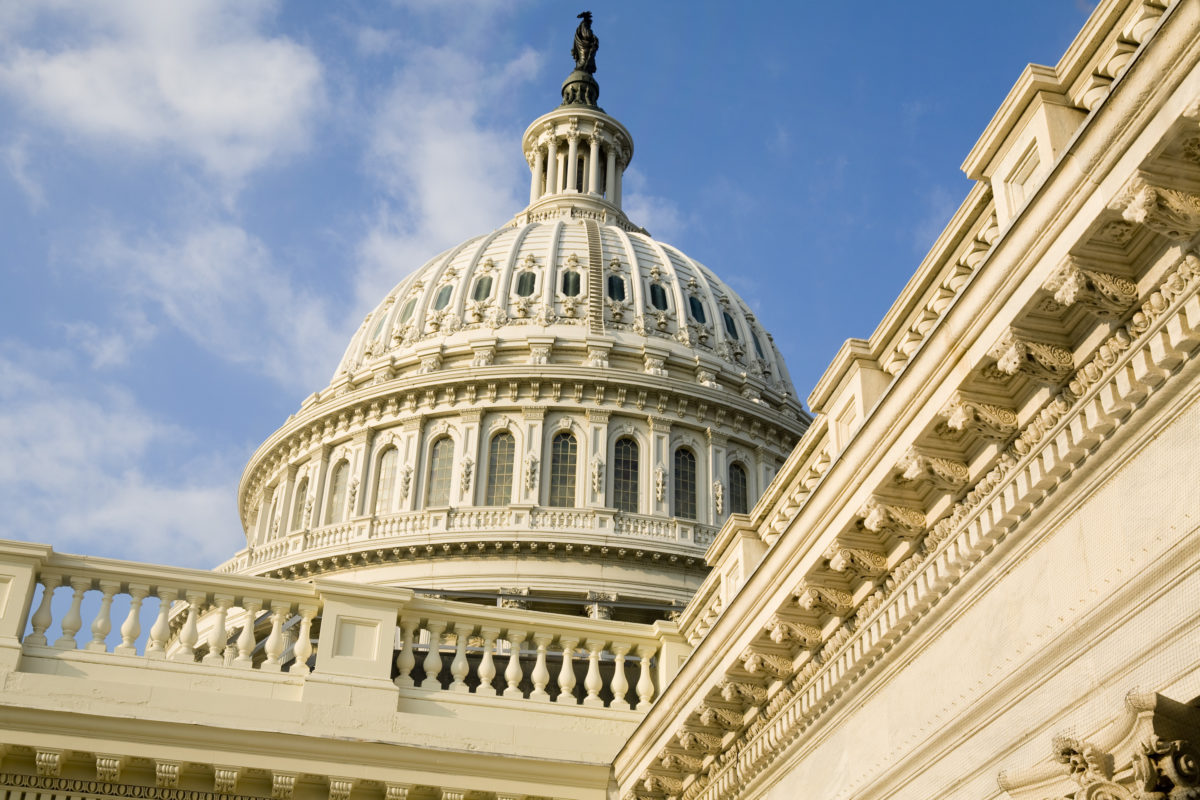
Photo via Brendan Hoffman/Getty Images
Tonight we have two Davids for the price of one — the House Intelligence Committee has released the transcripts of David Holmes’ and David Hale’s testimonies.
Holmes, of course, is the official who testified to knowledge of a call between President Donald Trump and Ambassador Gordon Sondland talking about Ukraine.
Both men are set to testify publicly this week.
Here are some of the immediate takeaways from their closed-door testimonies:
1. Holmes’ testimony on the Sondland/Trump call
Under questioning, Holmes again repeated what he testified to about the call, and described how stunned he was by it:
This was an extremely distinctive experience in my Foreign Service career. I’ve never seen anything like this, someone calling the President from a mobile phone at a restaurant, and then having a conversation of this level of candor, colorful language. There’s just so much about the call that was so remarkable that I remember it vividly.
He affirmed Sondland told him Trump doesn’t “give a shit” about Ukraine except for “big stuff” like things that would benefit him.
Holmes also said, “In my experience, generally, phone calls with the President are very sensitive and handled accordingly.”
2. Holmes’ testimony on the withholding of Ukraine aid
Holmes said he, like Bill Taylor, was “shocked” upon hearing about the hold on Ukraine aid.
“To suddenly hear, without any prior warning, that those funds were suspended was extremely significant,” he said.
When asked “Did you even learn the official reason why a hold had been put in place and subsequently lifted on September 11th?”, Holmes testified, “No.”
In talking about whether the Ukrainians felt pressure, Holmes said, “I think the Ukrainians gradually came to understand that they were being asked to do something in exchange for the meeting and the security assistance hold being lifted.”
3. Holmes: Rudy Giuliani was “promoting a political agenda”
Holmes was asked to elaborate on his opening statement about Giuliani’s actions. He said, “The themes that Mr. Giuliani was promoting and his associates were promoting were in that basket, in my view. And so that was my understanding. In my mind, those were — those were things — those were political things that were not related to the implementation of our policy.”
When asked “so whose political agenda was Rudy Giuliani promoting in Ukraine?”, Holmes said, “I came to believe it was the President’s political agenda.”
4. Hale’s testimony on the ouster of Marie Yovanovitch
Hale testified that he received an email from Yovanovitch amid the smear campaign against her, saying “she felt she could no longer function unless there was a strong statement of defense of her from the State Department.”
He said when they spoke she relayed “speculations about the motivations of people who may have been behind this campaign,” including Giuliani.
Hale also said he received information that implied “this was a roundabout way the President was trying to get rid of the Ambassador through this smear campaign,” remarking he didn’t understand why it was done that way when “all Ambassadors are Presidential appointees, they serve at the pleasure of the President.”
5. Sean Hannity
Hale is now the third individual in the impeachment testimony who has testified to knowledge of a call between someone in the State Department and Fox News’ Sean Hannity.
Hannity has previously denied anyone at State called him with respect to the smears against Yovanovitch. She testified that she was aware someone at State called Hannity to ask about the allegations, and George Kent testified as well that he had knowledge someone at State reached out to the Fox News host.
And now, this is what Hale testified with respect to the allegations against Yovanovitch, which Hannity covered at the time:
Q: Do you recall whether you understood whether — that Sean Hannity was promoting these narratives on his television show?
A: Yes, I was aware of that.
Q: And did that come up at that meeting?
A: I don’t know if it came up at that meeting. It did come up at some point with the secretary. I understood that he did call Sean Hannity.
Q: You understood the Secretary called Sean Hannity?
A: Yes.
Q: What did you understand that the Secretary said to Sean Hannity?
A: What the Secretary had consistently been saying, which is: If there are these allegations, I need to see what the evidence is.
Q: Within the State Department, as far as you knew, was there any validity to any of these allegations about Ambassador Yovanovitch?
A: Could you repeat the question?
Q: Within State Department circles, in terms of your conversations with anyone within the State Department or your communications with anyone within the State Department, did anyone in the State Department view these allegations against Ambassador Yovanovitch to have any validity?
A: No. No one that I met. The Secretary of State consistently maintained that he could not credit these allegations in the absence of credible evidence, and I never met anyone who felt that they had received that credible evidence, including the Secretary of State.
You can read Holmes’ here, and Hale’s here.
New: The Mediaite One-Sheet "Newsletter of Newsletters"
Your daily summary and analysis of what the many, many media newsletters are saying and reporting. Subscribe now!







Comments
↓ Scroll down for comments ↓