POLL: Tylenol’s Brand Reputation Bounces Back Without Permanent Damage — Despite Trump and RFK Jr’s Repeated Attacks

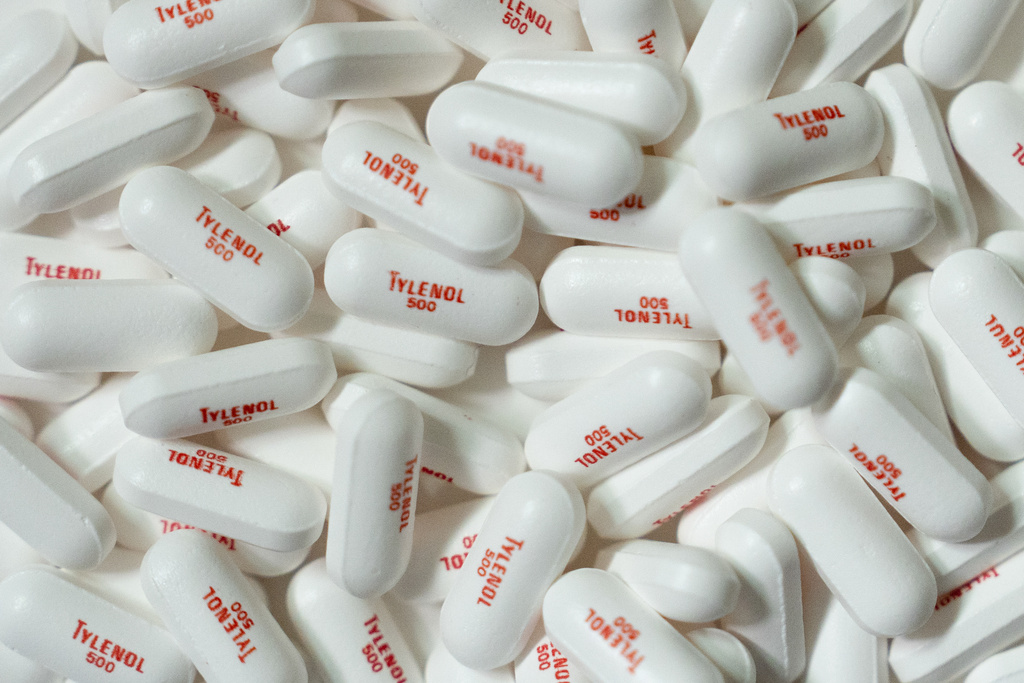
AP Photo/Jae C. Hong
Tylenol took a hit in the aftermath of President Donald Trump and Health and Human Services Secretary Robert F. Kennedy Jr.’s promotion of unfounded claims about it being linked to autism, but the brand’s reputation is solid and has largely bounced back without any permanent damage, according to tracking polls YouGov has conducted for the past four months.
At a press conference last September 22, Trump and Kennedy made claims that there was an increased risk of autism and ADHD in children whose mothers took acetaminophen, the active ingredient in Tylenol, during pregnancy. The president has also written multiple social media posts, continuing through this month, warning that pregnant women and children should not take Tylenol “FOR VIRTUALLY ANY REASON.”
These claims about Tylenol were swiftly and vociferously criticized by medical doctors and are contradicted by large-scale reviews of the research studies. Even Kennedy admitted in October that the evidence was “not sufficient to say” that Tylenol causes autism or ADHD.
YouGov has been conducting tracking polls to measure how Tylenol’s brand fared with American before and after Trump and Kennedy’s press conference urging people, especially pregnant women and children, to avoid taking it. According to the pollster’s analysis, their results show “a clear case study in how political controversy can fragment consumer response without permanently damaging a long-established brand.”
The YouGov polls tracked two metrics: “Consideration, which measures the percentage of adults who say they would consider buying Tylenol when next in the market for drugs or medical products, and Index, a composite score that averages perception of Impression, Value, Quality, Satisfaction, and Recommend.”
The Consideration metric “fell steadily” among Republicans after the Sept. 22 press conference, going from 48.8% on the day of the presser to “39.4% by October 28, a decline of 9.4 points in just over a month,” YouGov reported, but that number has mostly recovered, with Republicans back up to 45.5% on Jan. 19, when YouGov’s most recent poll was taken.
Unsurprisingly, Democrats were less likely to be swayed by comments from the Republican president and his Cabinet secretary. The Consideration score for Democrats actually went up in the aftermath of the Sept. 22 press conference; it has since settled down to essentially where it was last September (49.5% on Sept. 22, hitting a peak of 54.2% several times last November, and 50% on Jan. 19).
The combined effect is that Tylenol’s overall Consideration score for all U.S. adults is only slightly down, from 48.2% on Sept. 22 to 46% on Jan. 19.
Tylenol’s Index score showed similar trends as the Consideration polling, with Republicans scoring the pharmaceutical brand lower after September, Democrats scoring it higher, and both settling back very close to their starting points in the Jan. 19 polling, leaving the overall U.S. adult opinion of Tylenol virtually unchanged (scores of 43.3 on Sept. 22 and 43.6 on Jan. 19).
Digging deeper into the data, YouGov’s polls found a temporary spike of improvement for Tylenol in the subset of poll respondents who were parents:
The most complex pattern emerges when looking at parents of at least one child under 18. In the weeks immediately following the announcement, Consideration among parents rose sharply. From 43.5% on September 22, the score climbed to 60.3% by October 14, a gain of nearly 17 points in under a month. The increase stands out as one of the larger short-term movements for the brand in recent years. That rise, however, did not persist. After peaking in mid-October, Consideration among parents gradually eased over the following months, settling closer to earlier levels by the end of the year.
Looking at the brand’s Index score among parents adds another layer to the picture. The score stood at 36.9 on September 22 and showed some early improvement, before softening through the remainder of the year and reaching a low of 22.8 by January 6, 2026. Taken together, the two metrics highlight how different aspects of brand health can move on different timelines: willingness to consider the brand increased in the immediate aftermath, while broader brand sentiment adjusted more gradually over time.
In the end, the poll’s analysis reflected that there was measurable damage to Tylenol’s brand reputation in the aftermath of the Trump administration’s repeated criticism, but this only amounted to “short-term volatility” and the brand still demonstrated “long-term resilience.”
One key point YouGov highlighted: even with the controversy, Tylenol still ranked 10th overall in its “2025 Best Brand Rankings in the U.S.,” after Amazon, BAND-AID, Dawn, Dove, Samsung, St. Jude Children’s Research Hospital, M&M’s, Amazon Prime, and YouTube.
Read the polling and analysis at YouGov.
New: The Mediaite One-Sheet "Newsletter of Newsletters"
Your daily summary and analysis of what the many, many media newsletters are saying and reporting. Subscribe now!








Comments
↓ Scroll down for comments ↓