MSNBC Analyst Says Newsom Has ‘Hard Argument’ In Legal Challenge To Trump’s LA Riot Crackdown

MSNBC analyst and law professor Jessica Levinson predicted California Gov. Gavin Newsom (D) is going to have a “hard argument” to make in his lawsuit against the Trump administration, objecting to the mobilization of National Guard soldiers to respond to Los Angeles riots.
Newsom filed a motion for a temporary restraining order to block the Department of Defense from the deployment of soldiers to deal with immigration protests. The governor has claimed that during a phone call with President Donald Trump, he received no warning about troops being mobilized. Trump has denied this and said he did give Newsom fair warning.
The White House defended the mobilization of troops on Wednesday, saying hundreds of illegal migrants had been arrested during the protests, as well as others for assaulting law enforcement officers. The demonstrations are in protest of the Trump administration’s ongoing ICE raids.
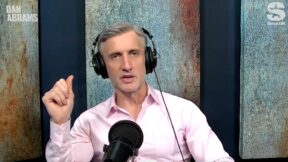
Mediaite founder and and ABC News chief legal analyst Dan Abrams was joined on The Dan Abrams Show this week by Levinson to break down the legal battle brewing between Newsom and Trump. Levinson argued the president likely has the stronger case.
“I think that’s going to be a hard argument for the governor to make here because what this statute talks about is giving the president the power in a couple of different circumstances,” Levinson said about Newsom arguing he never gave “consent” to mobilize the National Guard.
Trump’s response to the Los Angeles riots has sparked a number of legal questions and concerns, including whether the president will invoke the 1807 Insurrection Act, last used during the 1992 Los Angeles riots.
“Depends on whether or not there is an insurrection,” Trump said Tuesday. Over the weekend, he referred to “violent, insurrectionist” protesters.
Levinson argued that the president has an argument for not needing consent from the governor.
“Another is that there is a time of rebellion or danger of a rebellion, which is exactly what the president pointed to in his memorandum saying, I want to send in the National Guard… in that particular statute, there is language that says orders have to be issued through the governor. I’m going to offer my interpretation is that orders to call up the National Guard have to issued through the governor, that’s different from saying you need the governor’s consent.”
If Newsom is correct, she argued, than governors would have the right to essentially “veto” presidents.
“In my mind, that language is different from the president requires the consent of a governor,” she said.
She further explained:
A good reading of the statute is to say that it means that you have to give the governor’s office notice, and that you’re hoping that the governor’s office would cooperate and issue the orders. But I don’t view this as giving a governor a veto power to say, well, I’m not gonna issue those orders and so it’s not happening.
The question of whether Newsom’s office was given notice then becomes a more central issue. Levinson also added that National Guard and other military forces can only act as “supporting” forces to local law enforcement. “History and practice,” she said, “belie” Newsom’s argument that ultimately the authority lies with him over the president.
She continued:
Let’s, of course, be clear that in the vast majority of times, the president does work with a governor. And that, in fact, I think that’s legally and politically what we would hope for, that there would be some level of cooperation, but we have had circumstances in our nation’s history where the president decides to go it alone and that’s why you see the state pushing back and saying what about our sovereignty, what about the 10th Amendment, you’re infringing on our autonomy here. And the question is how broad of a grant of authority to the president the statute really is.
Watch above via The Dan Abrams Show.
New: The Mediaite One-Sheet "Newsletter of Newsletters"
Your daily summary and analysis of what the many, many media newsletters are saying and reporting. Subscribe now!




Comments
↓ Scroll down for comments ↓