CNN’s Kaitlan Collins Calls Out New Trump Threat as Potential ‘War Crime’

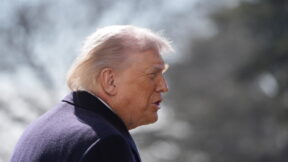
CNN anchor and senior White House correspondent Kaitlan Collins called out President Donald Trump’s latest threat against Iran if they don’t “immediately” open the Strait of Hormuz, noting the threat could constitute a “war crime” if the United States acts on it.
As the Iran war rages into its second month, Trump has stepped up his threats on Iran’s civilian infrastructure. In an early-morning rant on Monday, Trump threatened — among other things — “blowing up and completely obliterating all of their Electric Generating Plants, Oil Wells and Kharg Island (and possibly all desalinization plants!),” which is a potential war crime.
On Monday night’s edition of CNN’s The Source with Kaitlan Collins, Collins opened her show by noting that if carried out, the threat “could amount to a war crime”:
KAITLAN COLLINS: Tonight, thousands more of American troops have arrived in the Middle East, as President Trump is toggling between two drastically different trajectories for the war against Iran.
On one hand, the president is taking his threat to completely obliterate Iran’s energy sites even further, now suggesting that the United States could possibly target water desalinization plants in a move that could cut off the clean water supply to tens of millions of ordinary Iranians and, as critics will note, could amount to a war crime.
In that same post, though, as you keep reading, the president also argued that great progress is being made in what he described as a serious discussion with a new and more reasonable regime in Iran.
That echoes what he told reporters last night on Air Force One. (BEGIN VIDEO CLIP)
DONALD TRUMP, PRESIDENT, UNITED STATES OF AMERICA: We’ve had regime change, if you look, already, because the one regime was decimated, destroyed. They’re all dead. The next regime is mostly dead. And the third regime, we’re dealing with different people than anybody’s dealt with before. It’s a whole different group of people. So I would consider that regime change, and frankly, they’ve been very reasonable. So I think we’ve had regime change.
(END VIDEO CLIP)
COLLINS: And also, for the first time, tonight, the president is naming that third regime, as he describes it there, that he says his administration has been dealing with. The President confirms what we had largely suspected. It’s the Speaker of Iran’s parliament, Mohammad Ghalibaf, who President Trump told the Financial Times, that the United States will find out in about a week if Ghalibaf is someone that it can truly negotiate with.
This is what the secretary of state, Marco Rubio, said about that front today.
(BEGIN VIDEO CLIP)
MARCO RUBIO, UNITED STATES SECRETARY OF STATE: Well, I’m not going to disclose to you who those people are, because it probably would get them in trouble with some other groups of people inside of Iran. Look, there’s some fractures going on there internally.
There are new people now in charge who have a more reasonable vision of the future. That would be good news for us, for them, for the entire world. But we also have to be prepared for the possibility, maybe even the probability, that that is not the case.
(END VIDEO CLIP)
COLLINS: Now, on that note, Iranian officials are still denying that talks are even happening between the United States and Iran. And Ghalibaf, who is the Iranian parliament speaker, accused President Trump of signaling negotiation in public while secretly plotting a ground attack in private, as he warned that Iranian forces are ready and waiting for U.S. troops to arrive on the ground.
Today, the White House downplayed those denials, though, from Iran.
(BEGIN VIDEO CLIP)
KAROLINE LEAVITT, WHITE HOUSE PRESS SECRETARY: Despite all of the public posturing you hear from the regime and false reporting, talks are continuing and going well. What is said publicly is, of course, much different than what’s being communicated to us privately.
(END VIDEO CLIP)
COLLINS: Now this comes as sources are telling my colleagues here at CNN that the Trump administration is still not sure it’s talking to the right people in Iran, meaning, it’s not clear to U.S. officials whether the Iranian officials that they are speaking with and using as a back-channel, through Pakistan and Turkey, have the ultimate authority to sign off on any peace agreement, let alone implement one.
That uncertainty comes, as the President has continued to publicly float several major military options, which would carry significant risk for U.S. forces, should he take them. He told the Financial Times, Maybe we take Kharg Island, maybe we don’t. We have a lot of options… and It would also mean we had to be there for a while.
Kharg Island is where 90 percent of Iran’s oil exports flow through. As the President also mused about the notion of the United States potentially taking Iranian oil. He says, that would actually be his favorite thing. But he also added this, saying, quote, “Some stupid people back in the US say: ‘Why are you doing that?’ But,” he added, “They’re stupid people.”
Watch above via CNN’s The Source with Kaitlan Collins.
New: The Mediaite One-Sheet "Newsletter of Newsletters"
Your daily summary and analysis of what the many, many media newsletters are saying and reporting. Subscribe now!





Comments
↓ Scroll down for comments ↓