
Ex-Biden Nat Sec Advisor Warns Trump Admin ‘Has No Answers’ to ‘Difficult’ Hormuz Deadlock: ‘Backed Ourselves Into a Corner’

Former Biden National Security Advisor Jake Sullivan warned that it was clear the Trump administration “has no answers” to the “difficult” deadlock as Iran threatens oil shipping routes along the Strait of Hormuz in response to U.S. strikes, as he urged President Donald Trump to focus on one objective.
Since joint U.S.-Israeli strikes began targeting Iranian regime military assets on February 28, Tehran has responded with drone and missile attacks on neighboring nations, effectively bringing the transportation of resources through the narrow Strait of Hormuz to a halt. The move has spiked oil and natural gas prices, putting increasing pressure on the administration to act.
While praising the U.S. military for having “performed remarkably,” Sullivan suggested that “word games” in statements made by White House press secretary Karoline Leavitt showed the administration was “befuddled” by how to move forward with a situation that should have been “gamed out” in advance.
“Well, I’ll start with my biggest concern moving forward, and it’s just the sheer lack of planning and thinking through all of the second and third-order consequences,” he began.
Sullivan criticized the problem, in part, as being due to a lack of clarity around the administration’s objectives were in acting militarily: “When you sit in the situation room before the president decides to send U.S. men and women into harm’s way in war, you have to answer two questions,” he said. “The first question is, what are our objectives? What are we trying to achieve? And can we align our means to those ends?”’
Sullivan added: “We’ve gotten 12 different answers to the question of what our objectives are in this war. And so we’re sitting here today, many days into this war, and we can’t answer the question because the Trump administration can’t answer the question,” he said.
He continued: “The second question you ask in the situation room is, what is our enemy going to do in response to our attack? And then you game out how you counteract it. And one of the things that was very obvious from the outset here is that Iran would threaten the Strait of Hormuz, shutting down energy supply to the world, trying to drive up gas prices for ordinary Americans and energy prices for people around the world. And yet here, nearly two weeks into the war, we seem befuddled by the fact that they have done that, and we have no answers for how to respond to it.”
Rounding on specifics, he added: “So from my perspective, part of the reason that you have Karoline Leavitt playing word games about unconditional surrender, meaning kind of the opposite of what unconditional surrender actually means, is because we backed ourselves into a corner. We didn’t have a clear answer to the question, what constitutes success in this war when we went into it? And so now we don’t know how to get out of it.”
Later in the interview, Morning Joe co-host Joe Scarborough asked Sullivan what he would do if he were involved, to which the natsec advisor suggested the Trump administration narrow down on “degrading Iran’s nuclear capability” – in alignment with the objectives of past presidents’ policy towards Tehran.
Iran’s missile launching and naval capability, dismantled by the U.S. strikes, were “deeply set back” but may be built “back up.” With that he warned that the Trump administration’s decision to act militarily, which he contrasted with former President Barack Obama’s diplomatic approach, had become a “strategic conundrum.”
He urged President Donald Trump to avoid being “dragged” into a “regime change war” and focus on “operational tactical objectives” that could be achieved.
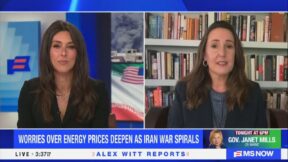
Watch above via MS NOW.
New: The Mediaite One-Sheet "Newsletter of Newsletters"
Your daily summary and analysis of what the many, many media newsletters are saying and reporting. Subscribe now!




Comments
↓ Scroll down for comments ↓