
New York Times’ Charlie Savage Requests Retraction From Washington Examiner Over Piece Bashing His Durham Coverage

New York Times national security and legal reporter Charlie Savage demanded a retraction Friday from the Washington Examiner’s Conn Carroll, who published an article this week titled, “Charlie Savage is the reason no one trusts journalists.”
Savage, who won the Pulitzer Prize for national reporting in 2007, wrote in a tweet: “Dear @conncarroll (@dcexaminer’s commentary editor), Your Feb 15 column not only went out on a limb, but you also got unnecessarily personal. Now that Durham’s filing has confirmed that the EOP data was Obama era, I respectfully request a retraction./1”
He followed that up with a second tweet, “Please also address telling your readers I hid that Sussmann had Democratic ties (“Savage wants to hide the ball, calling Sussmann merely a ‘cybersecurity lawyer’”) when I actually described him as “a cybersecurity lawyer with links to the Democratic Party.” Thank you.- Charlie/2.”
Please also address telling your readers I hid that Sussmann had Democratic ties (“Savage wants to hide the ball, calling Sussmann merely a ‘cybersecurity lawyer’”) when I actually described him as “a cybersecurity lawyer with links to the Democratic Party.” Thank you.- Charlie/2
— Charlie Savage (@charlie_savage) February 18, 2022
Carroll, the Examiner’s commentary editor, responded with a simple message, “please do show me where the Durham filing says all the EOP data used by Sussman only monitored Obama.”
please do show me where the Durham filing says all the EOP data used by Sussman only monitored Obama.
— Conn Carroll (@conncarroll) February 18, 2022
Savage’s first tweet and Carroll’s reply appear to be over these two paragraphs in Savage’s article in the New York Times from Feb. 14, which Carroll then uses as part of his argument to claim journalists are not trustworthy.
In the piece titled, “Court Filing Started a Furor in Right-Wing Outlets, but Their Narrative Is Off Track,” Savage wrote:
Most important, contrary to the reporting, the filing never said the White House data that came under scrutiny was from the Trump era. According to lawyers for David Dagon, a Georgia Institute of Technology data scientist who helped develop the Yota analysis, the data — so-called DNS logs, which are records of when computers or smartphones have prepared to communicate with servers over the internet — came from Barack Obama’s presidency.
“What Trump and some news outlets are saying is wrong,” said Jody Westby and Mark Rasch, both lawyers for Mr. Dagon. “The cybersecurity researchers were investigating malware in the White House, not spying on the Trump campaign, and to our knowledge all of the data they used was nonprivate DNS data from before Trump took office.”
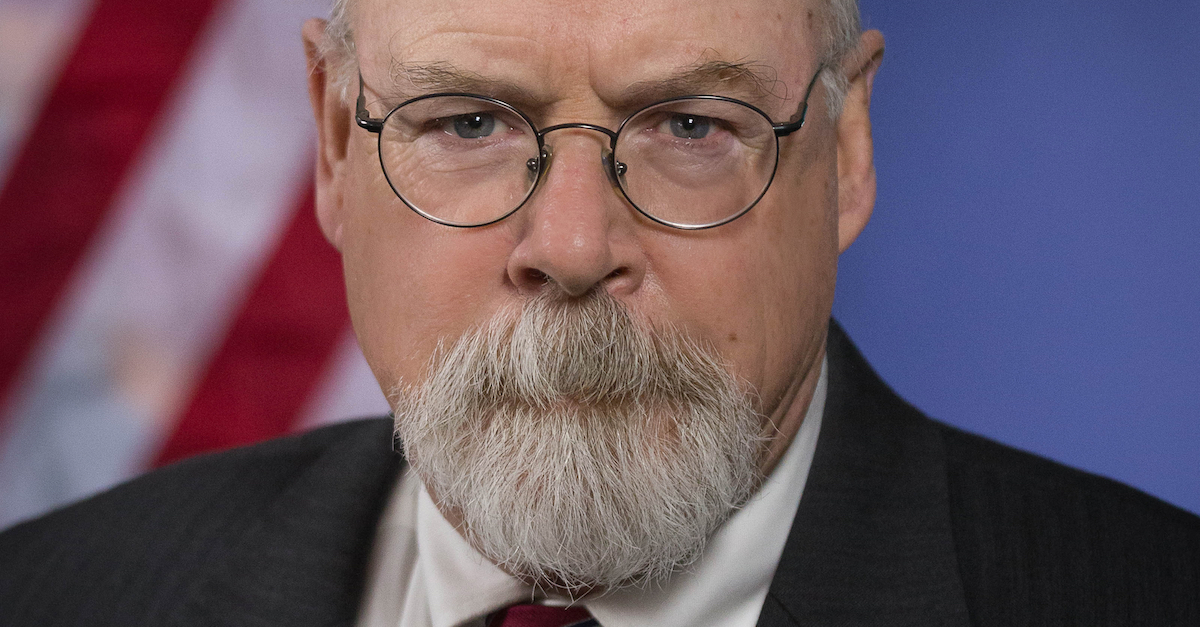
All of this goes back to the indictment special counsel John Durham filed against Democratic lawyer Micheal Sussman last September, that he lied to the FBI in an effort to mislead federal investigators to look into possible ties between Donald Trump and Russia. The latest news regarding Durham’s filing has to do with court filings to that indictment alleging Sussman obtained non-public data from the White House and Trump’s servers – albeit not in an illegal manner.
Savage, in his effort to debunk the right-wing narrative that Clinton spied on the Trump White House, is reporting that Durham’s filing actually is regarding data taken from the Obama White House, while Trump was running for president.
Carroll writes of Savage’s reporting:
If the “data” used by Sussmann in the CIA meeting was not “from the Trump era,” then why does the indictment say Sussmann claimed the data showed “Trump and/or his associates were using supposedly rare, Russian-made wireless phones in the vicinity of the White House?”
Carroll goes on to quote from Savage’s paragraphs above and concludes, “Of course, this statement is completely irrelevant to the new allegation in Durham’s filing.”
As for Savage’s second complaint, regarding how Sussman is referred to by Savage, Carroll does seem to be off-base. As Savage points out, Carroll wrote this in his piece, regarding Sussman:
For Savage, Sussmann is not a highly partisan lawyer who has served the Clinton Foundation and was a partner at Perkins Coie, counsel of record for the Democratic National Committee, the Democratic Senatorial Campaign Committee, and the Democratic Congressional Campaign Committee. No Savage wants to hide the ball, calling Sussmann merely a “cybersecurity lawyer.”
This is the third paragraph of Savage’s article:
The latest example began with the motion Mr. Durham filed in a case he has brought against Michael A. Sussmann, a cybersecurity lawyer with links to the Democratic Party. The prosecutor has accused Mr. Sussmann of lying during a September 2016 meeting with an F.B.I. official about Mr. Trump’s possible links to Russia.
While the first request from Savage is harder to parse out, especially given the complexities of Durham’s filing and media spin surrounding it, Savage’s second claim, which Carroll did not address, appears to be pretty straightforward.
In the meantime, however, the Washington Examiner is continuing to go after Savage’s reporting in the New York Times. In the latest round of coverage, Savage wrote an article, “Durham Distances Himself From Furor in Right-Wing Media Over Filing.”
The article centered around Durham stating in a filing that, “If third parties or members of the media have overstated, understated, or otherwise misinterpreted facts contained in the government’s motion, that does not in any way undermine the valid reasons for the government’s inclusion of this information.”
The Examiner’s Byron York, was quick to turn Savage’s argument around, writing, “It does not seem to have occurred to the New York Times that the New York Times might be one of those media outlets that either overstated, understated, or otherwise misinterpreted the facts in Durham’s filing.”
New: The Mediaite One-Sheet "Newsletter of Newsletters"
Your daily summary and analysis of what the many, many media newsletters are saying and reporting. Subscribe now!









Comments
↓ Scroll down for comments ↓