CBS Inviting Anti-Press Pete Hegseth to WHCD Is Deeply Embarrassing

(AP Photo/Manuel Balce Ceneta)
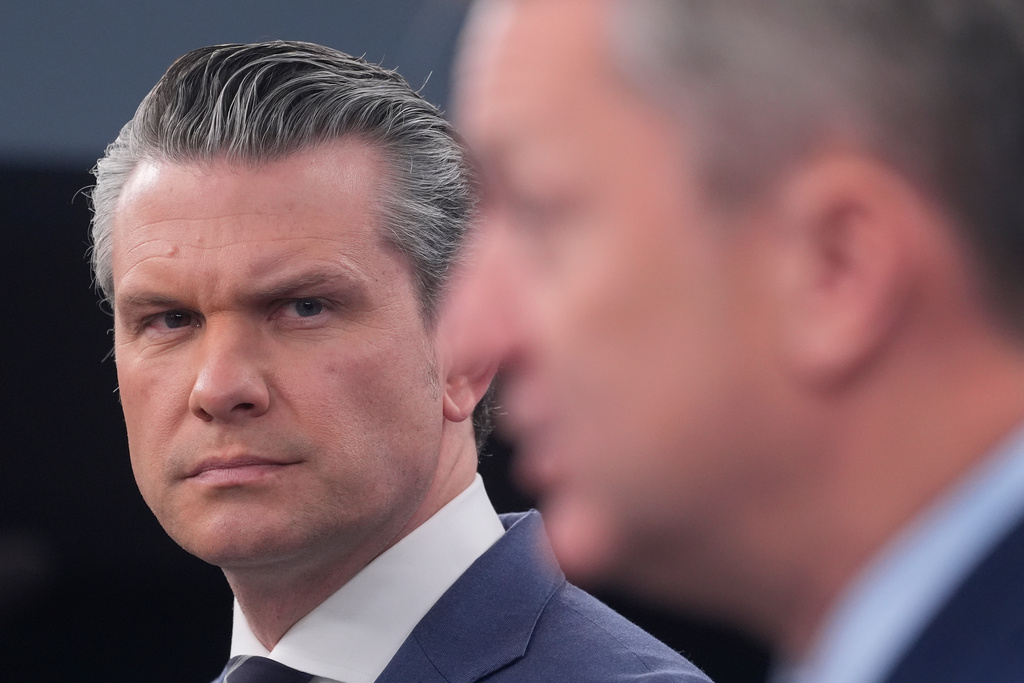
Someone at CBS News thought it was a good idea to invite Defense Secretary Pete Hegseth to be their table guest at this year’s White House Correspondents’ Dinner.
Not cover him. Not interview him. Invite him. As a guest. To a celebration of the First Amendment. The same Pete Hegseth, whose Pentagon press restrictions were so severe that nearly every credible military outlet boycotted his briefings. The man who stood at an official government podium and told the reporters in front of him they weren’t his audience.
CBS calls this routine outreach to senior administration officials. The invitation was first reported by Breaker’s Lachlan Cartwright, and a person familiar with the invite told me Hegseth hasn’t confirmed he’s coming. Both of those things can be true and the decision can still be indefensible.
The dinner has always required a certain suspension of disbelief. News organizations use their tables to grease relationships with sources, signal goodwill to the powerful, and remind the people they cover that journalism is not entirely adversarial.
When Michael Kelly brought Fawn Hall as his guest in the late 1980s, it was understood as a tell — a jokey and gross one — but a clear signal of how access journalism was evolving. The dinner was never purely about celebrating the press, it was about the press celebrating its own access and greasing some sources. That tradition is intact this year. As Cartwright reported, The New York Post is hosting Scott Bessent, Lee Zeldin, and Mike Waltz. The Wall Street Journal has Chris LaCivita. Fox News has Tulsi Gabbard and Sean Duffy. Nearly every major outlet who purchased a table is playing the same game.
And yet, CBS News found the single most indefensible seat at the table.
This year carries extra weight because Trump is attending for the first time as president, which is its own remarkable turn. The last time he sat in that room was 2011, when Barack Obama spent the better part of an evening humiliating him from the dais while the Washington establishment laughed. The mythology around that night — that Trump left having decided to one day take his revenge on every person who laughed — may be overstated, but it has the texture of truth. Now he’ll be at the head table. The room that made him a punchline will celebrate him as president. Nobody in that ballroom should be surprised if the ironies feel a little thick.
Which makes CBS’s guest list harder to square. Weijia Jiang, the very same network’s senior White House correspondent, will be on stage that night as WHCA president, presiding over a room that exists to reaffirm why a free press matters. At her own network’s table will be the cabinet secretary who pushed the credentialed Pentagon press corps out, restricted access for independent military reporters, and has spent months telling official briefings that journalists who raise questions about strategy or planning are rooting for America to fail.
This isn’t CBS hosting a political figure they find uncomfortable. This is CBS hosting the official most directly responsible for restricting CBS’s own journalists.
The network’s decision fits a pattern. In January, days after Hegseth effectively expelled the Pentagon press corps, CBS gave him three uninterrupted segments on its flagship evening broadcast with anchor Tony Dokoupil, who didn’t find the time to confront Hegseth on his controversial, and dare I say, unconstitutional press restriction. Then in March, Major Garrett sat down with Hegseth for 60 Minutes, a lengthy interview that covered the Iran war in detail. Both are legitimate journalism. Covering a wartime Pentagon chief is the job. But there is a difference between interviewing someone and welcoming them as your guest at a dinner that celebrates the principles they’ve spent months undermining.
Bari Weiss took over CBS News with a stated ambition to rebuild trust and model what she called normal news. I’ve defended that ambition against the reflexive pile-on that greeted her appointment, because the instinct behind it wasn’t entirely wrong.
The Hegseth invitation is harder to explain charitably. Maybe it’s naivete about what good-faith engagement with this administration actually costs. Maybe it’s a genuine belief that keeping lines open is worth the optics. Whatever the reasoning, CBS journalists still need Pentagon cooperation to cover the Defense Department. Seating Hegseth at a First Amendment dinner doesn’t change that reality. It just makes the terms of the relationship more visible than CBS probably intended.
The ritual of the correspondents’ dinner depends on both sides taking their roles seriously. The press has to believe it is independent enough to criticize power. The officials have to believe the press is doing a real job worth engaging with. Hegseth doesn’t believe that. He has said so, at official government briefings, with considerable force. Seating him at a First Amendment dinner doesn’t soften that position.
It just tells you where CBS stands.
This is an opinion piece. The views expressed in this article are those of just the author.
New: The Mediaite One-Sheet "Newsletter of Newsletters"
Your daily summary and analysis of what the many, many media newsletters are saying and reporting. Subscribe now!





Comments
↓ Scroll down for comments ↓