Pete Hegseth Demands Patriotic Coverage. That’s Not How a Free Press Works

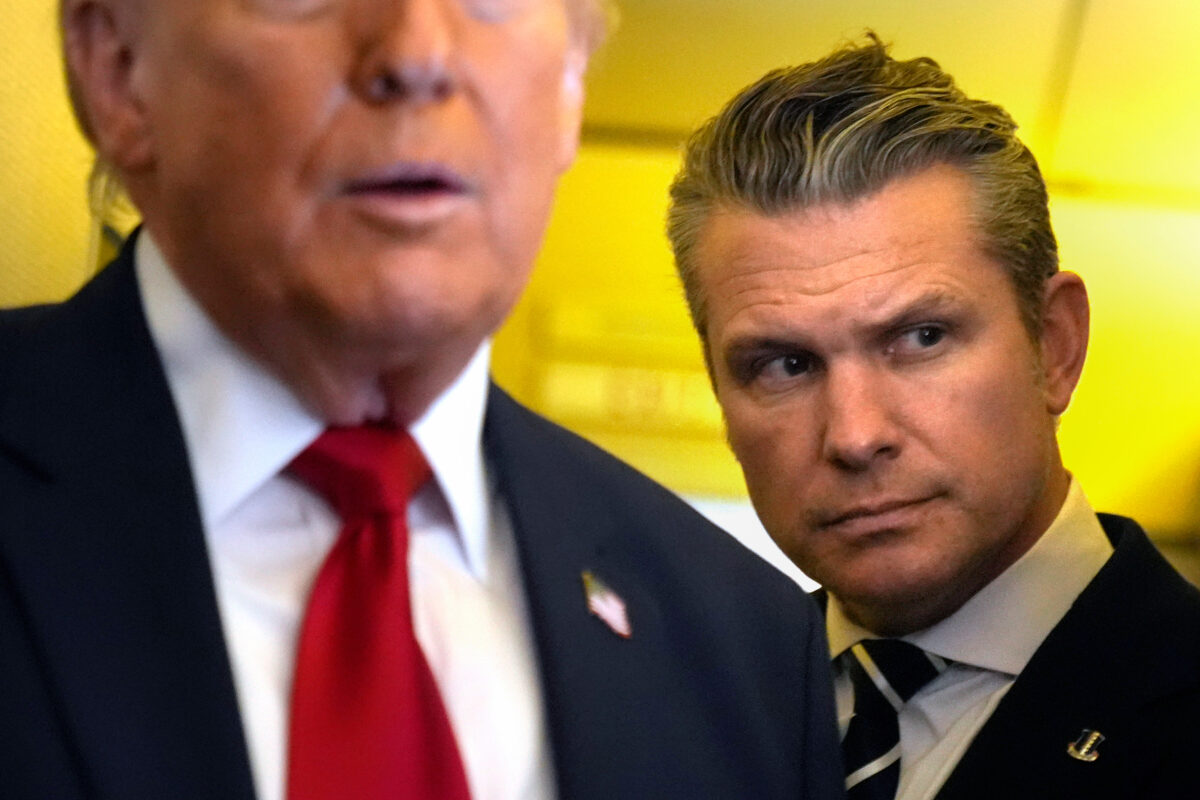
(AP Photo/Mark Schiefelbein)
Pete Hegseth is demanding the press frame the Iran war the way the Trump administration prefers.
The self-proclaimed “Secretary of War” made that clear when he lashed out at television coverage of the conflict and began offering his own replacement headlines. Banners like “Mideast war intensifies,” he argued, give viewers the wrong impression about what is happening. News organizations, he suggested, should instead emphasize Iranian desperation and American dominance, floating alternatives like “Iran increasingly desperate” or “Iran shrinking.”
The complaint was revealing because Hegseth did not dispute the facts reported. The conflict has expanded across the region. Iranian strikes have hit civilian and energy targets. Shipping through the Strait of Hormuz has once again become a global economic concern. (Fox’s Laura Ingraham effectively called it a dire crisis during Thursday night’s Ingraham Angle.)
These developments fairly describe the current state of the war, which has seen military dominance but also some political chaos.
Hegseth’s frustration rests with the interpretation that follows from those facts. Coverage that foregrounds escalation, economic risk, or uncertainty about the conflict’s trajectory reads to him as distorted framing. Coverage that foregrounds Iranian weakness and American advantage reflects the narrative the administration wants the public to absorb.
The argument he is making concerns narrative control, not factual accuracy.
That instinct helps explain why President Donald Trump placed a former Fox News personality in charge of the Pentagon. Hegseth arrived in government after years as one of Trump’s most reliable television allies, where his role rarely involved interrogating the administration’s claims about foreign policy or military strategy. His value on Fox came from reinforcing the administration’s interpretation of events and casting skeptical reporting as politically motivated or unserious.
That posture has now migrated from the television studio to the Pentagon podium.
The attack on CNN illustrated the dynamic. The network reported that the administration may have underestimated the economic and strategic consequences of Iranian disruption in the Strait of Hormuz. Hegseth dismissed the report as “patently ridiculous,” arguing that Iran has threatened the shipping lane for decades and that American planners obviously understood the danger.
In a statement to Mediaite, CNN stood by its reporting.
The substance of the reporting almost becomes secondary under that framework. The real objective is to establish a boundary around acceptable coverage. Reporting that raises questions about planning, strategic risk, or economic consequences is framed as unserious or politically motivated before the debate even begins.
The headline dispute captures the difference clearly. A banner that reads “war intensifies” describes an observable condition of the conflict. Fighting spreads, targets expand, and the strategic stakes increase. A banner that reads “Iran shrinking” expresses the administration’s interpretation of those developments and its preferred story about the war’s trajectory.
Hegseth is asking journalists to begin from that interpretation rather than arrive at it through reporting.
The standard he is proposing also appears selectively applied. During the Biden years, Hegseth’s Fox News commentary regularly highlighted battlefield setbacks, policy failures, and strategic confusion surrounding Ukraine and other foreign policy questions. Those segments never came with warnings about patriotic framing or arguments that critical coverage might embolden American adversaries. Scrutiny of the administration’s strategy was treated as a legitimate part of public debate.
That same scrutiny now receives a different label: fake news, irresponsible coverage, or journalism that supposedly aids America’s enemies.
A press corps that accepts Hegseth’s framing would operate very differently from the one Americans have traditionally relied on during wartime. Coverage would begin with the administration’s preferred interpretation of events and organize reporting around reinforcing that conclusion. Questions about whether the strategy is succeeding, whether risks were fully anticipated, or whether the economic and geopolitical costs of the conflict are growing would recede behind the need to sustain a narrative of momentum.
The public would still see the war on their screens. What they would lose is the independent reporting that helps them understand what the war actually means.
This is an opinion piece. The views expressed in this article are those of just the author.
New: The Mediaite One-Sheet "Newsletter of Newsletters"
Your daily summary and analysis of what the many, many media newsletters are saying and reporting. Subscribe now!






Comments
↓ Scroll down for comments ↓