Terror Fears Return to New York — Thanks to the War With Iran

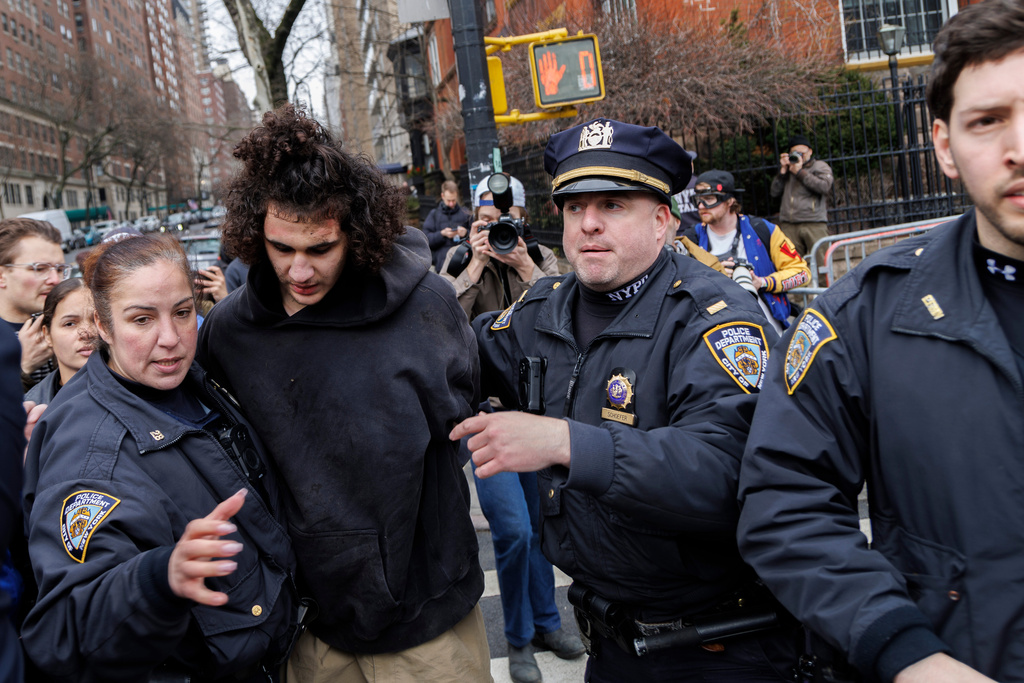
(Photo by Matthew Hoen/NurPhoto via AP)
Standing outside City Hall Monday morning, New York Police Commissioner Jessica Tisch delivered a line that should land with particular weight for anyone who has lived in the city long enough to remember the early 2000s.
The improvised explosive devices ignited during a chaotic protest near Gracie Mansion this weekend are being investigated as “ISIS-inspired terrorism,” she said. And then she added a sobering reminder: the last time an IED targeting people was deployed in New York City was in 2017.
Nearly a decade later, it has happened again.
Police say the devices were real improvised explosives capable of causing serious injury or death, and investigators determined that at least one contained TATP, the volatile homemade compound that has appeared in terrorist attacks around the world. Bomb technicians rendered the devices safe before anyone was injured.
For many people who lived in New York after September 11, the news carries a sadly familiar echo.
In the months following the attacks, something as routine as riding the subway beneath the East River required a quiet act of will. The commute from Brooklyn into Manhattan had always been automatic. After 9/11, packed train cars in narrow tunnels forced a moment of recalculation. You noticed the space differently. You noticed the people around you differently.
Above ground, the city took on the visual language of counterterrorism. National Guard soldiers appeared outside subway entrances with long rifles slung across their chests. Their presence was meant to reassure the public. It also served as a daily reminder that the threat environment had fundamentally changed.
New Yorkers adapted — we always do, trading ease of lifestyle for the privilege of this absurd, crowded arrangement. But the awareness never entirely disappeared
The Gracie Mansion incident arrives as the United States enters a widening conflict involving Iran. Anyone who watched the rise of ISIS understands how these moments can ripple outward. Extremist movements do not need direct orders from abroad. They need grievance, spectacle, and the sense that someone has struck a blow against the Muslim world that demands an answer.
Conflicts like this supply all three.
This is already playing out beyond New York. In Austin, the FBI is investigating last week’s mass shooting as a possible terror-inspired act. In Kansas City, an airport evacuation sent travelers fleeing amid a scare that proved to be a false alarm. The incidents may not be connected. The atmosphere that produced them seems clear.
The people who eventually act on those signals are rarely part of an organized cell. More often they are individuals who absorb the message and decide, on their own, that retaliation is their responsibility.
Those dynamics are not theoretical to anyone who remembers the years when jihadist attacks reshaped daily life in Western cities. The pattern played out in Madrid, London, Paris, and here in New York.
Which is why wars fought thousands of miles away have a way of altering the emotional landscape at home.
They show up in bomb squad robots crawling down residential streets and in sudden evacuations of airports and public buildings. They show up in the expansion of counterterrorism patrols and the visible return of heavily armed officers to places that once felt ordinary.
Tisch captured the stakes plainly when she reflected on the devices recovered this weekend.
“We were fortunate,” she said. “But luck is never a strategy.”
That line carries an uncomfortable implication. Luck spared New York from casualties this time. It cannot guarantee the same outcome the next time an improvised bomb appears on a crowded street.
The strategic debate over confronting Iran will continue in Washington. That debate should include a cost that rarely appears in the official calculus of war.
When conflicts ignite ideological movements abroad, Americans eventually feel the consequences at home. Sometimes in the form of armed patrols outside subway stations. Sometimes in the form of bomb squads and evacuation orders.
And sometimes in the uneasy realization that a familiar fear has returned.
This is an opinion piece. The views expressed in this article are those of just the author.
New: The Mediaite One-Sheet "Newsletter of Newsletters"
Your daily summary and analysis of what the many, many media newsletters are saying and reporting. Subscribe now!












Comments
↓ Scroll down for comments ↓