
Trump Admin Can’t Get Its Venezuela Story Straight — That’s a Red Flag

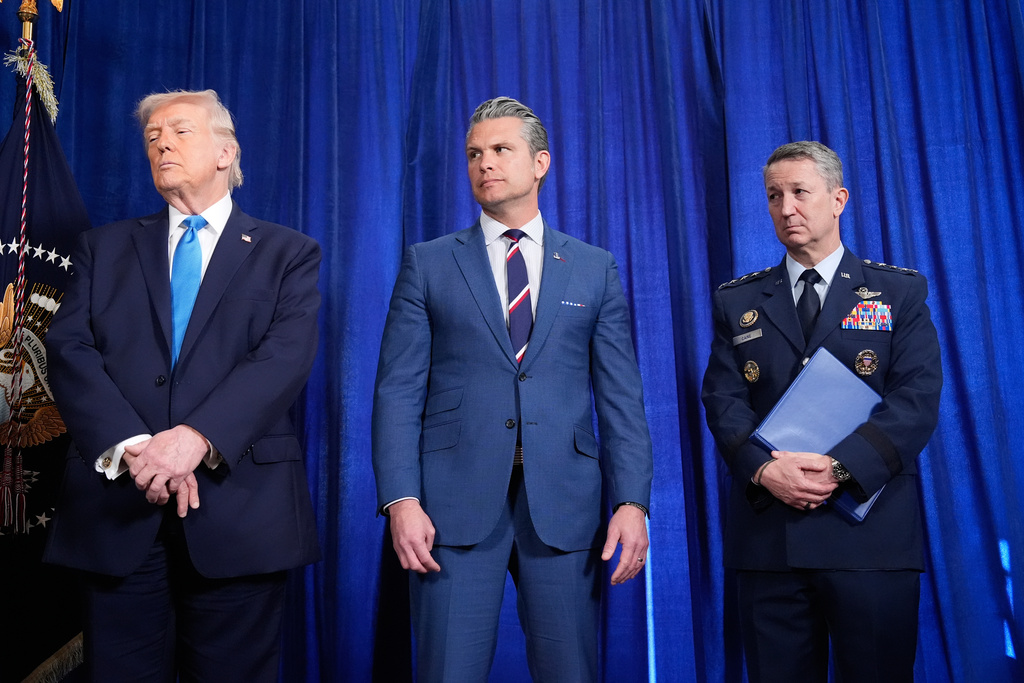
. (AP Photo/Alex Brandon)
The United States just invaded a sovereign nation and cannot coherently or consistently explain why. The absence of a clear purpose is already undermining the operation itself, leaving the people of Venezuela under confused governance and an incoherent occupation.
In the days following the military invasion of Venezuela and the capture of Nicolás Maduro, President Donald Trump and senior members of his administration have described the operation as law enforcement, national security intervention, economic stabilization, energy strategy, and transitional governance. Each justification has been advanced publicly by someone at the top of the government. None align.
Trump described the operation as an assertion of American control, stating that the United States will “run the country” and direct its economic future, including the sale of its oil. Secretary of State Marco Rubio offered a sharply narrower account, insisting the United States will not govern Venezuela and framing U.S. control as leverage rather than administration. Stephen Miller admitted that it was an invasion but also an action of law enforcement, arguing the mission was limited to the arrest of a criminal leader and the enforcement of U.S. law.
Trump revealed Tuesday evening that Venezuela will transfer 30 million to 50 million barrels of oil to the United States at market price, with proceeds under his direct control for the benefit of “both Venezuelans and Americans.”
Each explanation carries different implications for authority, duration, and responsibility. Together, they show senior officials talking past one another about the meaning of the same act of force.
A law enforcement action implies narrow scope. A national security intervention implies an external threat. Economic stabilization and energy strategy imply sustained material interest. Transitional governance implies responsibility for outcomes. Control over another nation’s oil revenues implies practical authority over its wealth and infrastructure. Each carries distinct legal, moral, and strategic consequences. Presented together, they do not clarify purpose. They obscure it.
The breakdown is especially striking given what this administration has proven it can do. The second Trump term has been defined by remarkable communications discipline under Susie Wiles, Steven Cheung and Karoline Leavitt. Messaging centralized. Talking points enforced. The improvisational chaos of the first term replaced by strategy. Venezuela represents the collapse of that system at the precise moment precision matters most.
Foreign policy power depends on clarity. That dependence intensifies when power is exercised remotely. The United States has no significant ground presence in Venezuela. It claims influence through force and leverage rather than administration. In that environment, authority rests almost entirely on credibility.
Remote power projection runs on story. Without troops holding territory or administrators managing institutions, the United States controls Venezuela only insofar as others believe it does. Allies require a framework for cooperation. Markets require predictability. Venezuelans require an explanation of who holds power and why. Each hears a different answer.
The consequences are no longer theoretical. Allies are watching the United States claim authority it cannot define. Markets are pricing uncertainty as a governance variable. Adversaries are weaponizing the administration’s contradictions, framing the operation as resource extraction because senior U.S. officials cannot agree on an alternative. Venezuelans searching for stability are encountering discord among those claiming to provide it.
This is how missions unravel before outcomes are measured. Authority dissolves into confusion. Deterrence gives way to uncertainty. Incoherence compounds into failure.
The administration still has time to consolidate its position. It can define a clear objective, state why the United States acted, and align senior leadership behind that explanation. That work remains undone. The most visible sign of strain does not lie in Caracas or offshore. It lies in Washington, where a government that mastered message discipline on domestic controversies cannot articulate its own actions abroad.
“Running” another country remotely demands coherence and precision. The United States has asserted extraordinary power in Venezuela. It cannot yet explain the purpose of that power.
This is an opinion piece. The views expressed in this article are those of just the author.
New: The Mediaite One-Sheet "Newsletter of Newsletters"
Your daily summary and analysis of what the many, many media newsletters are saying and reporting. Subscribe now!








Comments
↓ Scroll down for comments ↓