Trump’s Made-for-TV Cabinet Is Packed With Douchebags

(Kenny Holston/The New York Times via AP, Pool)
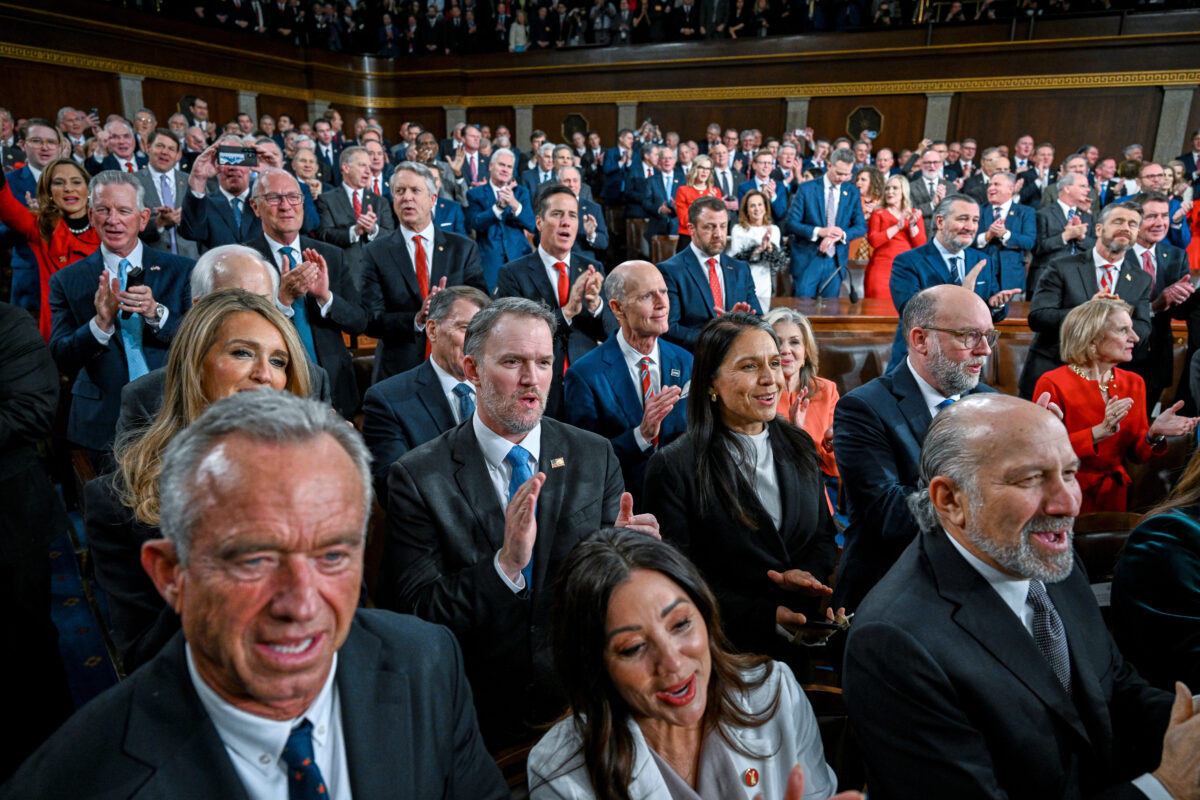
I was watching the cabinet file in for the State of the Union — that ceremonial parade of the newly powerful — and somewhere between the third and fourth recognizable face, a single thought formed with unusual clarity:
Jesus. These guys are all such douchebags.
I write columns criticizing the media, so I try to be precise. I immediately tried to replace that thought with something more analytical, more defensible. I couldn’t. The word wasn’t lazy. It was, I realized, clinically accurate. So I went with it.
The modern douchebag is not merely arrogant. He is convinced his performance of dominance is indistinguishable from actual authority. Everyone can see through the act except him. And in an administration designed to reward fealty to the patron saint of douchebaggery, Donald Trump, that distinction becomes a selection mechanism. This cabinet isn’t random. It’s a casting call for a very specific type.
To be clear, this isn’t a partisan diagnosis. I had a version of the same reaction during the Biden years when the vibe then wasn’t swagger, it was overcautious, overcredentialed, allergic to urgency. If this crew mistakes dominance for authority, the last one often mistook process for leadership. Different flavor. Same distortion. Let’s call them wimp douches.
The defining characteristics of those who make the cut in this administration reveal a clear taxonomy: grievance worn as identity, loyalty substituted for competence, personal brand elevated above institutional mission, dominance performed rather than earned.
Let’s run the roster…
Stephen Miller: grievance as governing philosophy. Policy positions and combative posture so thoroughly fused that the personal and the institutional are indistinguishable. In most institutions, that fusion would raise concerns about judgment. Here it’s a credential.
Kash Patel: the shameless wannabe influencer and brand-builder. His path to the FBI directorship read less like a public service appointment than a personal narrative activation — the book, the enemies list framed as accountability, the performative loyalty to a single patron. The institution exists as a backdrop for the story he’s telling about himself.
Pete Hegseth: the television personality installed at the Pentagon. His qualification was the performance of toughness on a medium that rewards performance of toughness. The institution was the prize. The job was the backdrop.
Robert F. Kennedy Jr. weaponized a name that once meant public service and redeployed it as a personal conspiracy franchise. He didn’t inherit an institution. He strip-mined a legacy.
JD Vance is the most instructive case precisely because he’s the most intellectually capable. His evolution from “Trump is America’s Hitler” to MAGA’s most articulate validator isn’t mere opportunism — it’s something more structurally revealing: elite ambition that discovered populism as its most efficient vehicle. He didn’t sell out. He rebranded—and then acted as though the original brand never existed.
Howard Lutnick, Sean Duffy, Doug Burgum — the list goes on. There are exceptions, notably, Marco Rubio has conducted himself with something resembling institutional seriousness. And while this is a distinctly male pathology, Attorney General Pam Bondi’s testimony before Congress last week was, in fact, particularly douchey.
Trump’s foundational promise was always that he hired the best people. The Art of the Deal mythology required it. What this cabinet reveals is that he hired the most performatively loyal people — and the ones who looked good doing it on television. That last part matters more than it should.
I spent years in television working with on-air talent. Here’s what I can tell you: the traits that make someone magnetic on camera — the unshakeable conviction, the comfort with confrontation, the instinct to perform rather than reflect — overlap almost perfectly with the taxonomy I just laid out. Television doesn’t select for wisdom. It selects for presence. And presence, it turns out, is just dominance made photogenic.
Trump didn’t so much hire a cabinet as cast one. And of course, the cable news marketplace elevated the telegenic figures because, well, they were newsmakers and relevant bookings. When it comes to douchebaggery, game respects game.
The deeper shift is not stylistic. It’s structural. For most of modern American history, institutions domesticated ambition. You entered a structure larger than yourself and were reshaped by it. The office imposed tone. The building imposed gravity.
That dynamic has inverted. Miller doesn’t disappear into the role of advisor. The role disappears into Miller. Patel doesn’t inherit the institutional mystique of the FBI. The FBI becomes a prop in his narrative. The institution no longer disciplines the personality. The personality colonizes the institution.
We are no longer selecting leaders to steward institutions. We are selecting personalities to weaponize them.
This is an opinion piece. The views expressed in this article are those of just the author.
New: The Mediaite One-Sheet "Newsletter of Newsletters"
Your daily summary and analysis of what the many, many media newsletters are saying and reporting. Subscribe now!





Comments
↓ Scroll down for comments ↓