Wagging the Dog: Trump Bombed Iran and Blew Up His America First Base


AP Photo/Sebastian Scheiner, File)
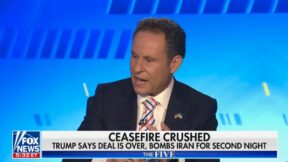
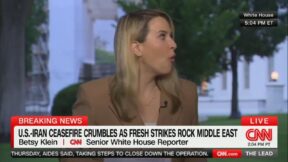
President Donald Trump, facing economic strain, terrible polling, tariff retreats, stubborn inflation, and the lingering Epstein fallout, just ordered airstrikes inside Iran.
Overnight, the United States, in coordination with Israel, hit multiple targets. Iranian state media has reported senior leadership casualties, though key details remain unconfirmed. If top regime figures were indeed killed, this was not a symbolic warning shot. It was escalation at the highest level.
The administration calls the action necessary and precise. Perhaps it was. But when force is deployed abroad during visible domestic turbulence, suspicion follows.
“Wag the Dog” entered the political lexicon after a 1997 film about a president who manufactures a foreign crisis to distract from scandal. The movie was satire but the cynical political instinct it captured was not. When a White House under pressure reaches for military force, voters ask whether the battlefield just changed the subject.
And irony of ironies, Trump has himself encouraged that exact same suspicion.
In 2012 and 2013, he warned repeatedly that Barack Obama might attack Iran to appear tough or distract from political weakness. He urged Republicans not to let Obama “play the Iran card.” His argument was blunt: a president in political trouble might reach for war to reset the narrative.
Now Trump is the president escalating against Iran amid domestic strain. The symmetry is not subtle as the very same standard he applied to Obama now applies to him. And given details surrounding this most recent attack, the suspicions are even stronger.
After last year’s confrontations with Iran, Trump declared U.S. strikes had “obliterated” nuclear-related facilities and angrily dismissed reporting that suggested otherwise. Trump argued that the attack was justified because all of Iran’s nuclear capabilities were forever damaged. But if those actions were as decisive as Trump claimed, the administration now owes the public a clear explanation of what changed and what imminent threat required this new round. If the problem was solved, why is it back?
That suspicion matters, but it is not even close to being most consequential issue. The larger story is institutional gravity, and why it appears to be stronger than any campaign promise.
For years, Trump told his voters something that resonated because it reflected lived experience: the architects of America’s forever wars prospered but the US public paid. Iraq and Afghanistan reshaped American politics because the burdens fell on soldiers and taxpayers while strategic accountability rarely reached the top.
Trump’s promise was not merely to manage that system more competently but to reject its reflexes. And the “America First” side of the MAGA base loved the isolationist approach. Now it appears that he has stepped straight into the institutional reflexes he long admonisthed against.
Presidential candidates always campaign against the machine, yet once in office, they very often inherit it. The intelligence briefings. The escalation ladders. The menu of force options presented as prudence. Military action is framed as resolve. Restraint is framed as risk. Under pressure, the decisive option is the cleanest to execute. The consequences are complex and deferred.
Trump’s brand was that he could bend institutions to his will, but this moment undermines that narrative and reveals how the institutions bent him. That is why the backlash from America First voices is not background noise. It is structural.
Tucker Carlson denounced the strikes as “absolutely disgusting and evil,” warning that escalation serves interests that are not America’s and contradicts the restraint voters were promised. Marjorie Taylor Greene called it a “bait and switch,” reminding supporters that “No More Foreign Wars” was central, not cosmetic. Steve Bannon warned against sliding into regime change and compared the posture to the interventionist playbook Trump once ran against. Matt Gaetz urged the administration to stay out and keep faith with America First priorities.
Thomas Massie labeled the strikes unauthorized acts of war and pushed war powers legislation to block escalation. Rand Paul questioned both the constitutional authority and the strategic wisdom of expanding hostilities without Congress.
These are not progressive critics. They are architects and amplifiers of the movement.
Trump fused hawks and isolationists by promising disciplined toughness without permanent entanglement. That balance is now under visible strain. If escalation widens, the anti-interventionist wing faces a stark choice: normalize what it once opposed or fracture publicly.
Then there is the strategic logic.
If the objective is nuclear rollback, airstrikes alone do not achieve it. They may accelerate the opposite outcome. The fastest way to convince a regime it needs a bomb is to demonstrate what happens to regimes that do not have one. Iran’s leadership has studied those precedents for decades. Military pressure without a political framework can harden resolve rather than deter it.
Iran anchors proxy networks across Lebanon, Iraq, Syria, and Yemen. Retaliation will not necessarily be symmetrical. It will surface through militias, cyber operations, and calibrated regional disruption. Escalation will not be tidy.
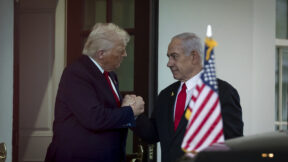
Coordination with Israel adds another layer requiring clarity. Alignment between allies is assumed. Alignment of long-term strategic interests is not automatic. If American assets are being deployed in service of objectives that extend beyond clearly defined U.S. interests, that distinction matters. Who set the pace. Who defined the end state.
Instability carries secondary risks. Jihadist movements that lost territory but retained ideology thrive in fractured environments. Sectarian escalation and power vacuums are accelerants. A widening U.S.-Iran confrontation creates conditions others will exploit. Trump has long took credit for eradicating ISIS — there is real concern that this action may have just been the motivation for Islamic extremists to ressurect themselves in the form of deadly terror attacks.
Supporters argue that decisive force restores deterrence. That case should be made with specificity. What is the objective? What marks success? What triggers de-escalation? Where does Congress stand?
What exists now is force without a fully explained framework.
A president who ran against the foreign policy establishment has taken a step that looks indistinguishable from it. The coalition that powered his rise is testing that decision in real time. And the larger question extends beyond this episode: whether any president can meaningfully redirect the institutional momentum toward intervention, or whether the machinery of American power ultimately normalizes them all.
If this was necessary, it will withstand scrutiny. If it was simply the system operating as designed, that is the more consequential revelation.
Trump set a trap in 2012 and just walked into it in 2025. He told the country exactly what to think when a vulnerable president bombs Iran. The country is thinking it now — and so is his own base. The difference is that this time, the people calling it out aren’t Democrats or legacy media. They’re Tucker Carlson, Steve Bannon, and Marjorie Taylor Greene. And they’re not skeptical. They’re furious.
This is an opinion piece. The views expressed in this article are those of just the author.
New: The Mediaite One-Sheet "Newsletter of Newsletters"
Your daily summary and analysis of what the many, many media newsletters are saying and reporting. Subscribe now!





Comments
↓ Scroll down for comments ↓