
Judges Deny DOJ’s Motions to Keep MN Church Protesters Locked Up, Rejecting ‘Simply Speculative’ Flight Risk Arguments

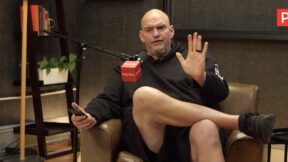
Screenshot via YouTube
Several federal judges in Minnesota have rejected arguments by the Department of Justice to continue to detain three people who were arrested in connection with a protest at a church in St. Paul, finding that the prosecutors had failed to establish the defendants were a flight risk or continued detention was otherwise legally warranted.
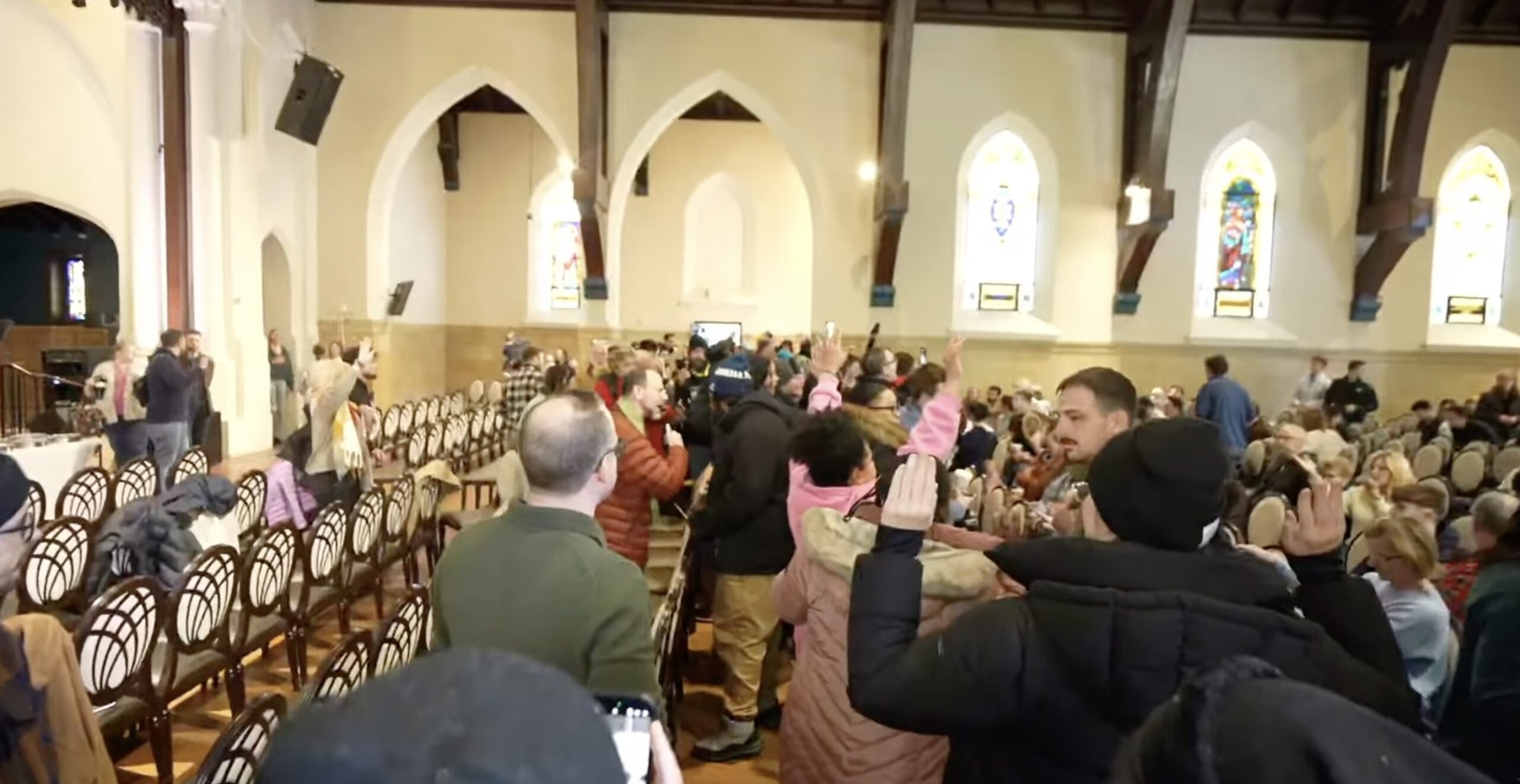
Last Sunday during a livestream of Don Lemon’s YouTube program, he recorded protesters storming into Cities Church in St. Paul to protest the recent immigration crackdown, reportedly because the pastor of the church, David Easterwood, was also working for ICE. St. Paul’s ICE Field Office lists a David Easterwood as its acting director, and while the agency has not confirmed whether or not they are the same person, a photo from the Cities Church website and an ICE press conference from last October suggest that may be the case.
President Donald Trump vociferously criticized Lemon and the protesters, calling for them to be jailed or thrown out of the U.S.
Attorney General Pam Bondi announced on Thursday that several arrests had been made, accusing the defendants of violating the FACE Act, a federal law that prohibits interference with religious services. The three people who were arrested are lawyer Nekima Levy-Armstrong, St. Paul school board member Chauntyll Louisa Allen, and William Scott Kelly.
The DOJ has so far been unable to bring charges against Lemon; a federal magistrate judge refused to sign off on a criminal complaint against him.
Friday afternoon, U.S. District Judge for the District of Minnesota Laura Provinzino, a Biden appointee, ruled that defendants Levy-Armstrong and Allen were to be released pursuant to the magistrate judge’s release orders, rejecting arguments from the DOJ that pushed for them to remain imprisoned.
In a 9-page opinion, Provinzino noted that the prosecutors had admitted that “there was no additional evidence they would offer” if a formal detention hearing were held, and the magistrate judge “had indicated on the record that he would come to the same decision even if he had held a formal detention hearing.”
The defendants’ release orders required them to register with the U.S. Probation and Pretrial Services, restricted their travel outside of Minnesota without approval, prohibited them from contacting any victims or witnesses in their cases, barred them from possessing firearms, and ordered them to stay away from the church where the protest occurred.
“A defendant cannot be detained unless the United States establishes by a preponderance of the evidence that no set of conditions will reasonably assure the defendant’s presence or establishes by clear and convincing evidence that no set of conditions will assure the safety of others and the community,” wrote Provinzino.
Prosecutors argued that the defendants’ continued detention was warranted because they were charged with a “crime of violence,” an argument that Provinzino bluntly rejected, noting that the DOJ “offers no factual or legal support for their assertions” that this was a crime of “violence” under federal statutory definitions, and likewise, “[t]he Court has found none.”
The judge rejected prosecutors’ claims that there was “a serious risk that Defendants will flee” as “simply speculative,” pointing out that the defendants were “without any substantive criminal convictions,” had “strong ties to Minnesota,” and “did not flee” when it became known they were being investigated.
The DOJ attempted to use the fact that the defendants were staying in a local hotel as evidence they were a flight risk, another argument the judge shut down as “tenuous,” as the defendants had “explain[ed] that they were staying in hotels because of the widespread dissemination of their home addresses and death threats that they have received,” merely “a temporary relocation in the same community” and “a rational response to an immediate and serious threat,” not “evidence of flight.”
Provinzino did add two additional conditions to the magistrate’s release orders, requiring them to surrender their passports and not apply for new ones during the pendency of the case. The judge concluded by rejecting the DOJ’s request to require a $10,000 appearance bond, finding that “[t]he standard personal recognizance appearance bond used in this District is appropriate here.”
Later on Friday, the magistrate judge assigned to Kelly’s case also ordered him released, reported Politico senior legal affairs reporter Josh Gerstein.
Gerstein noted that “a top DOJ official” had called Kelly a “domestic terrorist,” but the judge still said there was “no basis” for pre-trial detention.
New: The Mediaite One-Sheet "Newsletter of Newsletters"
Your daily summary and analysis of what the many, many media newsletters are saying and reporting. Subscribe now!






Comments
↓ Scroll down for comments ↓