Lawsuit Filed Minutes After DeSantis Signs Florida’s Version of SAVE Act, Says Bill Targets a ‘Fictional Threat’

AP Photo/Chris O’Meara
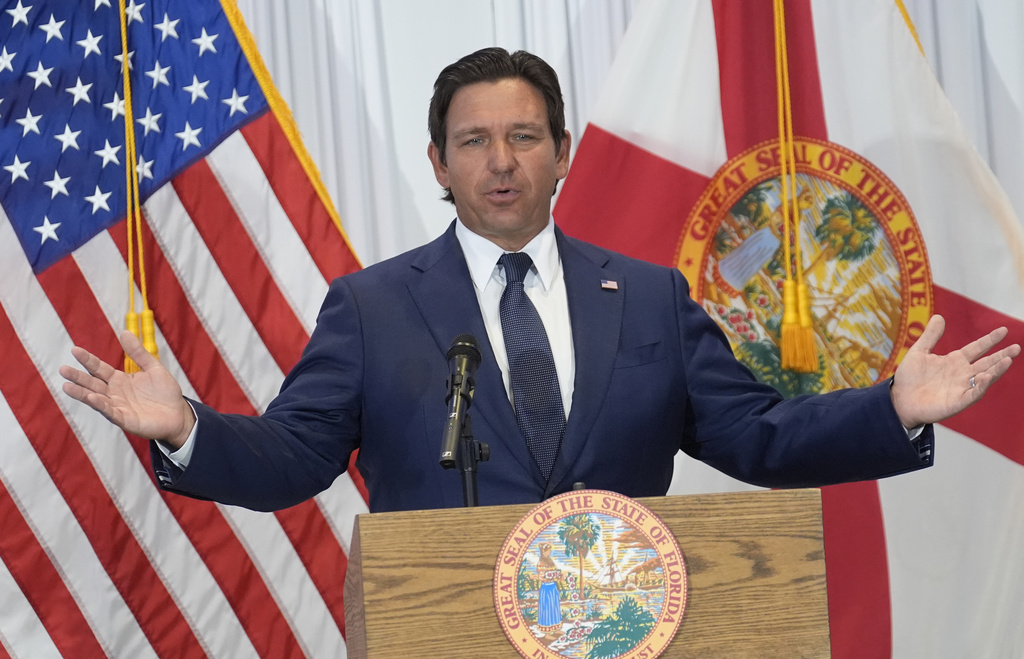
Attorney Mark Elias filed a lawsuit challenging a new Florida election bill right after it was signed by Gov. Ron DeSantis (R), seeking to block the law on First and Fourteenth Amendment grounds.
The bill in question was HB 991, which makes multiple revisions to the Florida Election Code, including (from the final staff bill analysis) requiring voters to submit documents proving their citizenship status to register or remain on the voter rolls, requiring the Florida Department of Highway Safety and Motor Vehicles (DMV) to include a driver’s legal status on a driver’s license or identification card, requiring political candidates to disclose whether they have dual citizenship, prohibiting a person from qualifying as a candidate if they legally changed their name during the 365 days prior to qualification, and revising the list of acceptable identification for voting to remove student IDs and public assistance IDs.
Multiple Democratic Party organizations and political activists had already spoken out against the bill prior to it being signed.
DeSantis has publicly called HB 991 “Florida’s version of the SAVE Act,” the federal law that President Donald Trump has aggressively pushed congressional Republicans to pass — and which has faced similar opposition from critics who call it voter suppression, specifically the provisions in the federal law that require additional documentation if a voter’s name does not match their birth certificate, a common occurrence especially for married women.
Elias warned he was preparing to file suit Wednesday morning while he was monitoring DeSantis’ remarks at the bill signing.
Calling the bill “a new voter suppression law,” Elias said DeSantis “is every bit as unhinged as Trump. Amazingly unhinged.”
“As soon as he stops rambling and signs this bill, Florida will be sued,” Elias continued. “Stand by….”
He made good on his threat shortly thereafter, announcing a complaint had been filed on behalf of the Florida State Conference of Branches and Youth Units of the NAACP and Florida Alliance for Retired Americans.
The 54-page complaint was filed in the U.S. District Court for the Northern District of Florida against Florida Secretary of State Cord Byrd and the Supervisors of Elections for each of Florida’s counties.
The bill “is the latest in a wave of Florida legislation that purports to advance ‘election integrity’—this time, in the name of stopping the fictional threat of widespread noncitizen voting,” the complaint argues. “But far from safeguarding Florida elections from unlawful voters, HB 991’s new requirements will exclude citizens from the electoral process, violating Florida voters’ First and Fourteenth Amendment rights and undermining the integrity of Florida elections in the process.”
A press statement from Elias’ law firm summarized the complaint as “alleg[ing] that HB 991 violates Florida voters’ First and Fourteenth Amendment rights by imposing an undue burden on the right to vote and by treating voters differently based on which registration form they use.”
“Under HB 991,” the statement continued, “both new registrants and existing voters who update their registrations must have their citizenship verified. If the state does not already have affirmative evidence of a voter’s citizenship, the voter must produce documentary proof, such as a birth certificate or passport, or face disenfranchisement. The law also requires state officials to conduct a sweeping review of all 13.3 million registered voters and initiate removal proceedings against any voter deemed ‘potentially ineligible’ unless they provide documentary proof of citizenship within 30 days.”
A similar law that Kansas passed in 2011 blocked 31,000 eligible voters from registering before it was struck down in court, the press statement noted, arguing that the claimed justification of voter fraud was not present. The U.S. District Court of Appeals for the Tenth Circuit affirmed the lower court’s finding that the Kansas law violated the Constitution.
There were “just 198 potential noncitizens on the state’s voter rolls out of more than 13.3 million registered voters,” according to an analysis by the Florida Office of Election Crimes and Security, and some of those 198 “appear to have never actually voted in any election.” Just before DeSantis signed HB 991, Secretary of State Byrd bragged about Florida having “the cleanest voter rolls possible.”
Abha Khanna, a partner at the Elias Law Group, called HB 991 “one of the worst voter suppression laws in modern American history.”
“The law’s own sponsors estimate that HB 991 would force over one million existing Florida voters, including lifelong Florida residents who have been voting in the state for decades, to present a valid passport or an original birth certificate or get kicked off the rolls within 30 days,” Khanna added. “The state’s own data shows that noncitizen voting is virtually nonexistent in Florida. If this law goes into effect, the number of eligible Florida citizens who will be disenfranchised will be far, far greater than the number of ineligible voters who will be prevented from casting a ballot. Courts across the country have rejected these kinds of laws, and this one should meet the same fate.”
HB 991 is set to take effect on Jan. 1, 2027, after the midterms but before the 2028 elections, a presidential year. Pamela Burch Fort, a spokesperson for the Florida NAACP, issued a statement saying that their organization was “proud to step up and bring this lawsuit now to make sure that we have plenty of time to challenge this harmful voter suppression law before the 2028 elections.”
The complaint seeks as relief a declaration that HB 991’s requirement for documentary proof of citizenship violates the Constitution, an injunction barring the defendants from enforcing those provisions of the law, and costs and attorneys’ fees under 42 U.S.C. § 1988.
New: The Mediaite One-Sheet "Newsletter of Newsletters"
Your daily summary and analysis of what the many, many media newsletters are saying and reporting. Subscribe now!






Comments
↓ Scroll down for comments ↓