New York Times Sues Defense Department Over ‘Patently Unconstitutional’ Policy Requiring Reporters Be Escorted at Pentagon

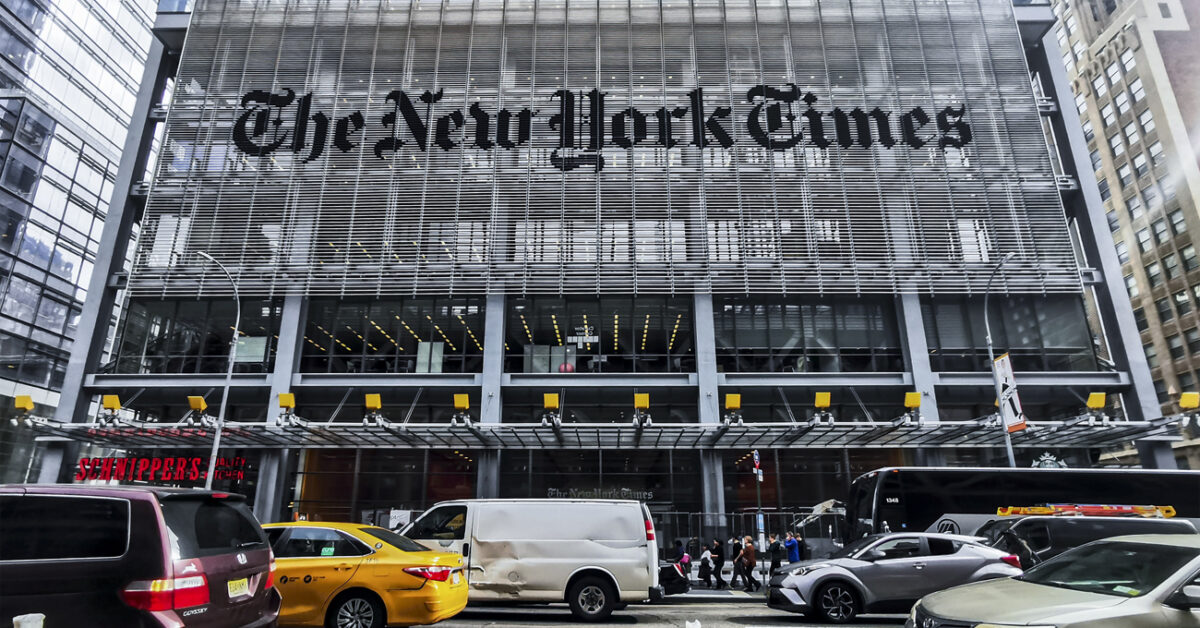
Beata Zawrzel/NurPhoto via AP
The New York Times filed a new lawsuit against the Department of Defense Monday arguing that an interim press policy requiring reporters to be escorted while at the Pentagon was “patently unconstitutional.”
The 50-page complaint, brought by the Times and reporter Julian E. Barnes, names as defendants the DOD, Secretary of Defense Pete Hegseth, Chief Pentagon spokesman Sean Parnell, and Hegseth’s special advisor Timothy Parlatore. Parlatore is Hegseth’s personal attorney and also wrote the interim press policies being challenged in this lawsuit, according to The Washington Post.
It’s the latest salvo in the ongoing battle between the press and the Pentagon, with President Donald Trump’s administration seeking to bring in more friendly media allies and restrict Pentagon press credential access for those who might provide more critical reporting.
One of Hegseth’s new rules included requiring reporters to have a government escort to access certain areas of the Pentagon, specifically those near the offices for the Defense Secretary and his aides.
The initial set of new press pass credential policies were struck down in March via a previous lawsuit by the Times by Senior U.S. District Court Judge Paul L. Friedman, a Clinton appointee, but an appeals court stayed the decision and allowed part of the new rules, the escort requirement, to remain in effect while the federal government filed its appeal.
First Amendment advocacy groups and press freedom organizations lambasted the new policies. The National Press Club said they sparked “serious concerns about transparency, oversight, and the public’s right to know.”
Times spokesman Charlie Stadtlander issued a statement saying that the interim policy requiring escorts for reporters was “hastily put into place” and “an unconstitutional attempt by the Pentagon to prevent independent reporting on military affairs.”
“As we have said before: Americans deserve visibility into how their government is being run, and the actions the military is taking in their name and with their tax dollars,” Stadtlander added.
Theodore J. Boutrous Jr., a partner at the law firm of Gibson Dunn, which is representing the Times, issued a statement calling the interim policy “a blatant effort to thwart independent journalism that violates the First Amendment, defies the district court’s earlier injunction, departs from long-standing tradition, and hurts the American people by trying to hide important information from them during wartime.”
The complaint calls the escort requirement “patently unconstitutional” and says it “violates the Administrative Procedure Act and Plaintiffs’ First and Fifth Amendment rights,” arguing that it “not only revives unconstitutional provisions vacated by that prior court order but also employs additional means of carrying forward the same impermissible, viewpoint-discriminatory aim that has motivated Defendants from the beginning: closing the Pentagon to any journalist or news organization unwilling to report only what Department officials approve.”
A core part of the plaintiffs’ arguments focused on what they characterized as the retaliatory intent of the interim policy (citations omitted):
The Interim Policy is patently retaliatory, utterly unreasonable, and manifestly arbitrary and capricious. Defendants adopted it as a means to thwart a district court order and to punish The Times both for its editorial viewpoint and its successful suit vindicating its constitutional rights. And the Interim Policy, like the unlawful policy it replaced, is impermissibly aimed at chilling independent newsgathering and reporting by threatening punishment—via suspension or revocation of access—for reporters who seek information from individuals not officially authorized to speak to the press on approved topics, or for offering to speak to a source on background, off-the-record, or not for attribution, despite such conversations being an everyday, necessary journalistic practice. The purpose of the Interim Policy is to restrict journalists’ ability to do what they have always done: ask questions of government employees and gather information to report stories that take the public beyond official pronouncements…
[T]he Policy dramatically curtails longstanding press access to the Pentagon by barring credentialed journalists from the building unless they are invited to a press conference or secure a pre-arranged interview or meeting—and, even then, only if they are accompanied by a Department escort. Defendants imposed those onerous limitations not to further any interest in security or safety, but to evade the injunction entered by the district court and carry out the same viewpoint-discriminatory, speech-suppressive purpose that court found unconstitutional. The sequence of Department officials’ actions and their own statements place the purpose and effect of the Interim Policy in stark relief: to restrict coverage of the Pentagon by independent journalists and news organizations who will not agree to only publish information “spoon-fed by Department leadership.”
This is a breaking news story and has been updated.
New: The Mediaite One-Sheet "Newsletter of Newsletters"
Your daily summary and analysis of what the many, many media newsletters are saying and reporting. Subscribe now!








Comments
↓ Scroll down for comments ↓