
Pokémon Go Players Found Something Disturbing on Epstein Island — And Epstein Himself Sent Emails About the Game

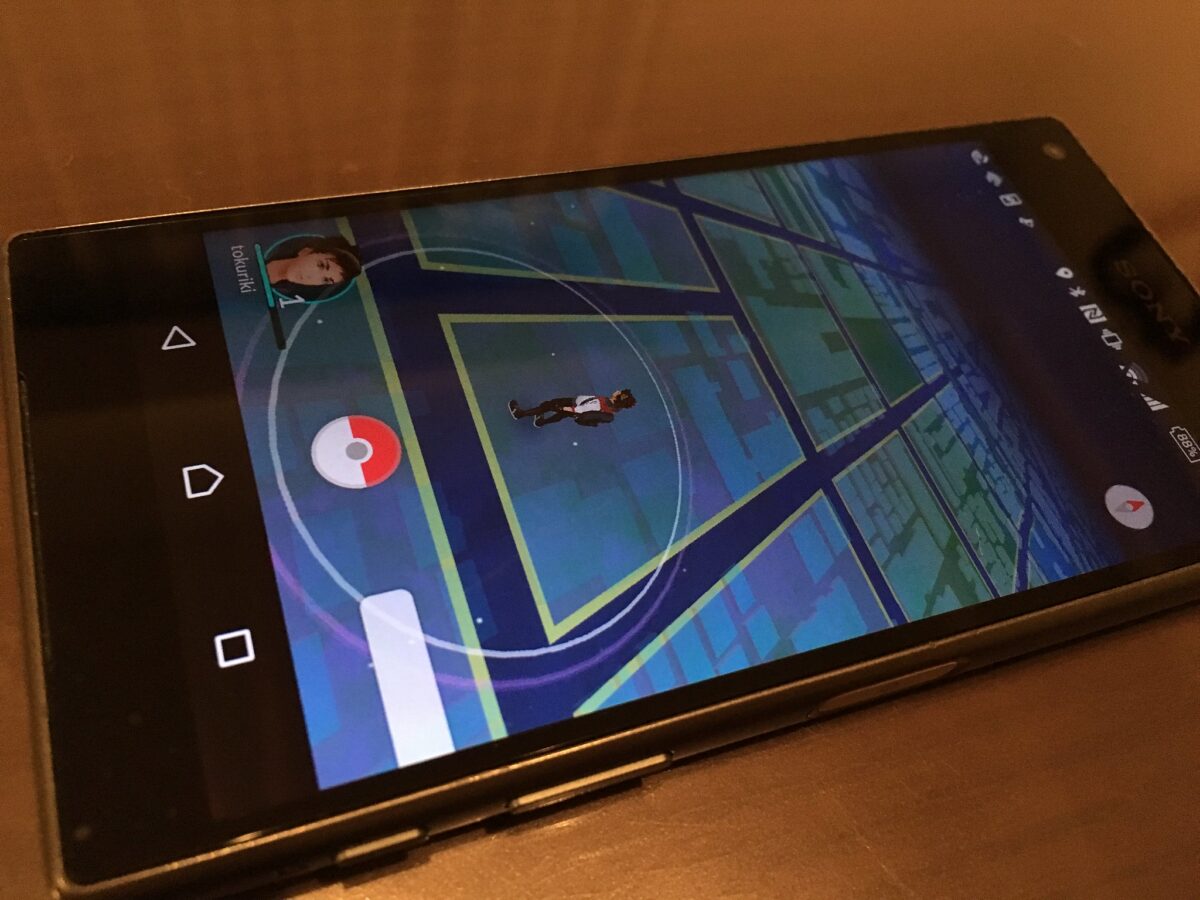
Savvy players of Pokémon Go, the mobile game that lets players catch digital creatures at real-world locations all over the globe, spotted one of the app’s PokéStops in a disturbing location: Epstein Island. And among the released Epstein files is an odd email from 2016, sent by Jeffrey Epstein himself, referencing the game.
The game, developed and released by San Francisco-based software company Niantic, uses GPS technology to overlay a virtual reality map over the real world, with geographical features like lakes, rivers, and roads appearing in the game. Players search for, catch, and battle the Pokémon creatures, as well as collecting items in various ways, including at PokéStops that are scattered around the map, marked with a photograph and label of that location.
Often PokéStops are established at public landmarks, like a park bench or ice cream shop. Many were set up by the programmers or in partnership with companies that paid a sponsorship fee; Starbucks was an early collaborator that actively sought to have PokéStops established at its stores across the U.S. Players can submit suggested PokéStops too after they reach a certain level, using Niantic’s online portal or within the mobile app.
Recently, photos were widely shared on Reddit and social media platforms of a PokéStop on Little Saint James — aka “Epstein Island,” the island in the U.S. Virgin Islands that was privately owned by Epstein and was allegedly used as a base of operations for his child sex trafficking and other crimes.
A report by Sara Heritage at Gaming Bible noted that some Pokémon Go players had been spoofing their location (a violation of Niantic’s terms of service that risks a user’s account been banned, but an enduring hobby for some, nonetheless) and had noticed the PokéStop on an outdoor sundial on Epstein Island.
Older Reddit threads had reported the Epstein Island PokéStop about a year ago, but the DOJ’s ongoing release of the Epstein files renewed interest in the deceased child sex predator, and the photos and posts about the Epstein Island PokéStop circulated again during the past few days. Several users have claimed this PokéStop was known about since 2021, but Mediaite was unable to verify that.
As Heritage pointed out, the game’s guidelines for submitting PokéStops require them to have “safe pedestrian access,” and this has been a restricted private island for years (after Epstein’s death, ownership was passed to a trust and the property was sold to billionaire investor Stephen Deckoff in 2023), it “likely violates” those rules.
And the presence of the PokéStop does not mean Epstein or anyone else of interest in the Epstein files was playing the game on the island, Heritage wrote. “The most likely reason for its existence is a rogue player has thought it’d be funny to submit Epstein Island as an official Pokestop,” she added.
On Monday, Heritage updated her report to add that Niantic “confirmed they have removed the [Epstein Island] Pokestop from the game” after she reached out for comment.
Interestingly, it does appear that Epstein himself was aware of the game (although, again, that is not proof that he had anything to do with his island’s PokéStop before he died in 2019), based on some emails released in the Epstein Files.
Pokémon Go launched in the U.S. on July 6, 2016, and there is an email in the Epstein files that appears to have been sent by Epstein to Sheikh Fahad Bin Hamad bin Khalifa Al Thani, the second son of the former Emir of Qatar, less than a week later, on July 13, 2016.
The email is just one line: “check out pokemon go if you have not already the first of augmented games.”
In another email chain included in the files, Epstein seems to be corresponding with new age guru Deepak Chopra — also on July 13, 2016, less than a week after the Pokémon Go launch. In the emails, the two write back and forth about “fundamental reality,” and Epstein urges Chopra to “[look] at the new pokemon go [app],” describing it as “the first of many augmented reality [games],” and suggesting Chopra could have an app developed that “allows people to [look] at their phone and detect an aura about each other.”
Such an app “would kill [the] market,” Epstein wrote, urging Chopra again, “after you return tonight look up [the] app and imagine,” adding “wow.”
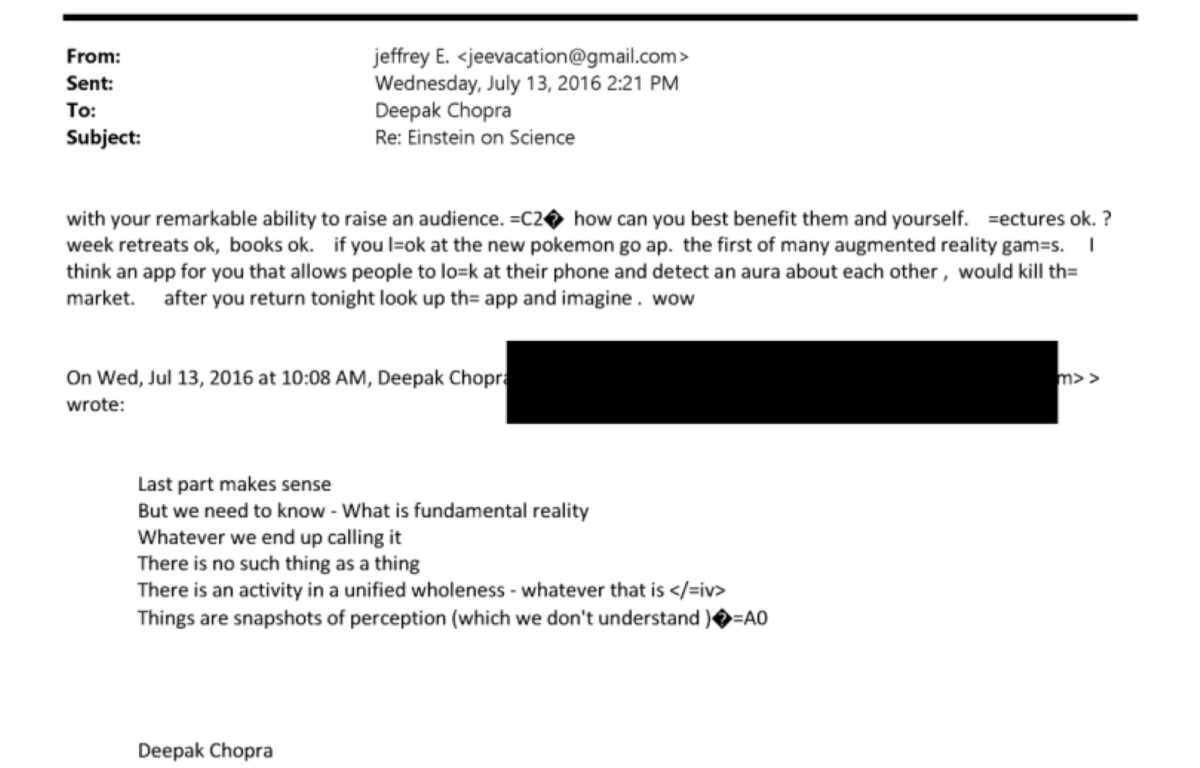
Screenshot via DOJ.
One way that this could all be relevant beyond just another weird online news story: the game tracks the physical location of the users in several ways: where they catch the Pokémon creatures, where they pick up items, and where they collect “gifts” to share with other players. If anyone who visited Epstein Island while Epstein himself was still running operations there and got out their phone to play, there would likely be a digital record of that, either on their phone or on the Niantic servers.
New: The Mediaite One-Sheet "Newsletter of Newsletters"
Your daily summary and analysis of what the many, many media newsletters are saying and reporting. Subscribe now!









Comments
↓ Scroll down for comments ↓