Why is Instagram Getting Flooded With Black-and-White Selfies? ‘Challenge Accepted’ Campaign Explained

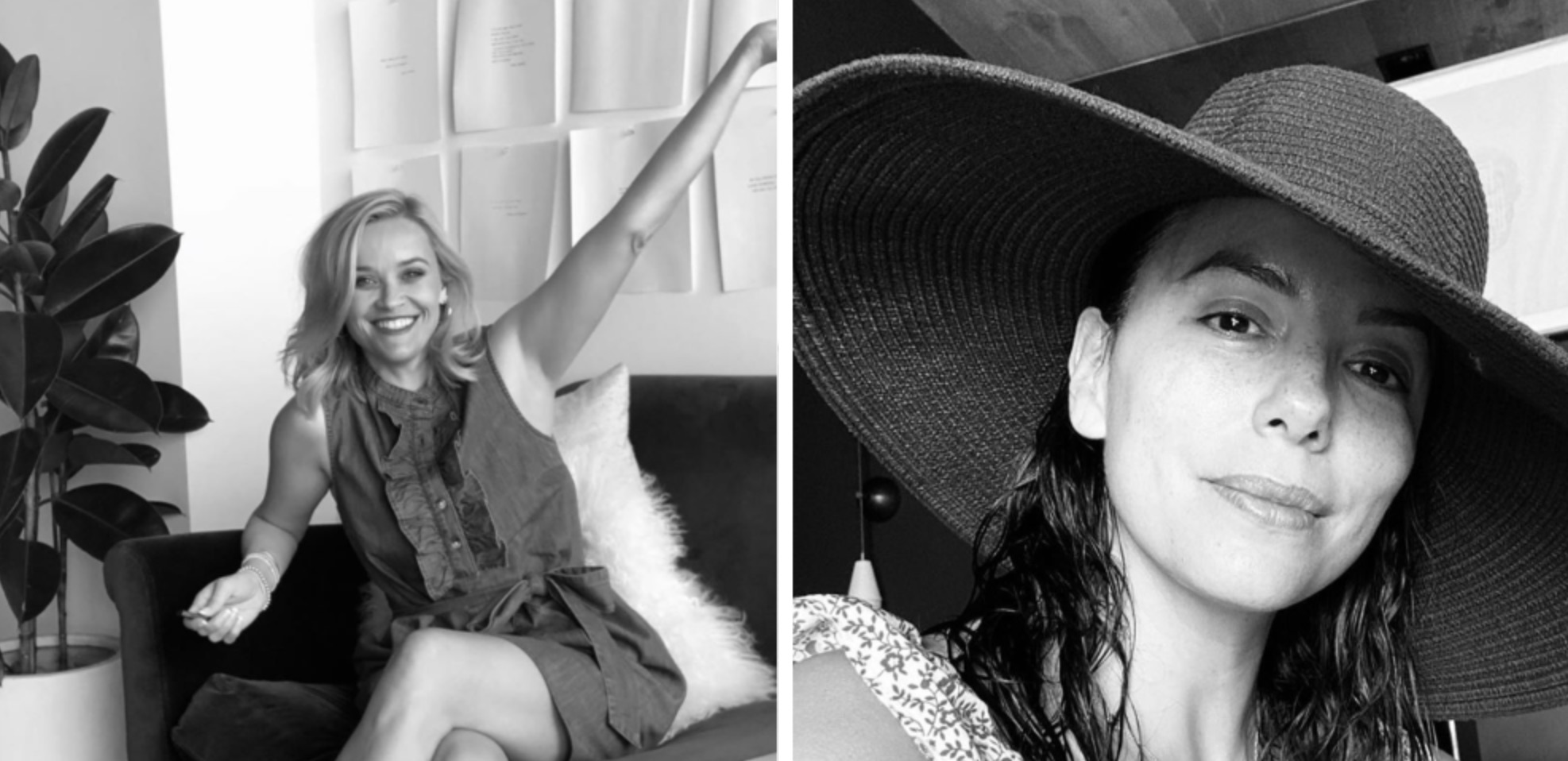
Reese Witherspoon/ Instagram, Eva Longoria/ Instagram
The “Challenge Accepted” campaign has been a top trend on social media this week — leading to a flood of black-and-white selfies on Instagram, which supposedly works to promote female empowerment. The campaign ultimately asks participants to post black-and-white pictures with the caption #WomenSupportingWomen and tag their friends, challenging them to do the same.
Similarly to the #BlackOutTuesday trend, which was started by two music executives, Jamila Thomas and Brianna Agyemang, in the wake of George Floyd’s fatal arrest, the “Challenge Accepted Campaign” looks to spread awareness regarding women’s rights.
The basis of the trend is that these selfies advocate for female empowerment and work to show support for other women — prompting many to nominate their friends to do the same.
“Thank you to all the magical women in my life for the endless love and support. May we all continue to shine a light on one another,” Reese Witherspoon, for example, wrote under her post. “This is what sisterhood is all about.”
Several artists, celebrities, and social media users have taken part in the movement by posting black-and-white selfies of themselves with the hashtags #ChallengeAccepted and #WomenSupportingWomen to Instagram and other platforms:
The reasoning for posting a picture of yourself to show support for others is still unclear to many, including some who decided to partake in the trend. The Morning Show star Jennifer Aniston admitted that she didn’t “really understand this #challangeaccepted thing” in her caption, but posted anyway as a way to show her support.
Aniston also included that the best way to support women is by registering to vote and encouraging other women to do the same.
Little Women star Florence Pugh explained in her post that the campaign is meant to raise awareness of the Istanbul Convention, which works to prevent and combat domestic violence and violence against women.
According to New York Times reporter Taylor Lorenz, “the earliest post the company could surface for this current cycle of the challenge was posted a week and a half ago by the Brazilian journalist Ana Paula Padrão.”
Cristine Abram, a public relations manager for a social media marketing firm, speculated that the trend began after Rep. Alexandria Ocasio-Cortez’s (D-NY) passionate speech last week, which condemned Rep. Ted Yoho (R-FL) for allegedly calling her a “f*cking b*tch” on the Capitol steps.
“That was the spark that led to the resurgence of the hashtag challenge,” Abram told the Times. “It’s all to do with female empowerment. There was this hashtag that already existed to raise awareness around other large issues. Tapping into that allowed participants to gain traction a lot faster because the algorithm was already familiar with the hashtag.”
Despite the challenge’s quick popularity among celebrities, some view the campaign as performative and ultimately ineffective.
The View’s Meghan McCain, for example, claimed she was not into “mob clicktivism,” despite her co-stars’ decision to post their own selfies, and urged her followers to register to vote instead:
I’m not into mob clicktivism as a general rule – instead of putting a hot black and white photo up (which is fine but I prefer more tangible results), why not link to your home states voter registration? That seems like a better way to support all women: https://t.co/AxKRKL6QOs
— Meghan McCain (@MeghanMcCain) July 28, 2020
TV writer Camilla Blackett also questioned the campaign, asking, “Do people not know you can just post a hot selfie for no reason?”
What is the point of this #ChallengeAccepted thing? Do people not know you can just post a hot selfie for no reason?
— Camilla Blackett (@camillard) July 27, 2020
Medium’s Brooke Hammerlin also took issue with the trend in her weekly pop-culture newsletter, writing, “I am ALL for women supporting women BUT I am not sure how a black and white SELF portrait does that — but hey that’s me.”
In a slightly more critical tone, screenwriter and author Bess Kalb, joked, “Sorry I missed your call. Women on Instagram started posting their most flattering selfies in black and white and calling it an empowerment challenge’ and I threw my phone into the sea.”
Sorry I missed your call. Women on Instagram started posting their most flattering selfies in black and white and calling it an “empowerment challenge” and I threw my phone into the sea.
— Bess Kalb (@bessbell) July 27, 2020
New: The Mediaite One-Sheet "Newsletter of Newsletters"
Your daily summary and analysis of what the many, many media newsletters are saying and reporting. Subscribe now!







Comments
↓ Scroll down for comments ↓