Conservatives Who Called Al Jazeera ‘Terror TV’ Now Silent as Qatar Eyes CNN.

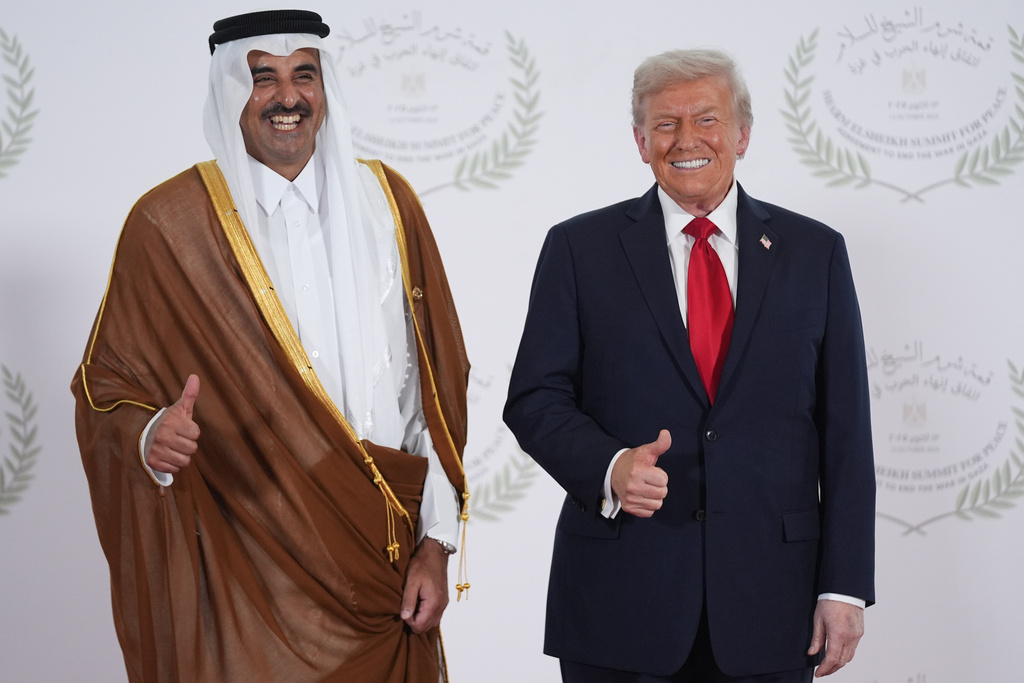
(AP Photo/Evan Vucci, Pool)
For twenty years, conservative media called Al Jazeera “terror TV” because Qatar funded it. They insisted that Qatari money in journalism meant Qatari influence, and Qatari influence meant danger. This was the refrain on Fox News, talk radio, and all across the right-wing blogosphere. A foreign state owning a news outlet was treated not as a story but as a threat.
And now? Qatar’s sovereign wealth fund is reportedly among the investors approached to help finance a takeover bid that includes CNN. Reuters reported that David Ellison’s team explored funding from Qatar, Saudi Arabia, and the UAE as they assembled the capital stack for the Paramount–Skydance offer. These are not confirmed investments, but the outreach is documented. A foreign state’s sovereign wealth entering an American newsroom should set off the alarms that conservatives spent years building.
Instead, there is silence.
Fox & Friends once devoted entire segments to warning that Al Jazeera was “terror TV” and a Qatari propaganda arm. In 2013, conservative columnist Michelle Malkin denounced the network as a “half-billion-dollar Trojan Horse for terror TV,” saying its Arabic-language arm had “cheer-led for terror” and held American lives responsible. Today, with Qatar in line to help finance a takeover bid for CNN — and with the bid routed through Trump’s family — those warnings have entirely disappeared.
The reason is obvious.
The difference is not Qatar. The difference is Donald Trump — whose son-in-law, Jared Kushner, is serving as a proxy in a deal built around Gulf sovereign wealth, a deal Trump appears positioned to benefit from. And conservative media will defend that deal before it defends press independence.
This is not ideological inconsistency. It is hierarchy. Conservative media has become more loyal to Trump’s interests than to the values it once claimed to champion. Qatar did not become more trustworthy. The movement simply decided that Trump-world’s access mattered more than its principles.
And the silence is not just a reversal. It is a permission slip.
If Qatar can move toward the American media bloodstream without resistance simply because the deal flows through Trump’s family, with Kushner as the intermediary, then other governments will study the model. They have deeper funds and sharper incentives.
China already owns TikTok’s algorithm, one of the most powerful information engines in America. Russia funds RT, which still reaches American audiences. Saudi Arabia, Turkey, and the UAE operate media networks as instruments of national strategy. What happens when they see that foreign money in American journalism is acceptable if it aligns with the right political patrons?
When a movement decides foreign money is harmless if it serves its leader, that money finds a safe path. And once the path exists for one actor, it exists for all. But the problem is bigger than politics.
It exposes a crisis inside American journalism itself. News organizations once saw themselves as public institutions. Over time they became corporate assets. Now they are becoming geopolitical commodities. When the financing behind a newsroom becomes a mosaic of private equity, political families, and foreign sovereign wealth, the question of who the journalism is for becomes harder to answer. Increasingly, it is for whoever assembled the money.
This is why the conservative silence matters. It is not about hypocrisy. It is about signaling that the American information system is open for foreign bidding as long as the political alliances line up. That is a dangerous precedent for a democracy with no consistent scrutiny of foreign investment in news and no shared understanding of what should be off-limits.
Qatar may be the most visible foreign state to test this vulnerability. It will not be the last. And when the next government makes its approach, the American political class may realize, too late, that the permission slip has already been signed.
This is an opinion piece. The views expressed in this article are those of just the author.
New: The Mediaite One-Sheet "Newsletter of Newsletters"
Your daily summary and analysis of what the many, many media newsletters are saying and reporting. Subscribe now!





Comments
↓ Scroll down for comments ↓