DOJ Chose Which Epstein Files You’d See — And Left Out the Trump Ones: WSJ

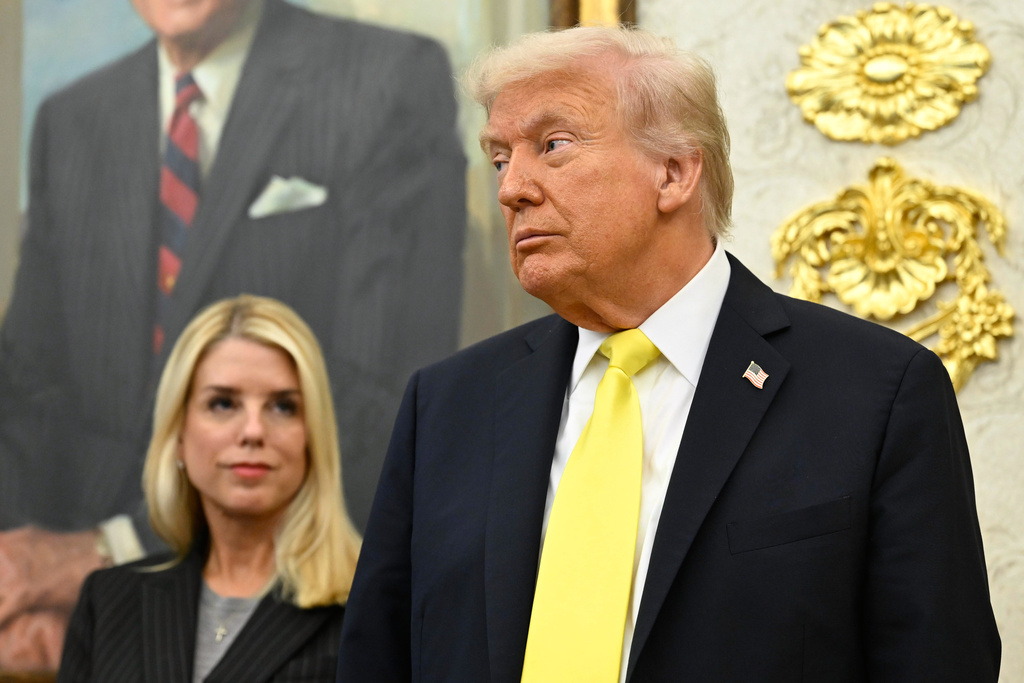
(AP Photo/John McDonnell)
The biggest Epstein files story yet dropped Tuesday night in the Wall Street Journal, and you probably missed it.
The United States has just launched military strikes on Iran, and every screen in the country was pointed at the Middle East. In that environment, a major accountability story about the Justice Department and 47,635 missing Epstein files didn’t stand much of a chance of breaking through the noise. It deserves one.
Here is what the Journal found: After analyzing the DOJ’s public Epstein database, the paper identified tens of thousands of files that appeared to be missing. When reporters Sadie Gurman and Caitlin Ostroff pressed the Justice Department about the discrepancy, a spokeswoman confirmed that 47,635 documents were being held offline for further review. The department hadn’t previously volunteered that information and confirmed it only after being asked directly about the gap.
That number alone should reshape how the public understands the DOJ’s legally bound rollout of Epstein documents.
For weeks the Justice Department characterized the problems surrounding its document release as the predictable friction of a massive, logistically complex operation — tagging errors, privacy reviews, deadline pressure. Those explanations carried some weight when the issues involved scattered redaction mistakes and documents that briefly disappeared and were reposted. A backlog approaching fifty thousand files that never appeared in the public database falls into a very different category.
But the detail that changes the nature of this story entirely is more specific than the aggregate count. The Journal reports that the Justice Department released one FBI interview summary from a woman who alleged that Jeffrey Epstein abused her as a minor while withholding three additional interview summaries from the same witness. The documents that were withheld are the ones in which she discussed President Donald Trump. The document that was released is the one in which she discussed Epstein.
Before going further, a necessary caveat. FBI Form 302s are agents’ written summaries of witness interviews. They are not sworn testimony, and they are not verified accounts. These documents have been contested and criticized across multiple high-profile investigations. Republicans argued strenuously that 302s were manipulated during the Flynn investigation, and they were not entirely wrong to question how those summaries are produced. The content of what this woman told FBI agents about Trump is unproven and should be treated as such. The issue here is not the allegation itself. The issue is the pattern of what the Justice Department chose to release and what it chose to keep offline.
The department had reviewed all four of these interview summaries. It published a summary of the woman’s allegations in January, which means officials knew what the documents contained. Then it released the memo documenting her account of Epstein’s conduct while leaving the three memos describing her account of Trump’s conduct out of the public database.
This is where I need to update an argument I made in this space earlier this month. I wrote that the Justice Department had created a situation in which incompetence and concealment had become functionally indistinguishable — that chaos in a transparency process produces the same practical result as a cover-up regardless of intent. I gave the department the benefit of the doubt on motive because the evidence at that point did not clearly establish one.
The Journal’s reporting removes much of that analytical cushion. What it describes looks less like a department that lost control of a complicated document release and more like a department that exercised precise control over which portions of a witness’s account the public would see. That is editorial judgment applied to a federal transparency mandate, and the result happened to benefit the president whose appointees are running the process.
The Wall Street Journal’s role in this story carries weight beyond the quality of its reporting, which is considerable. The paper operates inside Rupert Murdoch’s media empire — the same empire that built Fox News into the most powerful pro-Trump media institution in the country.
When that newsroom publishes a carefully sourced report describing Trump’s Justice Department withholding FBI interview memos that reference Trump himself, the story clears a credibility threshold that critics from either party will have difficulty dismissing. The Journal reports that it reviewed copies of the documents but does not explain how it obtained them, leaving open the possibility that they came from congressional investigators, litigation files, or someone inside the department. That sourcing question does not undermine the reporting, but in a story of this magnitude it is a detail worth noting as the full picture develops.
Attorney General Pam Bondi and Deputy Attorney General Todd Blanche have both insisted categorically that nothing was withheld for political sensitivity and that the department complied fully with the Epstein Files Transparency Act. Those are strong claims that now sit alongside a documented record of selective disclosure. The transparency law they say they followed explicitly prohibits withholding documents on the grounds that they might embarrass public figures. The department released one document from a four-document set, and the three it withheld are the ones that mention the president. Bondi and Blanche are entitled to offer their explanation. They are not entitled to have it accepted without documentation that matches its certainty.
What the Justice Department appears to have done — and this is the fresh, more troubling interpretation of a story that has been unfolding for weeks — is use transparency as a performance. It released enough material to claim compliance with the law while quietly maintaining control over the portions of the record most politically damaging to the president it serves. That kind of approach produces a problem far more corrosive than bureaucratic sloppiness because it is designed to remain deniable. Each individual decision can be attributed to process. The pattern those decisions form tells a different story.
The Justice Department still has an opportunity to close the gap between its assurances and the public record. That window exists. It is narrowing. And in a news environment where military strikes in the Middle East are consuming most of the public’s attention, the temptation for officials to let this story fade into the background must be considerable.
This is an opinion piece. The views expressed in this article are those of just the author.
New: The Mediaite One-Sheet "Newsletter of Newsletters"
Your daily summary and analysis of what the many, many media newsletters are saying and reporting. Subscribe now!









Comments
↓ Scroll down for comments ↓