
Media Coverage of ‘Dual Loyalty’ Controversies Turns Centrist Jews Into a Partisan Football

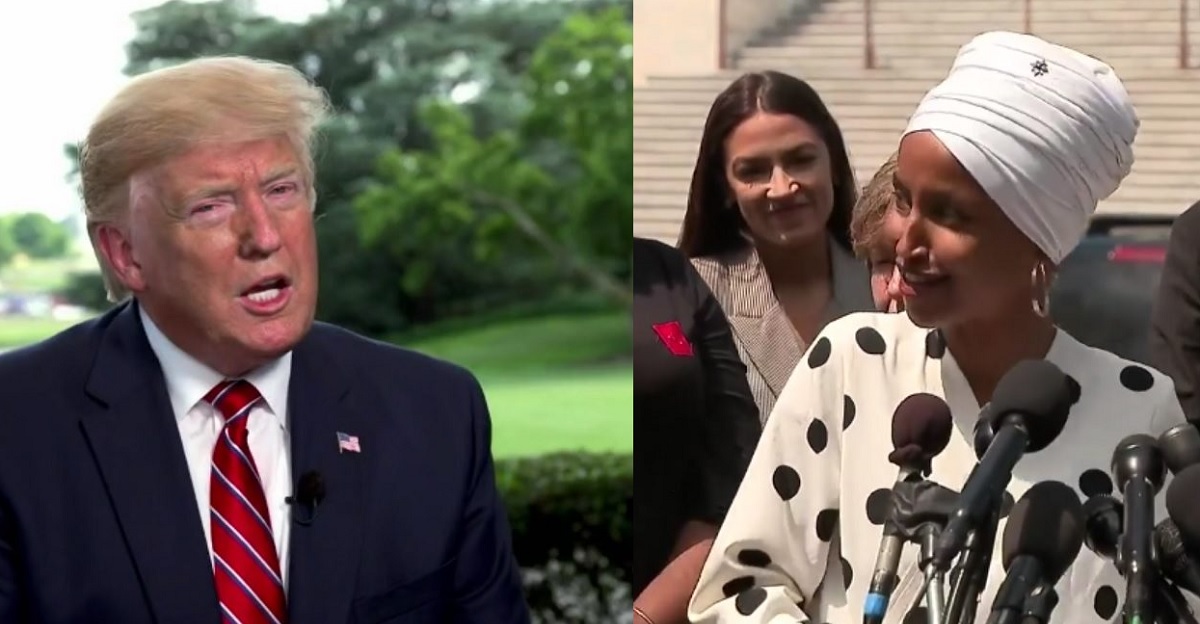
As an American Jew, I feel as if both the Democratic and the Republican parties have abandoned me. Media coverage of recent anti-Semitic rhetoric by members of both parties has fueled my feeling that no one has really gotten it right — with many missing the point entirely, rushing to go all-in with condemnation when abhorrent messaging is used on the rival side while minimizing the same behavior coming from their own political party.
I always had problems with the progressive left when it came to Israel. They were always the loudest voices berating the Jewish State about the treatment of Palestinians and their calls for not only a two-state solution — but a “solution” that seemed to have forgotten there are two entities on the Palestinian side, one of which (Hamas) denies Israel’s right to exist.
There was also the progressive left’s support of the Boycott, Divestment and Sanctions movement, which likens Israel to apartheid South Africa, even though the comparisons between a country that acquired territory because it acted in self-defense against a country (Jordan) who gave up all claims to those territories, was totally different than what occurred in South Africa — an important fact the media too often overlooks.
All the while, I still believed I had a home in the Democratic Party because the majority was still occupied by the center. But that no longer appears to be the case. While the party is still anchored by pro-Israel Democrats like Nancy Pelosi, Chuck Schumer, and Jerry Nadler, more vocal freshman progressives like Reps. Rashida Tlaib and Ilhan Omar have drowned out their voices. Too often, party leadership seems timid in calling out their Democratic colleagues and have allowed them to become the loudest in the room. And even if the establishment Democrats speak out, there’s no guarantee cable news programs will give them the light of day — consumed with the allure of the clicks and viewers that coverage of the controversial freshmen attract. In many ways, the popularity and power of the freshmen lawmakers has been made possible by the media outlets too eager to give their more radical positions more airtime than they deserve.
Earlier this year, when Rep. Ilhan Omar trafficked anti-Semitism in tweets — suggesting American Jews in Congress support Israel because “it’s all about the Benjamins” and purporting their “push for allegiance to a foreign country — I was appalled and looked to Democratic leaders to forcefully condemn the vile dual-loyalty trope. I was hopeful when they announced a public repudiation in the form of a House resolution. But by the time the resolution made it to the floor, it was watered down to include all hate speech — and did not even name the congresswoman who precipitated the vote. To me, it was a scathing reminder of how much the Democratic Party had changed. Democrats proved unable to directly condemn the vile words of one of their own when it really counted.
For the most part, the media reaction was predictable. Don’t get me wrong, there was plenty of condemnation going around the cable news airwaves. It just felt as if everyone had an ulterior motive. Fox News hammered Omar for the comments, hosting panel after panel to excoriate her, but conveniently forgot to mention the problematic comments made in the same vein by the president. Personalities on CNN and MSNBC were quick chastise the remarks, but spent an inordinate amount of time noting the hypocrisy in the commander-in-chief’s past when that time could have been better used educating viewers as to why these claims of Jewish loyalty are problematic in the first place.
And now we come to the Republicans.
The GOP has long been vocal about its full-throated support for Israel. But in order to talk about Republicans, you have to talk about the man who has hijacked the party and poisoned it with toxic rhetoric. President Donald Trump has not been immune to charges of anti-Semitism. Even prior to this month, he had a habit of being loose with his behavior, toeing the line of anti-Semitism. One prominent example came when Trump tweeted — and then deleted — an image of Hillary Clinton complete a background of dollar bills and the assertion that “history [was] made” because she is the “most corrupt candidate ever” in a Star of David. Another was in 2015 when Trump told the Republican Jewish Coalition, “you’re not going to support me because I don’t want your money,” “you want to control your own politicians” and that he is “a negotiator like you folks.”
Still, through the roller coaster ride that has been Trump’s first term in office, I had been, more or less, impressed with the commander-in-chief’s commitment to the Jewish State.
I applauded his decision to move the U.S. Embassy from Tel Aviv to its rightful spot in Israel’s capitol, Jerusalem. I was ecstatic when the president announced the U.S. would recognize the Golan Heights under the sovereignty of Israel — something previous administrations had been too timid to do. I was even on board with his withdrawal from the JCPOA which, while I commended the overall goal of limiting Iran’s ease in obtaining nuclear weapons, felt that the result of the Obama administration’s negotiation was weak and put Israel at risk.
When Trump jumped on the bandwagon of critics rightfully denouncing anti-Semitic tweets from Rep. Omar earlier this year, I was initially pleased with his voicing the objection.
But then the president became consumed with attacking the two Democratic congresswomen on racist terms, albeit thinly veiled ones. That was bad enough, but even worse was using their anti-Israel rhetoric, not as a legitimate topic for criticism, but as a political cudgel to paint all Democrats as somehow complicit in that anti-Israel and anti-Semitic rhetoric.
Trump’s strategy was ugly and repugnant, but he has remained determined to push what he views as a winning political position nonetheless. Earlier this month, days after Omar and Tlaib were denied entry to Israel due to their support of the BDS movement, the president crossed a line when he proclaimed that Jews who vote for Democrats are showing either a “lack of knowledge” or “great disloyalty.”
When he was confronted was about his remarks by the press, Trump doubled down, reiterating an anti-Semitic trope with his declaration that “if you vote for a Democrat, you’re very, very disloyal to Israel and the Jewish people.”
Trump’s choice to use such language underscored that, even while he may speak out against Democratic lawmakers for delving into anti-Semitic tropes, he has no real grasp of what makes their rhetoric so problematic.
The premise that Jews have a “dual loyalty” has been around for centuries. It was most infamously reanimated in Germany during World War II when Nazis would use disloyalty as a justification to persecute and slaughter Jewish citizens. After the establishment of the State of Israel in 1948, the hateful smear continued, only this time it was modified to suggest Jews living in other countries were more loyal to Israel than their native homelands.
It’s sickening that he would blast Democrats for one behavior just to turn around and publicly engage in the very same, showing absolutely no repentance or acknowledgment of how problematic his suggestion was. His comments epitomized the fact that Trump is not there for the Jews out of some unconditional benevolence. He’s using Israel and the Jewish community as a means to an end — as a vehicle to achieve reelection.
This is an opinion piece. The views expressed in this article are those of just the author.






Comments
↓ Scroll down for comments ↓