Trump Just Lost the Minneapolis Narrative—and He Knows It

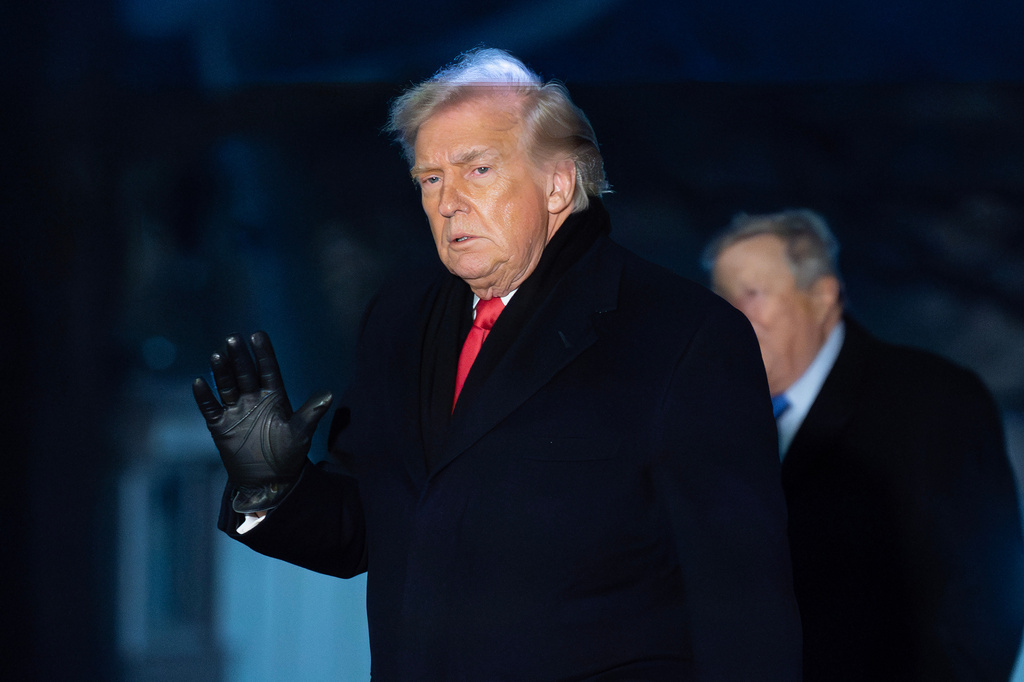
(Jose Luis Magana/AP photo)
President Donald Trump has always governed on the belief that forceful assertion can move faster than facts. This weekend, after federal agents killed Alex Pretti during an ICE operation in Minneapolis, that belief met a limit—and the collision played out in public.
Pretti, a 37-year-old ICU nurse, was the second protester shot dead by federal agents in Minneapolis in three weeks. Within hours of his death, senior administration officials offered a confident and unified explanation. DHS Secretary Kristi Noem described the killing as “the definition of domestic terrorism.” Deputy Chief of Staff Stephen Miller said Pretti was an “assassin” who wanted to murder federal agents. Border Patrol commander Greg Bovino said it appeared Pretti intended to cause “maximum damage and massacre law enforcement.”
The language was absolute. The evidence had not yet arrived.
Video from the scene spread quickly and showed a sequence that raised immediate questions. Pretti was holding a phone as he observed or recorded the operation. Agents pinned him to the ground and removed a firearm from his waistband. Multiple shots followed, including several fired after he lay motionless. Viewers did not need expertise to understand the gap between what they were seeing and what they were being told.
That gap carried consequences. By labeling the dead a terrorist before evidence was public, the government placed the burden of explanation on someone who could no longer speak. The state asserted finality before the facts were established, turning accusation into closure.
The resistance that followed was notable not for its volume, but for its breadth. The New York Times and the Wall Street Journal both published careful, frame-by-frame video analyses that contradicted the official account. The Journal’s editorial board urged ICE to pause operations in Minneapolis and concluded that Pretti’s actions warranted arrest, not a death sentence. The New York Post questioned the administration’s handling. Bill O’Reilly called for “adjustments.” Fox News’ own immigration reporters avoided endorsing the “domestic terrorism” framing. Conservative legal voices stayed conspicuously quiet.
In a country rarely unified on anything, the administration managed something unusual: it aligned institutions and audiences that almost never agree against its handling of a single incident.
Television interviews reflected the strain. CNN’s Dana Bash confronted Bovino with footage showing an agent removing the gun before the first shot. The exchange stalled because the claims no longer matched the record.
By Monday morning, the rhetoric softened. On Fox & Friends, Deputy Attorney General Todd Blanche said he did not believe anyone was applying the legal definition of domestic terrorism to what happened. The comment marked a clear retreat from the certainty expressed over the weekend and signaled that the earlier framing could not be sustained.
That progression—from maximal claims to cautious hedging—told the real story.
Immigration remains a powerful issue for Trump because the system is broken and public concern is real. Enforcement is difficult. Federal agents face real risks. None of that changed over the weekend. What changed was the credibility of a specific explanation for lethal force. The administration asked supporters to accept a story that evidence no longer supported. As that became clear, allies began to step back.
Trump’s own posture reflected the shift. In a brief call with Wall Street Journal reporter Josh Dawsey on Sunday night, he said the shooting would be reviewed and that ICE would leave Minnesota “at some point.” The tone was noticeably less certain than the statements coming from his administration just hours earlier.
Then, early Monday morning, Trump announced on Truth Social that he was sending Tom Homan to Minnesota. He emphasized that Homan “has not been involved in that area” and would “report directly to me,” language that signaled a desire for distance and reset. The post blended the move with claims about welfare fraud and political opponents, underscoring how tangled the messaging had become even as the White House adjusted its footing.
Trump rarely intervenes that way unless something has gone wrong. Sending Homan was not an admission of error. It was an acknowledgment that the original handling could not stand on its own.
The broader lesson of the weekend extends beyond Minneapolis. A governing style built on certainty without correction depends on controlling the flow of information. When evidence appears immediately and spreads widely, that control weakens. Authority begins to rely on persuasion rather than insistence.
Attention will move on. New controversies will arrive. Immigration will remain unresolved. But for a brief and revealing moment, the administration encountered a constraint it could not outrun.
The evidence held, and for once, authority had to yield to it.
This is an opinion piece. The views expressed in this article are those of just the author.
New: The Mediaite One-Sheet "Newsletter of Newsletters"
Your daily summary and analysis of what the many, many media newsletters are saying and reporting. Subscribe now!







Comments
↓ Scroll down for comments ↓