War Propaganda Is Now Made for the Algorithm. Journalism Can’t Keep Up.

Screenshot
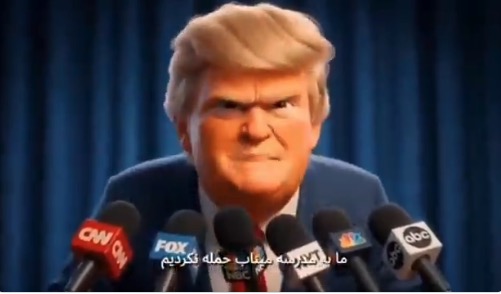
The video landed in my feed the way most things do now — shared by someone I follow, with a note that made it feel urgent. Brian Krassenstein, one of the more prominent anti-Trump voices on X, posted it with the header: “BREAKING: The Iran Embassy in The Hague just posted this video. Pay close attention.”
What followed was an animated satire rendered in the visual language of Pixar’s “Inside Out,” produced by Iranian state media, in which Donald Trump launches a missile at a girls’ school while eyeing a folder marked “Epstein.” The message was blunt: the war is a distraction from domestic scandal. It was also, undeniably, foreign government propaganda.
(The irony of embedding this tweet in a column about the ethics of sharing propaganda is not lost on me. But Krassenstein’s post is the story — the video is context, his decision to amplify it is the news. That distinction is the entire argument of what follows.)
Krassenstein shared it because he agrees with the message. That’s the whole story, and it cuts in every direction. My college friends back in Kansas share Pentagon-produced war footage with the same uncritical enthusiasm — slick edits of military strikes set to cinematic music, packaged to feel patriotic and land like action movie trailers. The politics are opposite. The mechanism is identical. Both are sharing content designed to manipulate them, and both are doing it willingly because the narrative flatters their priors.
That moment raised the question we face at Mediaite every time this content surfaces: is it news? And if it is, what are the ethics of covering it?
The propaganda victory no longer requires convincing anyone of anything. It only requires engagement.
For most of modern history, war propaganda operated on a belief model. Governments tried to persuade their own populations that the cause was just and the enemy monstrous. News organizations functioned as informal gatekeepers, deciding which messages were credible enough to pass along. That entire system has collapsed under the weight of cheap editing software, AI animation tools, and frictionless global distribution. Once a clip exists, the gatekeeping function is over. The content spreads regardless of whether journalists cover it — and it spreads fastest when people react, because outrage fuels the algorithm as efficiently as approval.
That dynamic is precisely why the Epstein reference isn’t just trolling — it’s targeting. The folder isn’t random provocation. It lands because a significant portion of the American public already believes the files are being suppressed, that powerful people are being protected, and that a war abroad might serve as a convenient cover. Iranian state media didn’t invent that suspicion. They just animated it. The clip works because it maps onto anxieties that already exist inside the American information ecosystem, and once it enters that ecosystem, the mechanics of virality handle the rest.
This is what makes the video worth examining beyond its obvious crudeness. It has already succeeded — not because Americans will adopt Tehran’s narrative, but because it has become a shareable artifact in a broader information war where the goal is participation, not persuasion. The American military’s own content operates on the same logic. A strike package edited like a Call of Duty trailer travels because it taps a familiar aesthetic. Critics call it propaganda. Supporters call it patriotic messaging. Both reactions drive the clip further into the feed.
This leaves journalism in a genuinely uncomfortable position. Ignoring propaganda means hiding content that is actively shaping global public perception. Covering it uncritically turns the press into the distribution infrastructure the propaganda was designed to exploit. The line between explaining and amplifying has collapsed to the width of a headline, and there is no clean resolution to that tension — only the obligation to be honest about it.
What gets lost inside this content ecosystem is the actual weight of the conflict. When war is packaged as entertainment, the emotional distance between audiences and consequences widens systematically. Civilian casualties become narrative ammunition. Military strikes become cinematic content optimized for shareability. The normalization isn’t incidental to how this war is being presented — it is the method. The strategic questions that should be driving public debate — what the endgame is, what the mission actually requires, how long and at what cost — struggle to compete in an information environment that has been deliberately aestheticized.
Those are serious questions that deserve serious answers. They are difficult to hear clearly when the war itself has been turned into content.
This is an opinion piece. The views expressed in this article are those of just the author.
New: The Mediaite One-Sheet "Newsletter of Newsletters"
Your daily summary and analysis of what the many, many media newsletters are saying and reporting. Subscribe now!









Comments
↓ Scroll down for comments ↓