»» Etan Bednarsh

Panel Nerds: Matisyahu’s One Day with PS 22

Panel Nerds: Matisyahu's One Day with PS 22

Who: Matisyahu, interviewed by Thane Rosenbaum What: “An Evening with Matisyahu Where: 92nd St. Y When: March 16, 2010 Thumbs: Up (more...)

Panel Nerds: Lorne Michaels And Seth Meyers Discuss What Makes SNL Work

Panel Nerds: Lorne Michaels And Seth Meyers Discuss What Makes SNL Work

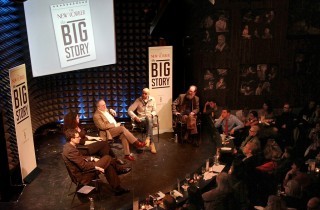
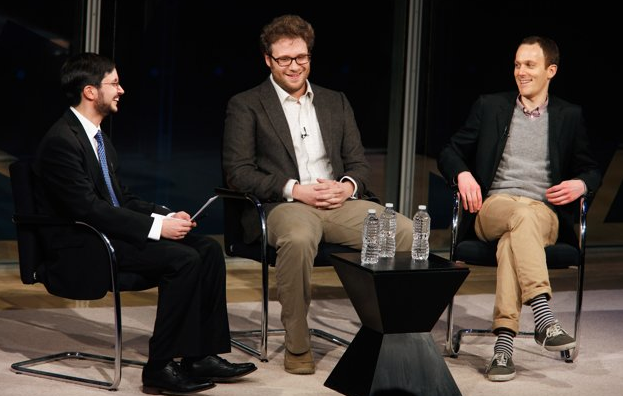
Who: Lorne Michaels and Seth Meyers, interviewed by Ken Auletta What: Newhouse and the New Yorker’s “Live from New York” Where: W Hotel - Union Square When: March 2, 2010 Thumbs: Up For many Saturday Night Live writers, the gig is their first real job. And that makes Lorne Michaels their first real boss. Contrary to what you may have heard, Michaels actually sounds like a supportive and understanding boss, setting aside the pressures of producing a weekly comedy show in favor of focusing on how to help his young talent get better at what they do. Michaels said that to make the show great, it takes the right mix of many ingredients: talent, on- and off-camera; a fresh approach and new insights; patience with young writers to allow them to reach their potential (he says it takes two to three seasons); and that there are no bad ideas in comedy. It’s the last point that head writer Seth Meyers really agrees with. Meyers has to navigate through roughly 50 different sketches each week to determine which will make the final cut. His selection process, he said, is eased by rehearsals that, based on the laughter or lack thereof, make the decisions easier on him. At a certain point, he added, there’s just no more room to fight for the nobility of the piece. Both Meyers and Michaels were entirely upfront about the process they go through to put the show on the air. Michaels says that his show requires a certain precision and camera timing to put together that doesn’t allow for improvising, despite the comedians’ proficiencies and wishes. However, when Michaels was asked about the way NBC handled the Leno-Conan handover, he quickly silenced himself. It showed how disciplined Michaels is, and prefers his show to be. The best performers can do the most with the opportunities they are given. Michaels points to Dana Carvey who he says did a better George H.W. Bush than Bush himself. Michaels frequently mentioned past cast members like Carvey as examples, showing that even after all these years none of them have ever truly left him. He says that’s the great thing about the show – each separate cast means something to viewers. Most often, people will claim the cast that appeared on the program when they were in high school as the “hey day” of “SNL.” Michaels believes that those formative teenage years are when people begin to take in the messages of the show and it stays with them for the rest of their lives. What They Said “We deal in the world of perception - it’s not real - and we deal with what’s on the surface.” - Lorne Michaels says that the first thing his staff has to do is find what’s funny about certain people "Lorne goes about getting the best writing out of somebody by pointing out that the current writing could (long pause)... be better.” - Seth Meyers indicates that he’s been on the receiving end of his share of writing critiques “If you feel the audience is ahead of you, you’re losing.” - Lorne Michaels recognizes his important it is in comedy to out think your viewers “It survives because fresh voices come in on both the performing and writing sides and have free reign to do things.” - Seth Meyers on why the show has lasted so long on the air, with so many new casts of characters “If I wasn’t more engaged, I would have left. If I hadn’t figured it out, I would have left.” - Lorne Michaels explains why he’s still at it, 35 years later What We Thought Ken Auletta did a great job asking questions and then staying out of the way. When you have a star like Michaels at the helm, it’s best to let him control the conversation. Even Meyers realized it, looking on in awe for much of the evening. We liked Michaels’ comments about how it’s the cast’s job to figure out how to use the weekly hosts in sketches. With such diverse hosts, this task can be particularly onerous at times. We can’t imagine how difficult it must be to write for Zach Galifianakis this week. PANEL RULES! Some audience behavior seems to repeat itself panel after panel. We’ll be updating a running list of “PANEL RULES!” that will help ensure that you are not the dweeb of the Panel Nerds. Panel Nerds don’t like…Overreachers Early on in the panel, Michaels refused to select one cast member or full cast as his favorite. So what makes you think that he’d be willing to indulge the reverse? Asking Michaels to identify which actors failed in their stints at “SNL” is disrespectful and gossip-mongering. If you want to know who didn’t work out, check the archives. There’s a record of who has lasted and who has teetered out. This isn’t the right forum to research that question.

Panel Nerds: Malcolm Gladwell and Adam Gopnik’s Fireside Chat

Panel Nerds: Malcolm Gladwell and Adam Gopnik's Fireside Chat

Who: Malcolm Gladwell and Adam Gopnik
What: "Adam Gopnik and Malcolm Gladwell: 'Surveying Mankind from China to Peru'"
Where: 92nd St. Y
When: February 16, 2010
Thumbs: Up

(more...)

Panel Nerds: “Winning Time” is a Winner

Panel Nerds: "Winning Time" is a Winner

Who: Dan Klores (filmmaker), Donnie Walsh (New York Knicks), Brandon Tierney (1050 ESPN Radio), moderated by Rick Allen (SnagFilms) What: ESPN's 30 for 30 "Winning Time: Reggie Miller vs. The New York Knicks" When: February 4, 2010 Where: The Paley Center For Media Thumbs: Like the photo: One up for the movie. One down for the panel. "Winning Time" is one of the best sports documentaries we have ever seen. Filmmaker Dan Klores said he wanted to shoot it as a dark comedy, and from the film's opening operatic chords it plays exactly like that. The documentary focuses on the Indiana Pacers-New York Knicks playoff battles of the mid-90s, and it thrives in four respects. The first is the way Klores presents the larger picture. We had not realized, for example, that the Pacers finished second in the 1985 draft lottery to select Patrick Ewing. The second is that he establishes why this rivalry is worthy of its own movie. Presenting the Knicks-Pacers as a big city/midwestern battle over values felt true and unforced. The third respect is the incredible footage he found from the era. Lastly, and this is the key element, Klores gets athletes to actually open up to the camera and not simply to rest on trite platitudes. Ironically, that last aspect is exactly where the panel failed. The discussion rarely pierced the surface. So much of the film's focus on Reggie Miller was about his trash talking, but rather than having Donnie Walsh explain how the Pacers felt about it, Brandon Tierney spoke about other great trash talkers in sports. (He cited Michael Jordan and Randy Johnson.) They mentioned the impossibility of recreating such an intense, physical rivalry in the modern NBA but didn't discuss what that change in the game means for how we view sports or the human triumph within the context of sports. Klores rarely touched on the deeper issues, but he did raise a few larger questions. However, he didn't seem to want to talk too much or address them though. We can't say we blame him. If we made a film as great as "Winning Time," we'd also want to let it speak for itself. What They Said "The thing that interested me was the moment...What goes on in a person's mind that he has the discipline, the courage...to not give up?" - Dan Klores wanted to examine the impossible-to-believe personal triumph aspect of sports (he first thought of this play) " Danny was the first time I told anyone that I didn't see those shots." - Donnie Walsh didn't stick around for Reggie Miller's famous 3 pointers against the Knicks in the '95 playoffs "Indiana and New York both feel they invented basketball." - Donnie Walsh suggests another reason this rivalry was so heated "It's beyond sports. a genius, just like a composer or playwright." - Dan Klores saw the deeper meaning of athletics "We had Reggie for 19 years, I always thought I'd lose him to New York...now I want to take one of those guys." - Donnie Walsh, ex-Indiana Pacers General Manager and current New York Knicks General Manager, understands both sides of this story What We Thought The Paley Center did three things all panels should do: 1) They gave out a sheet with panelists' information; 2) they handed out an audience survey for feedback; 3) They gave a full introduction to the panel, providing context for everything to follow. Others should follow their lead. The crowd was divided between a film crowd and a sports crowd. This is true for the audience - some of who nodded appreciatively of the footage and some who booed Charles Smith (for this, no doubt). This was true for the questions asked afterward. And it was also true for the panel. The gulf between Tierney's bombastic fanboyism and Klores contemplative calmness was wider than the opening Patrick Ewing had in game 7 of the 1995 playoffs. PANEL RULES! Some audience behavior seems to repeat itself panel after panel. We’ll be updating a running list of “PANEL RULES!” that will help ensure that you are not the dweeb of the Panel Nerds. Panel Nerds don’t like…Rik Smits Stalkers We're sorry, but Rik Smits is just too peculiar a person to be obsessed with. It's one thing to ask how Donnie Walsh scouted him. It's another to follow up with "so...what does he do now?" Even Rik Smits isn't interested in Rik Smits that much.

Panel Nerds: The Death and Life of Journalism Are Both Greatly Exaggerated

Panel Nerds: The Death and Life of Journalism Are Both Greatly Exaggerated

Who: John Nichols, Robert McChesney, Pamela Newkirk, David Carr, moderated by Laura Flanders
What: The Nation's The Death and Life of American Journalism: A Conversation
Where: New York Society for Ethical Culture
When: February 3, 2010
Thumbs: Up

For John Nichols and Robert McChesney, this was a book promotional event and an opportunity to outline their recommendations to save traditional journalism. It was a setup for a predictable night full of previews of what’s contained inside yet another "save journalism" solution book. Yet, thankfully, David Carr took a topic that has been spoken about to death and breathed new life into the discussion.

That’s not to say the writers didn’t have a great deal to suggest and share – their $30 billion recommended government subsidy has generated much attention. In fact, both Carr and Pamela Newkirk had read and digested the pair’s book in anticipation of the panel and referenced specifics in their insights and responses. It was Carr, however, who stirred the pot by taking issue with the pair’s controversial plan to get government heavily involved with journalism’s resurrection. While Carr believes that government can play a role, he questions whether a government-run press will actually lead to watchdog journalism that capably patrols the institutions that feed it.

And so the debate began and never really ceased. Both Nichols and McChesney were civil in their defenses. McChesney argued that their book is not intended to be the end-all and be-all of journalism solutions, but was written to get the discussion going. (That "just getting the ball rolling" position reminded us of the Freakonomics duo.) He said that before 1875 - when advertising began to fund and fuel the media - the U.S. government paid for the press, and there’s no reason we can’t return to a similar model in order to bail newspapers out during their toughest times.

Newkirk didn’t offer any solutions, but did say enrollment numbers at journalism schools are on the rise. She added that while the internet is ushering in a new era of media, it isn’t designed as a substitute for newspaper reporting. A true replacement with a major overhaul might not come any time soon either. Nevertheless, it’s worth noting that there are some opportunities available for those seeking them.

What They Said
“It’s an acute crisis, not something that can wait five years or ten years to shake out.”
- Pamela Newkirk is growing more concerned about fixing journalism

“This is a problem with a media system that treats people as nitwits and doesn’t give them the information.”
- John Nichols thinks that improvements begin with attitude, not finances. He also uses the word "nitwits." Nice.

“I plan to continue covering the media until I write about myself: ‘David Carr got laid off today.’”
- David Carr is going to create another Moses conundrum

“We will always have news, but it will be journalism-free news.”
- Bob McChesney believes that newspapers have already begun to loosen their ethical standards to cater to those with agendas to push. This is like soy "milk." Can we really still call it newspapers?

What We Thought

Before giving his first remarks, Carr thanked everyone in attendance for coming out and showing their concern for the future of the press. He seemed to appreciate that at least 100 people chose a journalism program over Avatar. Imagine how big a crowd they'd get if they did the panel in 3-D. McChesney gave a statistic that 86 percent of stories that came out of Baltimore newspapers last year originated from public relations companies and press releases. We at first balked at that number, before recognizing what a service these releases provide. It’s not a message about laziness or influence, but one about making the most of limited resources. We liked that McChesney and Nichols were so honest and up front about how difficult it is to make money online – only about 2,500 journalists do it. The internet is simultaneously giving journalists future paths and holding them back. The internet is to journalists what alcohol is to Homer Simpson: the cause of, and solution to, all of life's problems.

PANEL RULES!
Some audience behavior seems to repeat itself panel after panel. We’ll be updating a running list of “PANEL RULES!” that will help ensure that you are not the dweeb of the Panel Nerds.

Panel Nerds don’t like... An Arm Around the Girlfriend
For the most part, we were thoroughly impressed with Laura Flanders’ managing of the panel. But midway through the Q&A section – during which she was handed business cards with prepared questions – Flanders read three questions in succession in order to speed up the process. She then asked the panel to chime in on any of their choice. This reminded us of our high school teacher's admonishment that "if you drive with one arm on the steering wheel, and one arm around your girlfriend, you're not paying enough attention to driving - or to your girlfriend."  If questions are good enough to ask and entertain, they deserve time and investment. But to packages three questions together like that does a disservice to the panel. It’s better, in our opinion, to just get to fewer questions than you’d have liked.

Panel Nerds: Ruth Bader Ginsburg Is Human

Panel Nerds: Ruth Bader Ginsburg Is Human

Who: Ruth Bader Ginsburg interviewed by Nina Totenberg
What: Supreme Court Justice Ruth Bader Ginsburg
When: January 28, 2010
Where: 92nd Street Y
Thumbs: Up, in the Majority

The walls of Kaufmann Concert Hall at the 92nd Street Y are adorned with the names of some of history's greatest thinkers: Jefferson, Shakespeare, Maimonides. When Ruth Bader Ginsburg joined them on stage, she fit right in.

The assembled crowd, overwhelmingly made up of people within Ginsburg's demographic, gave the justice a standing ovation when she entered, and the palpable excitement never died down. (more...)

Panel Nerds: The State Of The Union (Delivered by Andy Borowitz)

Panel Nerds: The State Of The Union (Delivered by Andy Borowitz)

Who: Jeffrey Toobin, Calvin Trillin, Janeane Garofalo and Jonathan Alter, moderated by Andy Borowitz What: The Andy Borowitz Report: Obama’s First Year Where: 92nd St. Y When: January 27, 2010 Thumbs: Up Host/moderator Andy Borowitz set the tone for the evening with ten minutes of stand-up comedy at the top of the event. It sent the message that this wasn’t going to be the same old discussion evaluating the president’s first year in office. It was a night with more laughs than sharp critique. And that’s just what the crowd was looking for on the night of the president’s State of the Union address. (more...)

Panel Nerds: Toys and Cartoons Make Iraq and Afghanistan Real

Panel Nerds: Toys and Cartoons Make Iraq and Afghanistan Real

Who: Garry Trudeau, David Levinthal, David Stanford, and Owen Powell. Moderated by Roger Rosenblatt What: Politics and Current Events Lecture Series: War in Afghanistan and Iraq Where: The 92nd St. Y When: January 26, 2010 Thumbs: Up, but could have been Upper (more...)

Panel Nerds: Colin Firth Is A Single Man

Panel Nerds: Colin Firth Is A Single Man

Who: Colin Firth interviewed by Janet Maslin What: TimesTalks’ “A Conversation with Colin Firth” Where: The Times Center When: January 20, 2010 Thumbs: Up When you ask Colin Firth to speak about what went into his latest performance, he won’t give you the typical actor-speak. Rather, he’ll tell you more widely how his character fits into the overall scheme of the story. He gives off the expertise of a writer or director who’s brainstormed and structured the work. Not content to be an actor in a role, Firth seeks the complete picture. For instance, while discussing “Easy Virtue," Firth expounded on the themes and vision of the original writer, Noel Coward. He did the same when plugging his latest film, “A Single Man” which is directed by famous fashion designer Tom Ford (slightly NSFW). Firth recognized the “improbable combinations” that the first-time director injected into the film. He fully digests what the films are about (in this case: rage, finality, lust, regret, irony, adoration and sentimentality.) Interviewer Janet Maslin made sure to ask about the controversy surrounding the film, which centers on a gay man but had marketing materials that conveyed a more “heterosexual” message. Firth acknowledged that Ford and the marketing team struggled to find the right way to sell the film, but he’s convinced that the movie will reach all audiences. While Firth is analytical and upbeat, he’s also somewhat complex. Maslin correctly pointed out that Firth is drawn to two vastly different types of roles – the everyman and the royalty. For his “Single Man” role, he turned to the works of Dennis Potter as a source of inspiration to make sure his character’s grappling with death was not synonymous with depression. In order to achieve that difficult balance during filming, Firth had to quickly shift to different emotional states to show the multi-faceted nature to his character and the film overall. When they screened an example of what Firth describes as the “emotional trajectory” required to make that sudden change seem natural and believable, the audience recognized that as one of the talents Firth has certainly mastered. What They Said “One’s work isn’t just dependent on a fresh start or a clean slate. And your experience can be used as an instrument for that character.” - Colin Firth invests some of himself into his films “If you get a guarantee that everyone you take a risk on would deliver, then every film would be a masterpiece.” - Colin Firth, not considering "White Chicks" “People are generally secretive about their sexuality in one way or another in general. Unless they’re Italian.” - Colin Firth is married to an Italian woman “Because I’m English, there’s a perpetual state of embarrassment.” - Colin Firth prescribes character traits to nationality What We Thought We’ve never seen a crowd skew so much in the direction of one gender. Whether it can be explained by the accent or his acting talent, Firth has a firm grip on the 40s and 50s female demographic. Firth said that while they were shooting some of the more intimate gay scenes in the film, Proposition 8 passed in California. He said that it was an unfriendly reminder that America wasn’t as progressive as he’d liked to believe. He did, however, say that Obama getting elected during the same period was reassuring. He said the only late-night show he would agree to do time and again (as he just did) is “The Daily Show with Jon Stewart.” He said that he doesn’t like to be told that he has a few minutes to come up with several funny anecdotes. PANEL RULES! Some audience behavior seems to repeat itself panel after panel. We’ll be updating a running list of “PANEL RULES!” that will help ensure that you are not the dweeb of the Panel Nerds. Panel Nerds don’t like…Fawners If you get the courage to go up to the microphone to ask one of your favorite actors a question you’ve always wished you could ask him... actually ask it! It's unbecoming (yep, we said "unbecoming") to see a 50-something-year-old woman trying to repeatedly regain her composure while fanning herself and taking deep breaths into the mike. You may be a first time questioner. Tom Ford was a first time director. You can succeed your first time.

Panel Nerds: A Funny Thing Happened on the Way to Being Stephen Sondheim

Panel Nerds: A Funny Thing Happened on the Way to Being Stephen Sondheim

Who: Stephen Sondheim interviewed by Frank Rich What: Writers on Writers series’ “Paris Review Interviews IV” Where: Barnes and Noble (Upper East Side) When: January 18, 2010 Thumbs: Up (more...)

Panel Nerds: Natalie Portman Faces Stalker At Times Talk

Panel Nerds: Natalie Portman Faces Stalker At Times Talk

Who: Natalie Portman interviewed by Patrick Healy
What: The New York Times Arts & Leisure Weekend
When: January 9, 2009
Where: The Times Center
Thumbs: Down

The crowd exited the New York Times conversation with Natalie Portman buzzing, but it wasn't because of anything she or moderator Patrick Healy said. The cause was an unexplained, bizarre disappearance. Forty five minutes into the panel, at the beginning of the viewing of a clip from her new film Brothers, Portman quickly ran off the stage. Healy, without offering justification, then announced a delay in the panel. The audience sat awkwardly for a few minutes before Healy said that they'd show another clip. As soon as the lights dimmed, security came out and removed a gentleman from the first row of the audience. Only then did Portman return to the interview. (more...)

Panel Nerds: Jimmy Fallon on NBC Mess: “I’m Just Happy To Have A Show”

Panel Nerds: Jimmy Fallon on NBC Mess: "I’m Just Happy To Have A Show”


Who: Jimmy Fallon interviewed by Bill Carter
What: The New York Times' Arts & Leisure Weekend
Where: The Times Center
When: January 8, 2009
Thumbs: At our palms, applauding (more...)

Dear Alec Baldwin, Don’t Retire From Panels

Dear Alec Baldwin, Don't Retire From Panels

Who: Alec Baldwin interviewed by Janet Maslin
What: TimesTalks’ “Live with Alec Baldwin”
Where: The Times Center
When: December 3, 2009
Thumbs: Up

(more...)

Panel Nerds: Is Kindle The Future Of Culture?

Who: Wallace Shawn, Tony Kushner, and Walter Mosley, moderated by Gene Seymour. What: The Nation’s “What Will Become of Our Culture?” Where: Symphony Space When November 18, 2009 Thumbs: Up (more...)

Law & Order: This is Their Story

Law & Order: This is Their Story

Who: Dick Wolf, Rene Balcer, S. Epatha Merkerson, Sam Waterston (Law & Order), moderated by Pat Mitchell What: The Inside Media series’ “Law & Order: Twenty Years and Counting” Where: The Paley Center for Media When: November 16, 2009 Thumbs: Up (more...)

Panel Nerds: Andre Agassi’s Open Stance

Who: Andre Agassi, interviewed by George Vecsey What: Times Talks’ “Game. Set. Conversation.” When: November 11, 2009 Where: The Times Center Thumbs: As up as they go (more...)

Panel Nerds: Byron Pitts Just Scratches The Surface

Panel Nerds: Byron Pitts Just Scratches The Surface

Who: Byron Pitts (“60 Minutes”) What: The New York Press Club’s book event for “Step Out on NothingWhere: McGraw Hill Building When: November 10, 2009 Thumbs: Down (more...)

Panel Nerds: The Fantastic Mr. Wes Anderson

Panel Nerds: The Fantastic Mr. Wes Anderson

Who: Wes Anderson and Noah Baumbach What: Live From NYPL’s “Wes Anderson & Noah Baumbach: The Fantastic Mr. Fox” When: November 9, 2009 Where: New York Public Library’s Celeste Bartos Forum Thumbs: Up. Ideally, drawn through stop motion. (more...)

Panel Nerds: The Audacity Of Plouffe

Panel Nerds: The Audacity Of Plouffe

Who: David Plouffe What: Book event for “The Audacity to WinWhere: Barnes and Noble Union Square When: November 3, 2009 Thumbs: Up (more...)

Panel Nerds: Ira Glass and Etgar Keret’s “This Israeli Life”

Panel Nerds: Ira Glass and Etgar Keret's "This Israeli Life"

Who: Writer Etgar Keret interviewed by This American Life host Ira Glass What: Live from NYPL’s “Is Reality Overrated?” Where: New York Public Library’s Celeste Bartos Forum When: October 28, 2009 Thumbs: Up

(more...)

Stephen Dubner and Steven Levitt Get Their Super Freak-on-omics

Stephen Dubner and Steven Levitt Get Their Super Freak-on-omics

Who: Steven D. Levitt talks with Stephen J. Dubner
What: Thalia Book Club’s “SuperFreakonomics Live”
Where: Symphony Space
When: October 21, 2009
Thumbs: Up

Stephen J. Dubner says that he faced a difficult adjustment when moving from covering his one-time subject, economist Steven D. Levitt, to collaborating with him on Freakonomics. On the contrary, Levitt was relieved to shift roles, half-jokingly saying that the three days Dubner interviewed him for his piece were some of the most excruciating of his entire life.

At first, Dubner doubted whether Americans would care about Levitt’s hypotheses at all, and both were convinced that the book had no future. Levitt’s father even told him that it was immoral to collect money for a book he knew would fail. But after some insistence from their publisher, the two embarked on what would become a best-selling, culture shaping part of the zeitgeist.

They said they struggled to come up with a catchy name for the book, and went with Freakonomics because nobody could think of anything better. In true Freakonomics fashion, they believe this reinforces the chapter from their book about baby names. Names, they argue, bear little importance and relevance to predicting success.

They also discussed the recent uproar over their chapter on global warming. Dubner and Levitt maintain that their arguments have been distorted. They spent significant time trying to explain the controversy, and its key players, to the crowd. Ultimately, they claimed that the outrage is misguided because their chapter is not attempting to find a resolution, but only trying to look at the problem in a different way.

Since there was no moderator at this event, the pair led their own conversation (at one point Dubner asked “Is there anybody in charge here?”) Their back-and-forth had perfect timing and consideration as they gently jabbed at each other. The highlight of the night came when, faced with time constraints, Dubner suggested that they let the audience decide who gets to ask the last question. Levitt, ever the economist, interjected with a proposal that they auction it off to the highest bidder.

What They Said

“We try to look at things that happen, things that can be measured with data, and try to figure out how all of this is working.”
- Stephen J. Dubner summarizes the duo’s ongoing game plan

“It’s hard to put a title on a book that has no point.”
- Steven D. Levitt thinks that people seeking definitive conclusions should look elsewhere

“To me, what Levitt was doing in an empirical way was what I liked to do as a writer.”
- Stephen J. Dubner prefers to write about a variety of different things that pique his interest

“There was one thing that would get me to write this book: money.”
- Steven D. Levitt’s deadpan delivery left us convinced he was being serious

“Most people think of science as science but it winds up having a whole lot of dogma and a whole lot of politics in it.”
- Stephen J. Dubner believes that it’s a problem if good science is being knocked down by detractors

What We Thought

Levitt told a story that demonstrated his parenting approach. He wanted to raise his then 4-year-old daughters to think, so he taught them Rocks/Paper/Scissors. When one of the girls won a majority of the time, Levitt asked her how she did it. “Amanda never plays the same thing two times in a row,” Olivia explained. Levitt said it was one of his proudest moments. We now know how to beat Olivia, though. One of the rejected titles for their first book was “Bend It Like Veblin." We hope they were planning to include the explanatory hyperlink. Dubner also toyed with the idea of calling it “E-Ray Vision” and including an economist superhero.

PANEL RULES!
Some audience behavior seems to repeat itself panel after panel. We’ll be updating a running list of “PANEL RULES!” that will help ensure that you are not the dweeb of the Panel Nerds.

Panel Nerds don’t like…Dwellers
The pair set aside roughly an hour for questions. During that time, they got through a total of five questions. One of the reasons was because once they sufficiently answered a question and called on the next person, the questioner re-opened the same exact topic (starting off with “Getting back to your last point.”) There were about 30 other hands raised at the time. With interesting and engaging speakers who can easily rant for an hour about the same subject, why choose to stay there incessantly? As a result, we ran out of time during the “how Chicago prostitutes make less per hour because of the sexual revolution” discussion. For shame. For very very shame.

Panel Nerds: James Franco Is the Consummate New Yorker

Panel Nerds: James Franco Is the Consummate New Yorker

Who: James Franco interviewed by Lauren Collins What: The New Yorker Festival’s “James Franco talks with Lauren CollinsWhere: Cedar Lake Theatre When: October 17, 2009 Thumbs: Up (more...)

Panel Nerds: Clyde Haberman and Jackson Diehl Face Foreign Land

Panel Nerds: Clyde Haberman and Jackson Diehl Face Foreign Land

Who: Jackson Diehl interviewed by Clyde Haberman What: NYU’s Center for Global Affairs’ “Worldly Perspectives with Clyde HabermanWhere: The Center for Global Affairs When: October 14, 2009 Thumbs: Up (more...)

Panel Nerds: Gloria Steinem And Farai Chideya On Generations Of Feminism

Panel Nerds: Gloria Steinem And Farai Chideya On Generations Of Feminism

Who: Gloria Steinem and Farai Chideya, moderated by Gail Collins (New York Times) What: TimesTalks’ “Changes in Women’s Lives” Where: The Times Center When: October 13, 2009 Thumbs: Up (more...)

Panel Nerds: Almodovar and Cruz Share Broken Embraces

Panel Nerds: Almodovar and Cruz Share Broken Embraces

Who: Pedro Almodovar and Penelope Cruz, interviewed by Lynn Hirschberg What: TimesTalks' “A Conversation with Pedro Almodovar and Penelope Cruz” Where: The Times Center When October 7, 2009 Thumbs: Up

(more...)

Panel Nerds: PostSecret Tells Half The Story

Panel Nerds: PostSecret Tells Half The Story

Who: Frank Warren (PostSecret)

What: Barnes and Noble’s “An Evening with Frank Warren” for “PostSecret: Life, Death, and God

Where: Columbia University Teachers College’s Cowin Center

When October 6, 2009

Thumbs: At our sides (more...)

Panel Nerds: Financial Reform Panel Oughta Been Reformed

Panel Nerds: Financial Reform Panel Oughta Been Reformed

Who: Nomi Prins (Demos.org), Daniel Gross (Newsweek), and Matt Taibbi (Rolling Stone), moderated by David Brancaccio (PBS) What: Demos.org, The Nation magazine, and New York Society for Ethical Culture present “Wall Street's Game, Main Street's Pain: The All-Important Battle for Real Financial Reform” Where: New York Society for Ethical Culture When: October 1, 2009 Thumbs: Down (more...)

Panel Nerds: Sam Tanenhaus’ Death Panel for Conservatism

Panel Nerds: Sam Tanenhaus' Death Panel for Conservatism

columnists

Who: Jon Meacham (Newsweek) in conversation with Sam Tanenhaus (New York Times)
What: The Cooper Union’s “Sam Tanenhaus: The Death of Conservatism”
Where: The Cooper Union’s The Great Hall
When: September 30, 2009
Thumbs: Up (more...)

Panel Nerds: Why You Shouldn’t Post on YouTube

Panel Nerds: Why You Shouldn’t Post on YouTube

Who: Alex Zalben (Elephant Larry), Sam Reich (College Humor), Lizz Winstead (The Daily Show), Jon Friedman (The Rejection Show), Nate Sloan (The Apiary), Carol Hartsell (Drink at Work), moderated by Alex Goldberg (ECNY Awards) What: ECNY presents "Why 'You' Shouldn't Post on YouTube" (part of the Friars Club Comedy Film Festival) When: September 27, 2009 Where: The Friars Club Thumbs: Up (more...)

Panel Nerds: “What Will Become Of News?” Dan Rather Knows.

Panel Nerds: "What Will Become Of News?" Dan Rather Knows.

Who: Dan Rather (Dan Rather Reports), Marcy Wheeler (EmptyWheel), Jane Mayer (The New Yorker), moderated by Victor Navasky (The Nation)

What: The Nation’s “What Will Become of the News?”

Where: Symphony Space

When: September 23, 2009

Thumbs: Up (more...)

Panel Nerds: The Men Who Make David Letterman Funny

Panel Nerds: The Men Who Make David Letterman Funny

Who: “Late Show with David Letterman” writers interviewed by Jason Sudeikis

What: New York Television Festival’s “CBS’s Late Show Writers Room”

Where: The Times Center

When: September 22, 2009

Thumbs: Way Up (more...)

Panel Nerds: A.J. Jacobs, Self-Aware Guinea Pig and Self-Help Guru

Panel Nerds: A.J. Jacobs, Self-Aware Guinea Pig and Self-Help Guru

Who: A.J. Jacobs

What: Reading for The Guinea Pig Diaries

Where: Barnes and Noble 82nd St.

When: September 21, 2009

Thumbs: Up (more...)

Panel Nerds: Tom Daschle Introduces Civility to the Health Care Debate

Panel Nerds: Tom Daschle Introduces Civility to the Health Care Debate

Who: Tom Daschle in conversation with Bob Kerrey What: The New School’s President’s Forum: An Evening with Senator Tom Daschle Where: The New School When: September 16, 2009 Thumbs: Up (more...)

Panel Nerds: Women of the Media World Unite and Take Over

Panel Nerds: Women of the Media World Unite and Take Over

Who: Glynnis MacNicol (Mediaite), Caroline McCarthy (CNET), Jessica Grose (Slate), Anna Holmes (Jezebel), moderated by Rachel Sklar (Mediaite).

What: Gelf Magazine’s Media Circus “Overlooked: Women in Media”

Where: JLA Studios Art Gallery

When September 10, 2009

Thumbs: Up

(more...)

Panel Nerds: Two Cents on Online Entertainment Content

Panel Nerds: Two Cents on Online Entertainment Content

Who: Adam Elend (Bright Red Pixels), Heather Gold (The Heather Gold Show), Colin Moore (IFC), Diane deCordova (Next New Networks), Paul Kontonis (For Your Imagination) and Dina Kaplan (Blip.tv), moderated by Manoush Zomorodi (Reuters) What: Media Bistro’s Producing Online Entertainment Content Where: Tribeca Cinemas When: August 19, 2009 Thumbs: Up (more...)

Panel Nerds: Quentin Tarantino, That Inglorious Basterd

Panel Nerds: Quentin Tarantino, That Inglorious Basterd

Who: Quentin Tarantino interviewed by Lynn Hirschberg What: TimesTalks, “A Conversation with Quentin Tarantino” Where: The Times Center When: August 14, 2009 Thumbs: Up (more...)

Panel Nerds: Corporations and Cable News

Panel Nerds: Corporations and Cable News

Who: Brian Stelter and Steve Rendall What: Gelf Magazine’s Media Circus “The Corporate Influence on Cable News” Where: JLA Studios Art Gallery When August 13, 2009 Thumbs: Up When people talk about bias on cable news, they are usually referring to the political leanings of the networks’ hosts, pundits and reporters. But recently discussion has centered more on the bias imposed by corporate influence and interests. (more...)

Panel Nerds: Movie Night With The Lumets, Plus Way Too Much Morgenstern

Panel Nerds: Movie Night With The Lumets, Plus Way Too Much Morgenstern

Who: Sidney Lumet & Jenny Lumet, moderated by Joe Morgenstern

What: The Wall Street Journal’s “Movie Night with the Lumets”

Where: Walter Reade Theatre

When: July 21, 2009

Thumbs: Way Down

(more...)

Panel Nerds: Hot J-School Action

Panel Nerds: Hot J-School Action

Who: Jay Rosen, Stephen Shepard, C.W. Anderson

What: Gelf Magazine Media Circus "What's Next For J-School?"

Where: JLA Studios Art Gallery

When: July 9, 2009

Thumbs: Down (more...)


© 2010 Mediaite, LLC | About Us | Advertise | Newsletter | Privacy | User Agreement | Disclaimer | Power Grid FAQ | Contact | Archives | Dan Abrams, Founder | Hosting by Datagram | RSS