
Bari Weiss Keeps Becoming the Story at CBS News

(Sipa via AP Images)
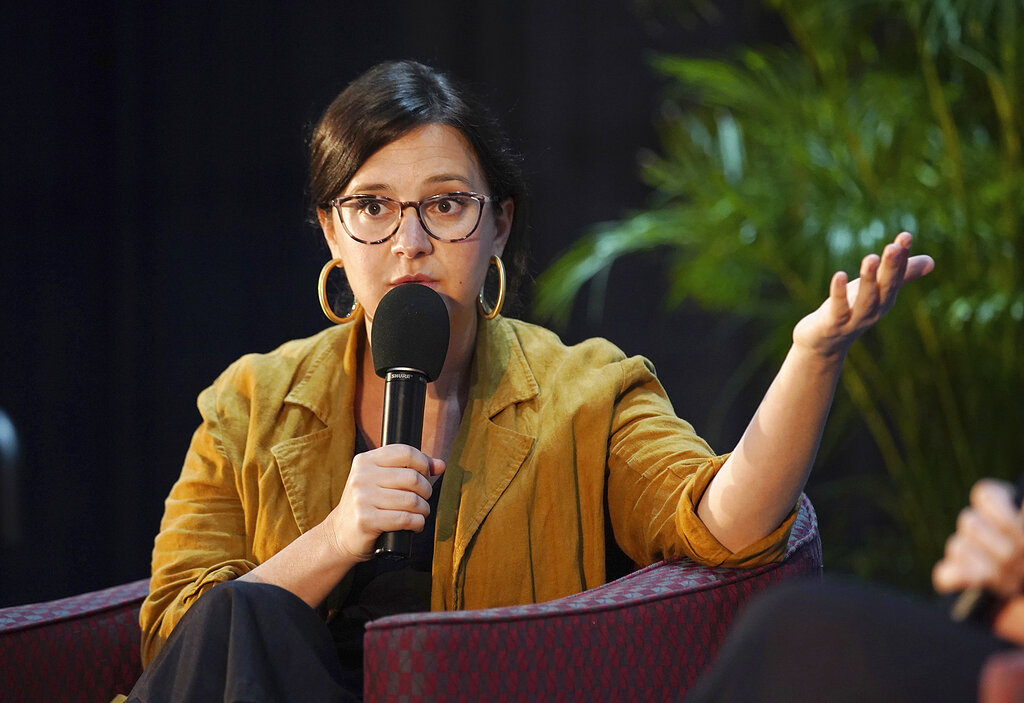
Bari Weiss has always been remarkably skilled at turning herself into the story. At CBS News, that instinct has become less an asset than a liability.
That was always the risk when David Ellison handed one of America’s most institutional news organizations to a journalist whose career has been built on argument, friction, and personal brand. The bet was audacious: that a figure forged in the Substack era could inject relevance and urgency into a legacy newsroom losing oxygen in a TikTok-shaped media environment. It was never going to be quiet. But it was supposed to be productive.
What’s changed since Weiss arrived is not simply that she has drawn controversy—that was inevitable—but that much of the consequential news emerging from CBS News has been about her, rather than the journalism she oversees.
To be clear, Weiss has not spent her tenure preening in public or deliberately courting attention. Some of the frenzy around her has come from leaks and from coverage that is openly hostile. You can reasonably argue that the intensity of the backlash is evidence of why she was hired in the first place: she challenges norms that much of legacy media treats as sacred. That context matters. But it doesn’t explain the pattern.
Weiss is not without credentials. She edited at The New York Times. She built The Free Press into a real media force. She made her name by challenging ideological conformity and giving voice to dissenting views at a moment when many legacy outlets felt flattened into a narrow worldview. To her admirers, she represented a necessary corrective.
But the fine print was always there. The Free Press, despite its rhetoric of independence, relied on backers largely aligned with one political pole—the kind of alignment that would raise alarms inside a traditional newsroom. And while Weiss has criticized President Donald Trump, her project has often been most forceful when aimed at liberal excesses. Heterodoxy that mostly punches in one direction starts to look less like independence than partisanship with better marketing.
Those ambiguities now live inside CBS News, where they are no longer rhetorical but operational. A newsroom is not a Substack. Its authority depends on shared process and institutional trust—not the force of a single voice, no matter how compelling.
Early signs of strain were revealing. There was the leaked interest in recruiting Bret Baier and Dana Perino—both under long-term contracts at Fox News—followed by reported outreach to CNN’s Scott Jennings. These were not serious negotiations. They were the media equivalent of a mood board: performative talent fantasies that confused buzz with leverage. Buzz is not a staffing strategy.
The much-hyped Erika Kirk town hall followed. It was earnest, carefully framed, and positioned as a signature moment—and it landed with a thud. The ratings lagged badly behind Kirk’s Fox News appearances, and even Weiss allies like Megyn Kelly accused CBS of exploiting the subject rather than illuminating her story. The lesson was blunt: attention does not automatically translate into authority.
Then came 60 Minutes.
Weiss’s decision to pull a fully vetted and promoted segment examining Venezuelan deportations to El Salvador’s CECOT prison—after five screenings, legal clearance, and taped introductions—crystallized the deeper problem. The issue wasn’t that she exercised her authority. It was how she did it, and the standard she articulated in doing so.
By treating the Trump administration’s refusal to participate as grounds to halt a finished investigation, Weiss effectively suggested a new rule: that silence can function as a veto. Once that principle is accepted, power quietly shifts from journalists to the subjects of their reporting. Stonewalling becomes strategy. Silence becomes leverage.
That is the kill switch.
Weiss’s conservative bona fides are well known. So is Paramount’s regulatory exposure. So are Donald Trump’s public attacks on CBS. None of that proves motive—but journalism does not operate in a vacuum where perception is optional. Institutions live or die on credibility, not intent.
A large share of the responsibility belongs to David Ellison. By installing a high-profile contrarian with a powerful personal brand at the helm of CBS News while Paramount seeks regulatory approval from a Trump-influenced FCC, Ellison placed Weiss in an almost impossible position. Every editorial decision was bound to be read through a political and transactional lens, regardless of intent. That was not an accident of timing; it was a structural choice. If the goal was to signal ideological recalibration to regulators while preserving institutional trust inside the newsroom, the tension was baked in from the start.
Weiss, for her part, willingly signed up for the job knowing it was high-profile, fraught, and unforgiving. She is now learning in real time that running a Substack — where authority flows from voice, argument, and audience loyalty — is fundamentally different from running a network news division, where authority is earned through process, restraint, and collective trust. That lesson may yet be absorbed. But CBS News cannot afford a prolonged apprenticeship conducted in public.
Weiss keeps becoming the story. CBS News needs someone who can make the news the story.
Those are not the same job.
This is an opinion piece. The views expressed in this article are those of just the author.
New: The Mediaite One-Sheet "Newsletter of Newsletters"
Your daily summary and analysis of what the many, many media newsletters are saying and reporting. Subscribe now!








Comments
↓ Scroll down for comments ↓