
Don Lemon, WaPo, Ozturk: Trump’s War on the First Amendment Now Alarmingly Clear

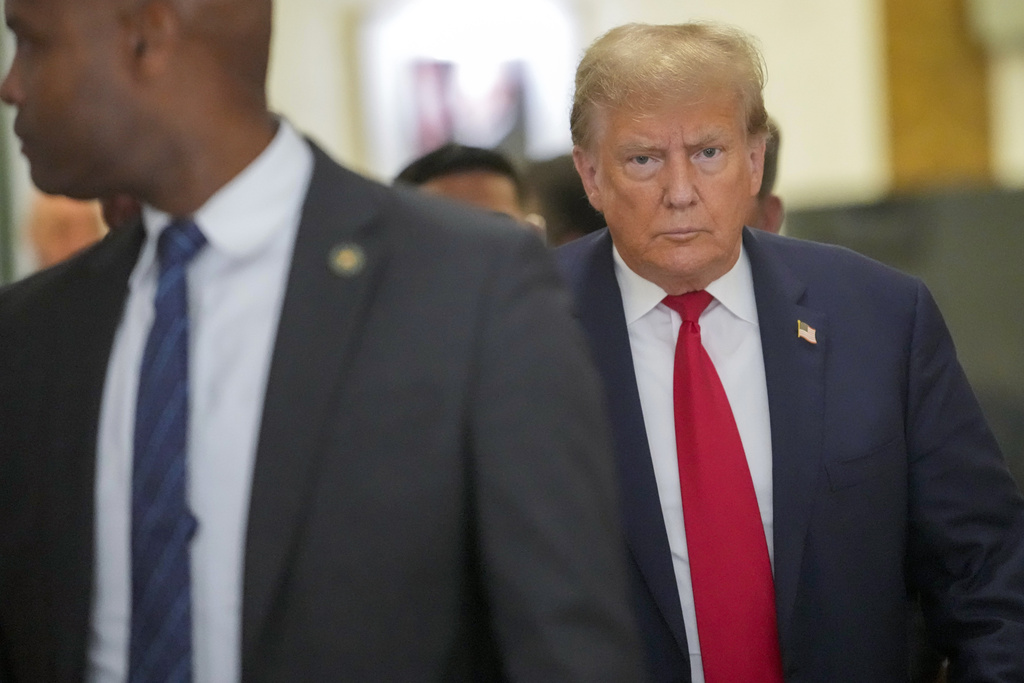
AP Photo/Mary Altaffer
In a functioning democracy, the federal government does not compile dossiers on students for their political views, threaten journalists with prison for covering protests, or seize reporters’ devices as a warning to sources. Yet all three have now come into focus in the United States, supported by newly unsealed court records and recent actions by the Trump administration.
Federal agents seized the phones and computers of a Washington Post reporter during a leak investigation tied to coverage of the administration. President Donald Trump publicly amplified calls to jail Don Lemon after Lemon livestreamed and reported from an anti-ICE protest inside a Minnesota church, while Justice Department officials openly discussed the possibility of criminal charges. And documents unsealed this week revealed that the Department of Homeland Security detained and sought to deport Rumeysa Ozturk, a Tufts University postdoctoral student, despite finding no evidence that she was antisemitic, supported terrorism, or incited violence. The conduct cited against her centered on an op-ed she wrote criticizing Israel.
Taken together, these episodes reveal a governing approach that should concern anyone who cares about constitutional rights and democratic stability. Different legal tools are being deployed toward a shared effect: increasing the personal and professional cost of speech, reporting, and political expression while preserving the appearance of normal governance.
The Ozturk case is especially clarifying because the internal record is now public. Department of Homeland Security memos show that investigators concluded Ozturk posed no security threat and espoused no extremist ideology. Her dossier focused largely on an opinion piece she wrote for a student newspaper calling for divestment from Israel, along with her presence at campus protests. Officials acknowledged internally that there were no alternative grounds for her deportation beyond a rarely used provision of immigration law loosely tied to foreign policy interests.
Those memos were forwarded to Secretary of State Marco Rubio, who personally approved the revocation of visas for five student activists last year. Government lawyers anticipated that the deportations might not withstand judicial scrutiny because much of the conduct cited was likely protected speech. A federal judge later agreed, ruling that the administration had illegally targeted the students based on their expression and describing the effort as an unconstitutional attempt to chill academic speech.
Immigration law plays a central role in this approach because it allows the government to act swiftly and with limited transparency. Detention and deportation proceedings carry fewer procedural protections than criminal cases and often unfold outside sustained public view. That combination makes immigration enforcement a powerful tool for imposing consequences without the friction that accompanies direct censorship.
A similar logic appears in the administration’s posture toward journalists. Lemon was not accused of organizing a protest or engaging in violence. He livestreamed and reported from an anti-ICE demonstration that passed through a church. In response, Trump reposted calls for Lemon to face decades in prison, and Justice Department officials floated the possibility of charges under statutes designed to address intimidation and violence. A federal magistrate declined to proceed, but the warning was delivered.
The seizure of a Washington Post reporter’s devices during a leak investigation reinforced that message. When federal agents take a reporter’s phone and computer, they do more than pursue a source. They signal to potential whistleblowers that contact with the press carries risk. Press freedom advocates and newsroom lawyers warned that the move could deter investigative reporting, and several editors described immediate changes in how sensitive sourcing was handled.
None of these actions required banning speech or shuttering news outlets. Each relied on discretion, enforcement choices, and uncertainty. Over time, that combination reshapes behavior more effectively than overt repression because it encourages people to internalize limits that were never formally imposed.
Corporate media companies have adapted in ways that further weaken institutional resistance. ABC and Viacom chose to settle lawsuits brought by Trump despite widespread skepticism about the merits. Current and former executives, speaking privately, describe heightened sensitivity to regulatory exposure during periods of consolidation and license review. One senior producer at a broadcast network said editorial meetings increasingly include discussions about political fallout that once sat far from core news judgment.
These adjustments carry consequences. Editors anticipate friction. Producers narrow focus. Stories that promise prolonged conflict without immediate payoff move more slowly or not at all. The shift rarely appears as an explicit directive. It emerges as caution.
Supporters of the administration argue that these episodes reflect routine law enforcement and regulatory oversight. Immigration statutes exist. Leak investigations exist. Protest-related laws exist. That defense warrants consideration. It also warrants scrutiny when enforcement repeatedly lands on speech, journalism, and political expression, and when internal government records acknowledge constitutional vulnerability.
The throughline is incentive-shaping. Influencing private risk calculations accomplishes more than winning public arguments. It produces restraint without requiring rules.
Alarm bells should be sounding across the partisan spectrum. This is no longer simply a question of loyalty to or opposition to a president. It is a question of whether Americans will accept a system in which speech remains legal while its exercise carries escalating personal consequences.
That framework does not belong to any ideology. Once normalized, it does not remain confined to one set of targets. Republicans who have warned about administrative overreach should recognize the precedent being set. Democrats who assume these tools will only ever be aimed in one direction should consider how quickly enforcement authority changes hands.
The Constitution protects speech because power cannot be trusted to decide which ideas are acceptable. When political expression becomes grounds for detention, investigation, or professional retaliation, rights weaken without any formal change to the law.
This is how democratic erosion unfolds. Institutions remain intact. Courts function. Elections proceed. The space for disagreement contracts as people adapt to pressure.
What is unfolding now fits that pattern too closely to ignore. It deserves attention while there is still time to respond.
This is an opinion piece. The views expressed in this article are those of just the author.
New: The Mediaite One-Sheet "Newsletter of Newsletters"
Your daily summary and analysis of what the many, many media newsletters are saying and reporting. Subscribe now!




Comments
↓ Scroll down for comments ↓