
Enough Is Enough

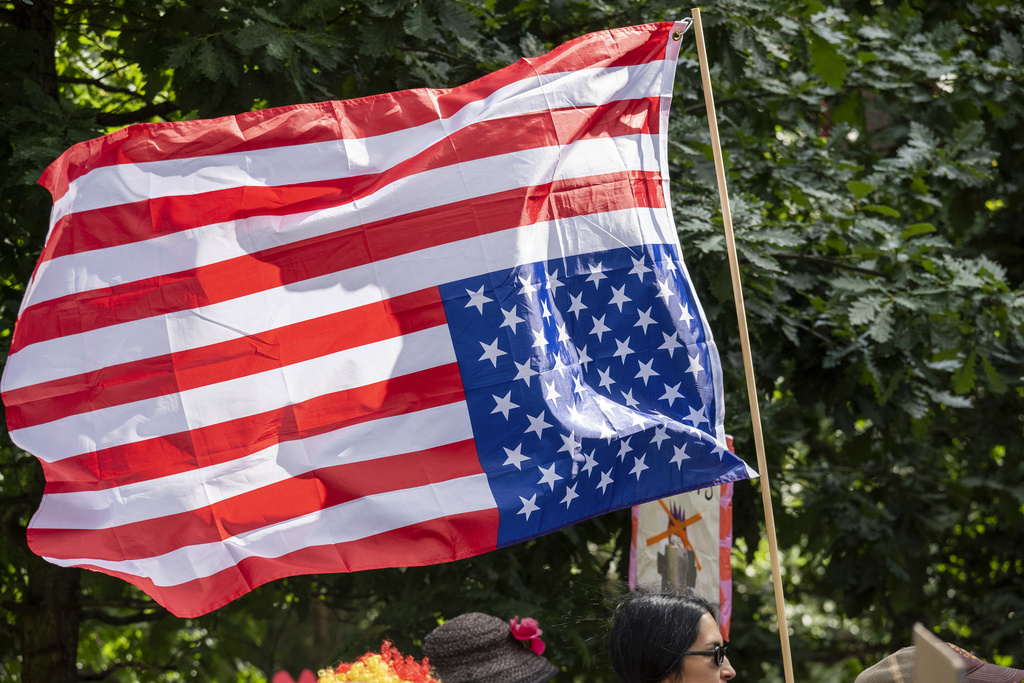
(Photo by Krisztian Elek / SOPA Images/Sipa USA)(Sipa via AP Images)
Last week, the United States extracted a foreign leader by military force without congressional authorization, federal agents shot a protester and were immediately defended before investigation, and the president threatened additional unilateral military action.
Taken together, they describe a presidency operating on the assumption that no one will intervene. That expectation is the point.
The Venezuela operation raised clear constitutional questions about war powers, but its significance goes beyond process. For decades, American foreign policy has rested on the idea that power is constrained by law, alliances, and institutional consent. Acting unilaterally, extracting foreign leaders by force, and threatening further military action without congressional involvement replaces that framework with something more destabilizing. It signals that force, rather than legitimacy, is becoming the organizing principle. That shift undermines U.S. credibility with allies and accelerates a global environment in which restraint is treated as weakness and unpredictability becomes policy.
This did not begin with President Donald Trump. Executive power has been expanding for decades with bipartisan acquiescence. Presidents of both parties have tested limits, bypassed Congress, and relied on creative legal theories to act unilaterally. What distinguishes the current moment is not the impulse to push boundaries, but the scale, speed, and brazenness with which those accumulated precedents are being exploited. Obama used drones and faced criticism but operated within executive branch legal frameworks. Trump extracts foreign leaders and announces it as fait accompli.
At home, the same logic is playing out through federal law enforcement. ICE agents are defended reflexively, before facts are known and before investigations are complete. Oversight is dismissed as obstruction. Questions are treated as attacks. Power is insulated first and examined later. This posture does not restore order. It accelerates conflict while signaling that escalation carries little risk.
The operating principle is explicit: Innocence is assigned through allegiance, not established through evidence. Ashli Babbitt, shot while breaching a barricaded doorway during the January 6 attack, is framed as a victim of unjust state violence. Renee Good, killed by an ICE agent in Minneapolis, is blamed for provoking her own death. The difference between martyrdom and culpability has nothing to do with what happened. It has everything to do with loyalty to the president.
State and local officials did not cover themselves in glory either. In Minneapolis, political leaders rushed to the microphones within hours, staking out partisan positions before investigations had even begun. That reflex deserves criticism. But the issue here is not rhetorical excess across the political spectrum. It is the concentration of coercive power at the federal level, and the expectation that it will be defended reflexively regardless of outcome.
What Americans are responding to is not any single incident. It is the accumulation. The sense that guardrails once assumed to be firm are no longer holding. Assertions of force are becoming routine. Institutional response is slow, conditional, or absent. Each episode is treated as a discrete controversy, managed and absorbed, even as the pattern grows clearer.
Congress has failed to assert its war powers authority regardless of which party holds the majority. Courts have moved cautiously or deferred to executive claims of national security. The institutional weakness that should check executive power is decades in the making
Ask yourself: If someone had described this week’s events five years ago—military extraction operations, federal agents using lethal force against protesters, presidential threats of additional force—would you have believed it could happen without immediate constitutional crisis? Add to that the Justice Department criminally charging the chairman of the Federal Reserve, an institution designed to operate independent of political pressure. The fact that it now feels almost normal is the crisis.
This recognition cuts across ideology. You do not need to oppose this administration’s agenda to see the danger. You only need to believe that power should be constrained, that institutions should matter, and that constitutional limits should be enforced rather than tested indefinitely.
Every member of Congress, every federal judge, every military officer, and every naturalized citizen has taken the same oath. Not to a party. Not to a president. Not to a political movement. To the Constitution of the United States.
That oath is not ceremonial. It is a binding commitment that matters precisely in moments like this, when power tests limits and institutions hesitate. Veterans who swore that oath recognize what is at risk when military force is deployed without authorization. Judges understand the stakes when executive action is defended before facts are established. Citizens who chose this country know what is being lost when constitutional constraints are treated as negotiable. The question is not whether you supported this administration or opposed it. The question is whether the oath still means something.
The American protest infrastructure has evolved to accommodate dissent without demanding a response. Permits are issued. Marches are contained. Outrage is expressed and absorbed. This is not a failure of protesters. It is a feature of a system that has learned how to metabolize opposition while continuing to function unchanged.
What is required now is presence that cannot be metabolized or ignored.
That does not mean chaos or lawlessness. It does not mean random street blockades or provocation for its own sake. It means sustained, concentrated civic presence directed at institutions themselves—showing up day after day, at congressional offices, courthouses, state capitols, with the same demands, until delay is no longer a viable strategy and response becomes unavoidable. Duration and persistence matter more than spectacle.
This does not require ideological unity or agreement on every policy question. It requires a shared refusal to accept the normalization of unchecked executive power. It requires citizens willing to insist, repeatedly and visibly, that constitutional limits still mean something in practice.
This is the test of whether concern remains rhetorical or becomes consequential. Americans already understand what is happening. The question is whether that understanding translates into sustained pressure that institutions cannot ignore or simply wait out.
Power is operating on a familiar assumption: that outrage will peak, expression will follow, and normal life will resume. That delay will blunt urgency. That escalation will be absorbed, as it has been before.
Constitutional limits do not enforce themselves. They are enforced only when citizens insist that institutions honor them, not symbolically, but materially. When the cost of ignoring that insistence becomes greater than the cost of responding.
Show up. Stay. Make Congress vote. Make courts rule. Make state governments choose between complicity and resistance. Impose cost on inaction until institutional response becomes unavoidable.
The Constitution will mean exactly as much as you are willing to fight for it. Nothing more. Nothing less.
Enough is enough.
This is an opinion piece. The views expressed in this article are those of just the author.
New: The Mediaite One-Sheet "Newsletter of Newsletters"
Your daily summary and analysis of what the many, many media newsletters are saying and reporting. Subscribe now!









Comments
↓ Scroll down for comments ↓