The Mueller Report Was Never a Hoax. It Was a Warning.

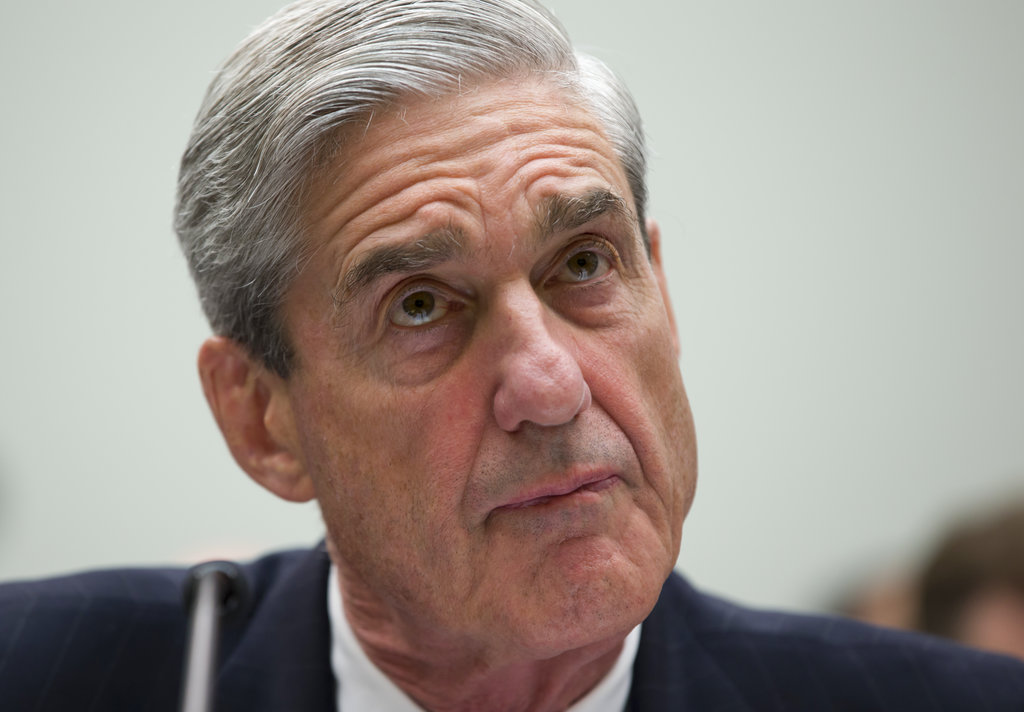
(J. Scott Applewhite/AP photo)
Robert Mueller’s death has revived an argument many had quietly set aside. Not because the facts have changed, but because they have faded. In the years since his report, the investigation into Russia’s interference in the 2016 election has been reduced to a pair of competing slogans. “No collusion” on one side. “Not exonerated” on the other. The details — and they matter — have been lost to narrative shorthand.
Even now, seven years later, revisiting it carries a cost. Write about Mueller honestly — not as martyr, not as villain — and you invite attack from both directions. The left wants vindication. The right wants dismissal. The actual record, which is more complicated and more damning than either camp allows, has become its own kind of third rail.
“Not exonerated” was the more legally precise claim — Mueller said it explicitly on obstruction — but it never achieved the same cultural velocity. “No collusion” traveled further and hit harder, and that asymmetry is the story.
Because the shorthand both sides rely on rests on the same distortion. “No collusion” was never the conclusion of Mueller’s report. It was the political translation of its limits. And that translation didn’t spread on its own.
Mueller’s career stands in sharp contrast to the rhetoric that now surrounds him. A decorated Marine officer who earned a Bronze Star for valor and a Purple Heart in Vietnam, he went on to serve presidents of both parties at the highest levels of American law enforcement. As FBI director, appointed by George W. Bush and later asked by Barack Obama to extend his tenure, he rebuilt the bureau after 9/11 into a modern intelligence agency while navigating the tension between national security and civil liberties. He was a Republican of an older mold, defined less by ideology than by institutional loyalty and a rigid sense of duty. Across decades in public life, his reputation was for discipline, restraint, and an almost stubborn commitment to the rule of law.
That is the man President Donald Trump reacted to within minutes of his death by writing, “Good, I’m glad he’s dead.”
The sentiment is not incidental. It reflects a now-mainstream position on the right: that Mueller’s investigation was a hoax, a partisan effort designed to undo a presidency. That claim did not emerge from the evidence. It emerged from the absence of a definitive prosecutorial conclusion — and from a sustained effort, reinforced across institutions, to define that absence before anyone else could.
Start with what Mueller actually established.
Russia carried out a coordinated intelligence operation to influence the 2016 election. Russian military intelligence hacked Democratic emails and released them through WikiLeaks in strategically timed waves. A Kremlin-backed troll farm flooded American social media with disinformation designed to inflame divisions and boost Trump’s candidacy. The effort was directed by figures tied to the Russian state and aimed, explicitly, at helping Trump and hurting Clinton.
The Trump campaign did not simply exist alongside that effort. It engaged with it in ways that are difficult to dismiss. A campaign adviser was told in advance that Russia possessed damaging emails. Senior campaign officials agreed to a meeting after being told the Russian government wanted to help. Roger Stone, a longtime Trump adviser, worked to anticipate the WikiLeaks releases that U.S. intelligence had traced to Russian hacking operations, and kept campaign leadership informed as they approached.
The most consequential channel ran through Paul Manafort. As campaign chairman, he shared internal polling data and strategic insights with Konstantin Kilimnik, a longtime associate whom the U.S. government later identified as a Russian intelligence services agent. The Republican-led Senate Intelligence Committee called this relationship a “grave counterintelligence threat.” Internal campaign data is among the most sensitive assets in modern politics. Passing it to a figure linked to a hostile intelligence service is not a trivial contact. It is the kind of vulnerability counterintelligence officials are trained to detect and disrupt.
None of this resulted in a charged criminal conspiracy. Mueller concluded the evidence did not meet that threshold. That finding became the foundation for the claim that the entire investigation was a hoax.
But that claim only works if you collapse a legal judgment into a factual one — and if you ignore the sustained effort to make that collapse feel inevitable.
Mueller’s restraint is what created the opening. He refused to say more than he could charge. He declined to subpoena the president and accepted written answers that were largely nonresponsive. He laid out substantial evidence of obstruction and chose not to make a traditional charging decision, citing Justice Department policy. By refusing to translate a dense factual record into a clear prosecutorial judgment, he left a vacuum.
That vacuum didn’t stay empty for long. Trump filled it with a single phrase, repeated relentlessly: “no collusion.” Fox News treated it as settled history. Republican lawmakers who had access to the underlying intelligence declined to challenge it. The Senate Intelligence Committee — the same body that called the Manafort-Kilimnik relationship a grave counterintelligence threat — watched its findings get absorbed into a narrative that rendered them irrelevant. Institutions with access to the record amplified the simpler story instead.
Over time, repetition did what evidence alone could not. It collapsed a legal standard into a factual claim. No charge became no conduct. No conspiracy became no connection. A complex counterintelligence finding was reduced to a talking point.
That is how the word “hoax” entered the mainstream. Not through honest engagement with Mueller’s findings, but through a sustained effort to bury them. The gap between what is known and what is claimed is not a matter of confusion.
It does not describe the investigation Mueller conducted. It describes the success of the campaign built to discredit it.
The reaction to his death shows how complete that transformation has been. A lifetime of public service is reduced to a punchline. A documented foreign intelligence operation is recast as a partisan invention.
The facts are more stubborn than that.
Russia interfered. The Trump campaign was not a passive bystander. And calling the investigation a hoax requires ignoring not just Mueller’s findings, but those of the Republican-led Senate committee that confirmed them — and then watched quietly as they were erased.
Mueller proved far more than his critics admit. The forgetting was deliberate.
This is an opinion piece. The views expressed in this article are those of just the author.
New: The Mediaite One-Sheet "Newsletter of Newsletters"
Your daily summary and analysis of what the many, many media newsletters are saying and reporting. Subscribe now!









Comments
↓ Scroll down for comments ↓