
The Pam Bondi Hearing Sh*tshow Was a Perfect Display of a Broken Government

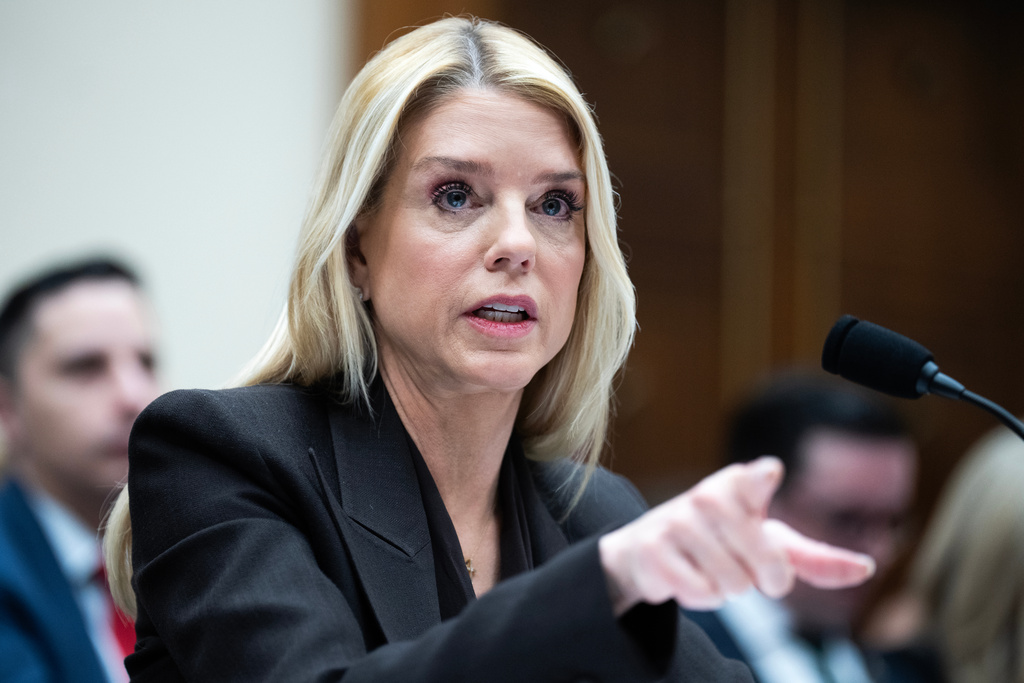
(Tom Williams/CQ Roll Call via AP Images)
The Pam Bondi hearing was the latest and most vivid proof that the American government is broken.
Not broken in the dramatic, smash-the-glass sense. Broken in the way that matters more: everyone performed their role, the machinery ran on schedule, and nothing of substance was accomplished. The flags were up, the cameras were live, and oversight was reduced to a staged fight in which both sides walked away claiming victory to separate audiences.
Bondi did not testify like a witness intent on clarifying the record. When pressed about matters tied to Jeffrey Epstein, she pivoted into familiar grievances about partisan persecution and the supposed exoneration of President Donald Trump, reframing pointed questions as extensions of old political vendettas.
At other moments she laced her answers with open praise for Trump that sounded less like legal argument than public affirmation. The cumulative effect was unmistakable. Her testimony seemed calibrated to reassure an audience beyond the committee room.
Trump’s Truth Social post afterward removed any doubt. He hailed her as “fantastic,” cast the hearing as another iteration of “Russia, Russia, Russia,” attacked Democrats as “slimeballs,” and even used the moment to swipe at a Republican congressman. The hearing became a prop in a larger narrative about loyalty and grievance. Bondi’s appearance functioned as a signal that was promptly received and rewarded.
Democrats, for their part, telegraphed that they expected little candor. One member after another used their time to lay out extended narratives about corruption, democratic norms, and the stakes of the moment, often consuming most of their allotment before a sustained back-and-forth could begin. Questions arrived framed as closing arguments. When Bondi deflected, the exchange frequently moved on rather than tightening. The structure of the hearing allowed members to document the dodge without meaningfully cornering it.
The pattern was clear without anyone needing to say it aloud. Each side spoke primarily to its own constituency. Bondi demonstrated allegiance. Democrats documented resistance. The cameras captured it all. What the public received was a sequence of clips rather than a clarified record.
The two sides were not arguing over the same set of facts. They were narrating different events to audiences that would never compare notes. Oversight requires a shared evidentiary baseline. This hearing made clear that no such baseline exists.
This is how a system malfunctions while appearing intact. The gavels fall. The transcript grows. Yet the central purpose of oversight — to narrow ambiguity and establish a foundation for consequences — recedes. Executive branch actors learn that deflection carries little immediate risk. Lawmakers learn that forceful messaging carries more reward than incremental illumination.
The Bondi hearing fit squarely within the broader drift from accountability to performance that now defines congressional oversight. The ritual remains. The leverage weakens. Over time, the expectation that a hearing might meaningfully check power fades from both participants and observers.
What unfolded was not a singular outrage. It was a diagnostic. Congress can still summon a witness. It struggles to compel a straight answer. A witness can withstand hours of questioning and emerge publicly praised by the political figure whose interests were most implicated. If that pattern hardens, hearings will continue to generate headlines while leaving power structurally undisturbed.
The worst part isn’t that the hearing was a waste of time. It’s that nobody was surprised. When the public stops expecting hearings to produce answers, Congress loses the one thing that made oversight dangerous in the first place.
This is an opinion piece. The views expressed in this article are those of just the author.
New: The Mediaite One-Sheet "Newsletter of Newsletters"
Your daily summary and analysis of what the many, many media newsletters are saying and reporting. Subscribe now!








Comments
↓ Scroll down for comments ↓