
Trump, Venezuela, and America’s Descent Into ‘Might Makes Right’

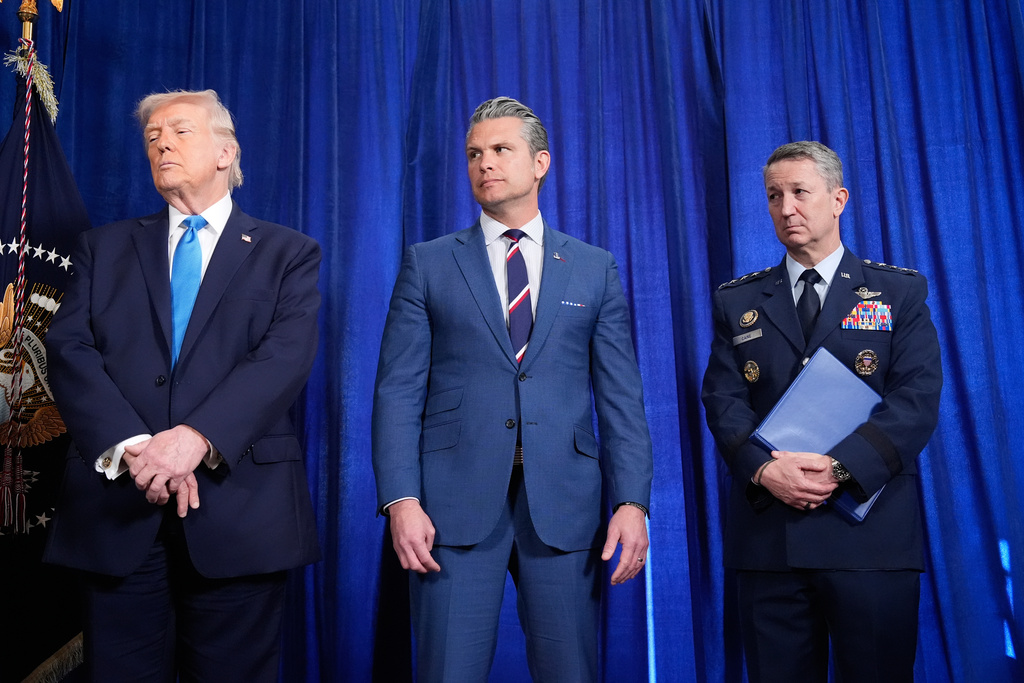
(AP Photo/Alex Brandon)
There was a time when American power at least felt obligated to explain itself.
Even when U.S. military interventions were legally dubious or strategically incoherent, they arrived wrapped in language: humanitarian necessity, international norms, shared security. The explanations were often thin and sometimes cynical, but they served a purpose. They preserved the idea that power was supposed to answer to something beyond itself.
What feels different now is not unilateral action. The United States has acted alone before. What is different is that we have stopped pretending the rules apply to us. We have stopped pretending there are rules.
This weekend, under the orders of President Donald Trump, the United States launched a brief military operation in Venezuela, striking targets in Caracas and capturing President Nicolás Maduro and his wife, who were flown to New York to face federal charges. The operation was conducted without congressional authorization or international approval. In the aftermath, administration officials did not bother with legal justification. They did not invoke international law. They asserted authority.
On Meet the Press, Secretary of State Marco Rubio explained it plainly: “This is the Western Hemisphere. This is where we live”. Geography plus power equals legitimacy.
No one challenged him. Kristen Welker did not ask a follow-up. The assertion passed without scrutiny. On one of the most important Sunday shows in American politics, a sitting Secretary of State claimed hemispheric authority by virtue of power alone, and it was treated as banal. That moment matters more than the operation itself. What Rubio articulated was reality stated plainly: the explicit rejection of the system meant to constrain power.
Rubio didn’t just fail to justify the operation normatively — he could not identify any legal authority for it. When pressed on This Week by George Stephanopoulos, he offered no treaty, statute, or constitutional provision empowering unilateral military action or regime removal. As I wrote yesterday, this omission wasn’t an oversight but a reflection of the constitutional breakdown at the heart of the administration’s claim: there is no clear legal basis for seizing a foreign president without congressional approval or international mandate. Yet on Sunday television, that absence of law went entirely unnoticed.
The post–World War II international order was built on a single, radical premise: might does not make right. The United Nations Charter, the Geneva Conventions, and the broader architecture of international law existed to prevent exactly this logic from returning. The system was imperfect, often hypocritical, and frequently violated. But it mattered that violations required explanation. It mattered that power felt compelled to justify itself, even badly.
What happened on Sunday marked abandonment. Rubio was not defending a violation of the system. He was rejecting the system itself.
At that point, I found myself thinking back to a Western Civilization class I took as a sophomore at the University of Kansas.
One of the earliest ideas we studied was the organizing principle of the pre-democratic world: might makes right. Before law, before consent, power justified itself. The strong ruled because they could.
Plato captured this worldview through figures like Thrasymachus and Callicles, who argued that justice was nothing more than the advantage of the stronger. Rules were conveniences imposed by power. When power shifted, justice shifted with it.
My professor illustrated the idea with a parable. The eagle hunts the sparrow. The sparrow does not hunt the eagle. No one accuses the eagle of injustice. Nature does not apologize. Ancient politics did not either. Dominance was its own moral logic.
Democracy represented a rejection of that premise. Strength alone was no longer a claim to rule. That rejection made modern politics possible.
The response to Venezuela shows how quickly that logic can return.
Across the administration and its allies, the same worldview surfaced in different forms. Rubio spoke in the language of hemispheric entitlement. Defense Secretary Pete Hegseth framed military force as law enforcement, war as policing. Senator Lindsey Graham praised the operation and floated occupation as a reasonable outcome. Conservative commentator Matt Walsh, writing on X to a large following, stripped away even the pretense, calling it a war for oil and asking why the United States should allow a weaker country to control resources it has the power to take.
Different voices. Same premise. Power creates its own permission.
This did not come out of nowhere. Donald Trump has long been openly impressed by strongman leaders who exercise power without apology. He has praised them not despite their brutality, but because of it. Trump has consistently framed Russia’s invasion of Ukraine as the predictable result of power dynamics rather than illegal aggression, and he has pressured President Volodymyr Zelensky to accept deeply lopsided peace terms on the grounds that Vladimir Putin “has all the cards.”
Power, in this telling, does not merely explain outcomes. It justifies them.
That logic is now being normalized as American foreign policy. If having the cards makes you right, invasion becomes strategy, domination becomes realism, and resistance becomes naïveté. What once would have been condemned as naked aggression is recast as common sense. The strong act. The weak adjust.
Venezuela follows directly from a principle Trump has endorsed consistently: that strength confers legitimacy, that law is subordinate to leverage, and that outcomes should favor whoever can impose them. What is new is not the instinct, but its elevation from personal admiration to public doctrine.
What should stop us cold is who accepted that premise without resistance. Elite media treated it as unremarkable. The political establishment offered no objection. Mainstream Republicans echoed it. This was institutional normalization in real time.
This is where the forest disappears behind the trees. The daily Trump spectacle, the insults, the chaos, the noise—all of it distracts from the fact that something far more consequential just happened. The United States publicly declared that international law does not bind its power, and almost no one seemed to notice.
This marks a rupture.
Western Civilization taught me that rejecting might makes right was one of humanity’s great achievements. Democracy and law were not inevitable. They were hard-won responses to the violence that follows when power stops answering to anything but itself.
Once power stops justifying itself abroad, it does not restrain itself at home. When the Secretary of State says the Western Hemisphere belongs to American authority, he is not only talking about Venezuela. He is articulating a worldview that applies wherever American power can reach.
Including here.
This is an opinion piece. The views expressed in this article are those of just the author.
New: The Mediaite One-Sheet "Newsletter of Newsletters"
Your daily summary and analysis of what the many, many media newsletters are saying and reporting. Subscribe now!





Comments
↓ Scroll down for comments ↓