Trump ‘Politicizes’ DOJ, Creating an ‘Erosion in Faith’ With Judges and Grand Juries, NY Times Reports

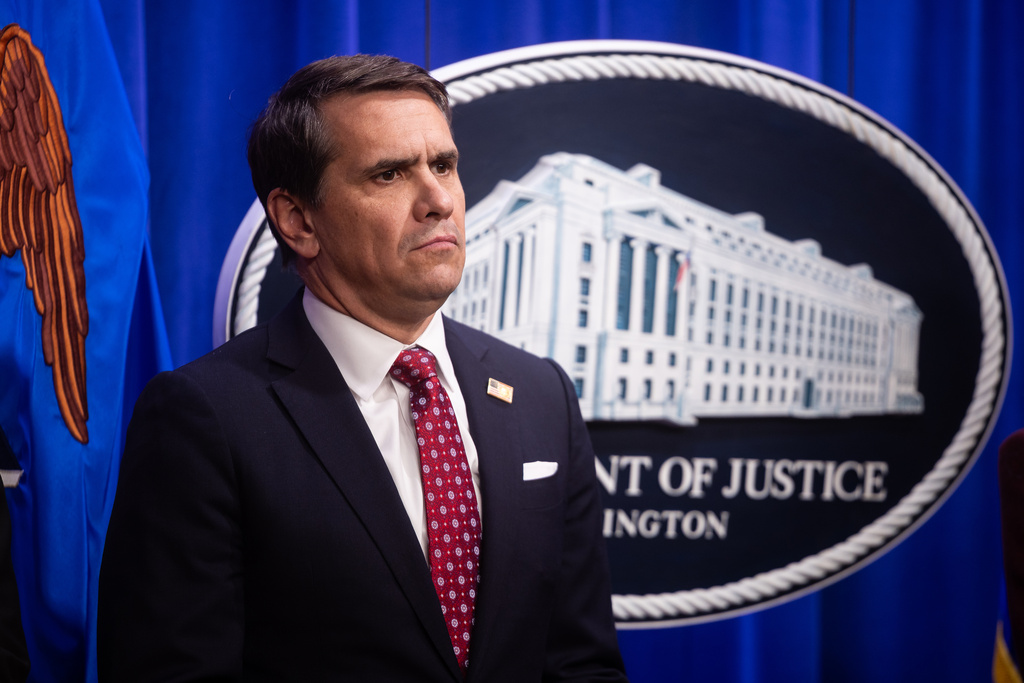
Francis Chung/POLITICO via AP Images
President Donald Trump has pushed a politicized agenda at his Department of Justice, leading to prosecutors pursuing “weak cases” that have created an “erosion in faith” with judges and grand juries, The New York Times reported Tuesday.
During Trump’s second term, his DOJ has repeatedly sought to prosecute the president’s political foes, but has often come up short — not just in getting convictions, but also in even being able to get a case to survive until trial.
Notable examples include the cases against former FBI Director James Comey and New York Attorney General Letitia James, both of which were dismissed after a judge ruled that Trump’s appointee to head the Eastern District of Virginia office, his former attorney Lindsey Halligan, was improperly appointed.
In both those cases, federal prosecutors then tried again, but grand juries repeatedly refused to indict either Comey or James.
The DOJ has since brought a new indictment against Comey for his Instagram post showing seashells that spelled out “86 47,” but legal experts across the political spectrum have panned the case as fundamentally “weak” on both the facts and law.
Even the cases that manage to get to trial have frequently ended up with black eyes for the DOJ. In November, a Washington, D.C., jury found a man who had tossed a Subway sandwich at an ICE agent not guilty for a federal misdemeanor assault charge for allegedly “assaulting, resisting, opposing, impeding, intimidating and interfering with a federal officer” — and that was after the grand jury had refused to indict him for the felony charge then-Attorney General Pam Bondi had publicly bragged about.
Last year, federal magistrate judge Zia Faruqui lambasted the DOJ in a written opinion for the way rampant errors were becoming an unfortunate pattern for federal prosecutors, leading to more than one out of every five criminal cases brought by the U.S. Attorney’s Office in D.C. being dismissed; the dismissal rate for the previous decade had been a minuscule 0.5%.
The Times report by Alan Feuer described how Trump’s DOJ “has had serious difficulties presenting cases to grand juries, running into problems that would have seemed unthinkable a year ago,” with prosecutors “repeatedly fail[ing] to persuade grand juries that the cases they have brought warrant criminal charges” and even being “admonished at least three times since last November by federal judges who have accused them of misconduct.”
It “used to be essentially unheard-of” for DOJ prosecutors to fail to get grand juries to indict, also known as “no true bills,” wrote Feuer, because of “the amount of sway that prosecutors have in the grand jury room and the department’s adherence to a tradition of seeking charges only in cases with strong evidence,” but during Trump’s second term, “there has been a flurry of no true bills in federal courts across the country.”
A case against four Democratic activists who were facing charges for a protest at an ICE facility in Chicago was dismissed earlier this month when the judge “cited a remarkable list of grand jury errors,” wrote Feuer:
The blunders shocked the judge, April M. Perry, who recounted from the bench on Thursday how prosecutors had spoken to grand jurors outside the grand jury room — a major breach of protocol — and had improperly coached them that the evidence they had presented was particularly strong.
The prosecutors also stacked the deck in their own favor by removing from the panel some grand jurors who had voted against them when considering an earlier version of the charges. Making matters even worse, they tried to hide these maneuvers by redacting the grand jury transcripts — that is, until Judge Perry ordered them to give her the full copies.
The government’s missteps were bad enough to necessitate tossing out the case against the critics of the president’s immigration plan just days before it was supposed to go to trial.
This case illustrated the result from Trump demanding the prosecution of his political opponents, wrote Feuer, and “prosecutors have felt pressure to push weak cases through grand juries,” which “has led to an erosion in faith in the Justice Department by both the grand jurors themselves and the judges considering the cases.”
Judge Perry scolded the DOJ in court, saying that the “trust has been broken” between the courts and federal prosecutors, because of a growing list of incidents that had reversed the long-standing “presumption of regularity” — the legal doctrine where the courts operate under the assumption that prosecutors and other government officials are acting in good faith and their legal filings and representations to the court can be trusted.
There aren’t really any statistics measuring when federal prosecutors get admonished by judges for grand jury misconduct or fail to secure indictments, Feuer noted, “if only because such events used to be rare,” but it has been happening with increasing frequency, and it’s triggering judges to take a closer look at grand jury proceedings that used to be largely allowed to proceed with little scrutiny.
One key cause of the problems facing Trump’s DOJ, Feuer pointed out, is how there has been a mass exodus from the department, leading to an agency-wide loss of institutional knowledge and rookie prosecutors pushed to take bigger roles than they would have in the past, even leading cases. Some of the departures have been voluntary, with prosecutors turning in their resignations over disagreements about the DOJ’s direction.
Other DOJ attorneys have been fired, either “because they were forced out for having worked on cases that ran afoul of the president” before he was re-elected or because they refused to participate in the politicized prosecutions he wanted.
New: The Mediaite One-Sheet "Newsletter of Newsletters"
Your daily summary and analysis of what the many, many media newsletters are saying and reporting. Subscribe now!






Comments
↓ Scroll down for comments ↓