Ric Grenell Ran the Kennedy Center Into the Ground and Is Getting the Embarrassment He Deserves

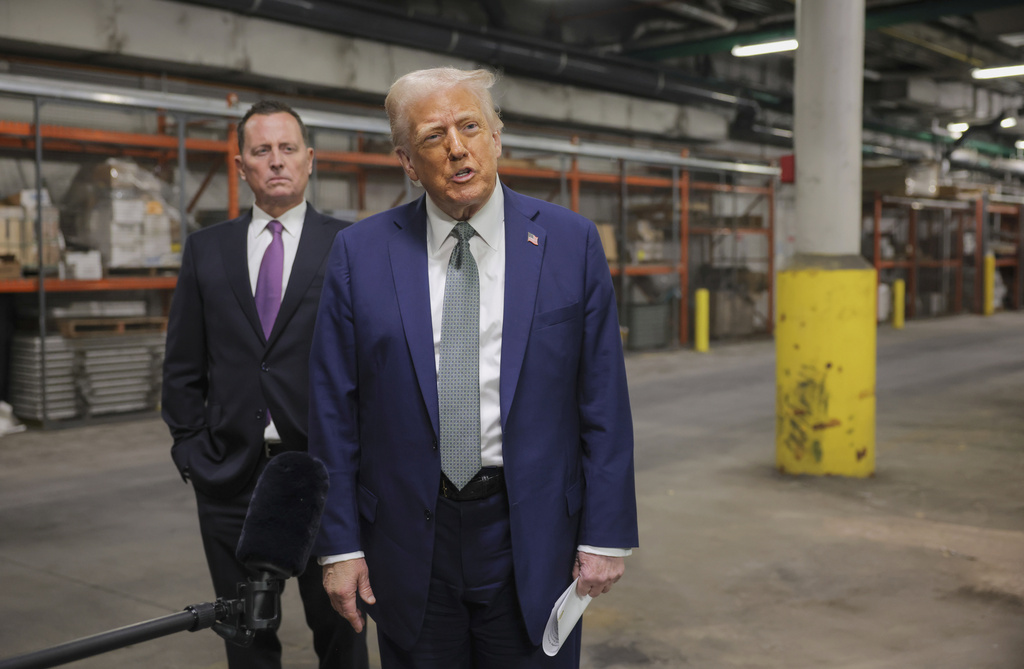
(Pool via AP)
Ric Grenell failed spectacularly. He ran the Kennedy Center into the ground, the artists left, the events dried up, and the building is now closing for two years. He has earned every bit of the derision he is now facing.
This was always going to happen because Grenell was never truly charged with running a cultural institution. He was running a new flank in Trump’s culture war, and a clumsy one at that — installed by an administration that assumed the same authoritarian playbook used on federal agencies and government watchdogs would work just as well on the performing arts.
It does not work on the performing arts. Artists are not bureaucrats. They cannot be reorganized, reassigned, or threatened into compliance. They can simply decide not to show up, and when enough of them make that decision, the most prestigious stage in the country becomes an empty room.
The naked ambition of the whole project was visible from the beginning. This was the administration that decided a living memorial to an assassinated president — a building literally created by an act of Congress as a monument to John F. Kennedy — should be rebranded with President Donald Trump’s name attached to it. The Trump-Kennedy Center.
That is not a culture war. That is something closer to a hostage situation, and the arts community read it exactly that way.
And when the board met Monday to ratify the closure, Trump made clear how seriously he takes the governance process he imposed on the institution. “It’s a little late for the board,” he said as the meeting was convening, “because we’ve already announced it. These are minor details.” The congressional members whose participation is mandated by law were allowed to attend but not allowed to vote. A federal judge had to order the administration to turn over renovation documents before the meeting. This is what institutional capture looks like from the inside.
The signal was not subtle. The institution had been seized, the mission had been subordinated to politics, and the man put in charge of the whole operation was Ric Grenell, a career loyalist whose primary qualification was his willingness to do whatever the moment required in service of whoever was signing the checks.
It is worth pausing on what Grenell actually signed up for here, because it was not a small thing. He accepted a role that required him to stand in front of the country and defend the proposition that a building named for a martyred president should be renamed for a living one — and he did it without visible hesitation or embarrassment. That is the kind of loyalty that has no bottom.
Grenell was handed a shit sandwich and he ate it in public and told everyone it tasted great, which is either a remarkable act of self-abnegation or a remarkable act of self-delusion, and at this point the distinction barely matters. What matters is that he did it willingly, enthusiastically, and on camera, and the result is the wreckage now sitting on his résumé.
What followed was entirely predictable if you understood anything about how the performing arts world actually functions. It runs on relationships, on reputation, on the informal trust networks that determine where artists choose to bring their work. It is, in this sense, almost perfectly designed to resist the kind of political capture the administration attempted.
You cannot intimidate a soprano into performing. You cannot gaslight a conductor into ignoring what his colleagues are telling him. Word spreads the way it always spreads in that world — person to person, quietly and quickly — and what spread was the entirely accurate message that the Kennedy Center had become a political project rather than a cultural one.
Grenell’s response to the exodus was to insist it wasn’t happening, and then to insist it was happening but was the media’s fault. CNN and the Washington Post, he claimed, were personally calling performers and orchestrating a boycott. This is the kind of allegation that sounds like a strategy and functions like a confession — it tells you that the person making it has no actual answer to the underlying problem and is hoping the accusation itself will change the subject. It did not change the subject. Artists kept leaving. Productions kept withdrawing. The calendar kept thinning. The gaslighting continued regardless, because that is the only tool Grenell brought to the job.
And now the building is closing for two years — for renovations, officially, which may even be partly true, since the structure is more than fifty years old and large institutions do require maintenance. But the timing has a particular quality to it. The closure was announced in the middle of an extended period during which the venue was visibly struggling to fill its schedule, and it arrives as a remarkably convenient explanation for a calendar that had already become difficult to defend.
A shuttered theater does not need to book artists. A dark building draws far less scrutiny than a thinning one. Shortly after the closure announcement came the news that Grenell was out, which was presented as a separate development and did not feel like one.
Trump himself provided the most clarifying moment of the entire episode. Asked about Grenell’s departure as the board meeting was convening, he said: “There was a story he got fired; he didn’t get fired.” This is the same administration that insisted the artists weren’t really leaving, that the media was orchestrating the boycott, that the calendar was fine. The denial reflex is not a communications strategy at this point. It is a reflex, and it applies to everything, including the obvious.
What Grenell never grasped — what the administration apparently still does not grasp — is that cultural institutions do not operate on the logic of political power. Prestige in that world is not conferred from above. It is built slowly, through relationships and programming and the accumulated credibility of decades, and it can be destroyed with remarkable speed by anyone who treats it as a political prop. Grenell treated it as a political prop. The institution’s reputation paid the price.
The damage, according to people who actually know how these institutions work, will not be repaired quickly. Deborah Borda, the president emerita of the New York Philharmonic and someone who has overseen major renovations at both Walt Disney Concert Hall and David Geffen Hall, submitted a sworn declaration warning that the performers removed from the schedule will find alternative venues and not return quickly, that departing staff will be difficult to replace, and that donors who redirect their giving will develop new institutional loyalties. She called the harms “severe” and “immediate,” and warned they “cannot be quickly reversed.” That is not a political opponent talking.
That is one of the most respected figures in American performing arts, testifying under oath about what Grenell’s tenure actually produced.
Grenell had his shot. The building is closing, the artists walked away, and he is out of the job he was given to run. The result is not mysterious. It is the predictable outcome of treating a cultural institution like a political prop.
This is an opinion piece. The views expressed in this article are those of just the author.
New: The Mediaite One-Sheet "Newsletter of Newsletters"
Your daily summary and analysis of what the many, many media newsletters are saying and reporting. Subscribe now!








Comments
↓ Scroll down for comments ↓