Trump’s Family Is Helping Foreign Governments Buy CNN. No One Can Stop Them.

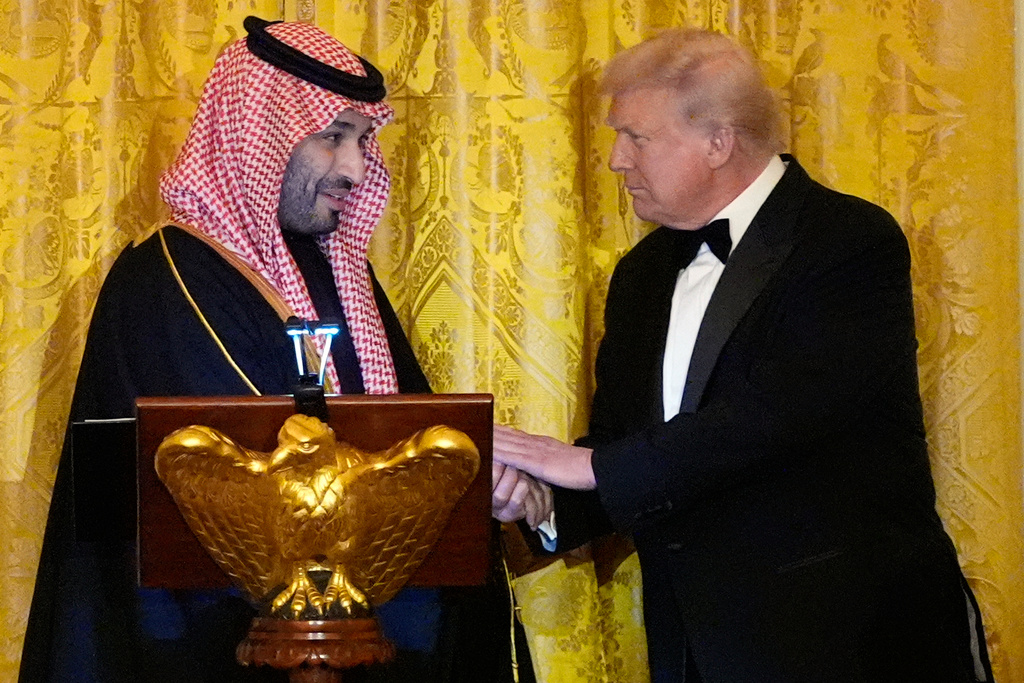
(AP Photo/Alex Brandon)
Imagine if Hunter Biden were helping assemble billions in Saudi and Qatari financing so a progressive media owner could take over Fox News while quietly assuring the White House that he planned to replace hosts and reshape the network’s direction. The national reaction would be immediate. Congressional hearings, emergency ethics panels, a weeklong media frenzy.
Now consider what is actually happening. The developing Paramount–Skydance effort to acquire Warner Bros Discovery involves outreach to sovereign wealth funds in Saudi Arabia, Qatar, and the UAE. Reuters reported that Jared Kushner helped connect David Ellison’s team with those funds as they explored financing options for a potential hostile bid. These investments are not confirmed or finalized, and Axios has reported that the foreign investors “have agreed to forgo any governance rights – including board representation – associated with their non-voting equity investments.”
Even still, the implications are serious. When foreign state wealth approaches an acquisition that includes a major American news institution, the public deserves visibility. When the president’s son-in-law is involved in those introductions, the stakes are far higher.
The point isn’t that these situations are identical. It’s that our outrage is bizarrely asynchronous and selective when the structural threat is constant.
The Wall Street Journal reported that Ellison told President Donald Trump he planned sweeping changes at CNN if his takeover succeeded. This is not rumor. It is sourced reporting and has not been disputed by the principals. If accurate, it reflects something the country is unprepared to confront. A potential buyer of a news organization offered political value to a sitting president in the middle of a high-stakes media consolidation effort. And yet? Crickets from most major news outlets.
This is not a narrow corruption story. It is much worse — evidence of a structural weakness in the American democratic system that has only recently been exposed, and shockingly ignored. The United States has few meaningful guardrails preventing political families, foreign sovereign wealth, and corporate acquirers from converging inside a transaction that reshapes national news.
That is media capture in the modern sense. It rarely looks like censorship. It looks like a phone call before a regulatory decision. A meeting that never happens because someone signals it shouldn’t. A tonal shift in coverage that feels organic but reflects the results of pressure nobody documented and nobody needed to. Influence that is subtle, diffuse, and consequential.
Many will argue that the American media has always had politically motivated owners — the Hearsts, the Sulzbergers, the Murdochs. But ideological owners are not the core issue. The qualitative change comes when political families with direct stakes in government decisions, foreign governments with geopolitical interests, and corporate bidders seeking regulatory favor operate inside the same deal structure. That is not media partisanship. It is the integration of political power and global capital into a democracy’s information architecture.
This is what it means for a newsroom to become an asset class. Not a civic institution with editorial independence, but a tradable commodity in a marketplace where sovereign wealth funds, political insiders, and corporate consolidators negotiate for influence. Anchors become leverage points. Programming strategies become bargaining chips. Public narratives become elements of a transaction rather than reflections of journalistic judgment.
Other democracies recognize this danger. Many impose strict limits on foreign ownership of news organizations. Others bar political families from holding equity in major media companies. The United States has none of these protections. It treats media consolidation as a routine business matter, governed by antitrust models built for cable franchises and telecom mergers rather than for an era when sovereign wealth and presidential proximity can jointly determine who informs the public.
The irony is that this warning will be filtered through the very same media ecosystem whose vulnerabilities it describes. Every outlet covering the story already exists within ownership structures that face their own pressures. That does not invalidate the concern. It proves the urgency of acknowledging the crisis before it hardens into precedent.
The question now is unmistakable. Does the United States still have a functioning firewall between political power, foreign capital, and the ownership of its major news institutions?
If the answer is no — and this moment suggests the answer is moving in that direction — then the issue is no longer whether one network tilts left or right. It is whether a democracy can sustain public trust once its information system becomes a global asset class where political access and foreign money shape the terms.
If we treat this as partisan drama, the lesson will be lost. If we treat it as a structural alarm, there is still time to respond.
This is an opinion piece. The views expressed in this article are those of just the author.
New: The Mediaite One-Sheet "Newsletter of Newsletters"
Your daily summary and analysis of what the many, many media newsletters are saying and reporting. Subscribe now!






Comments
↓ Scroll down for comments ↓