
Mediaite Q&A: MS NOW’s Alex Tabet Reveals the Biggest Challenges Covering the Minneapolis ICE Shooting from the Frontline

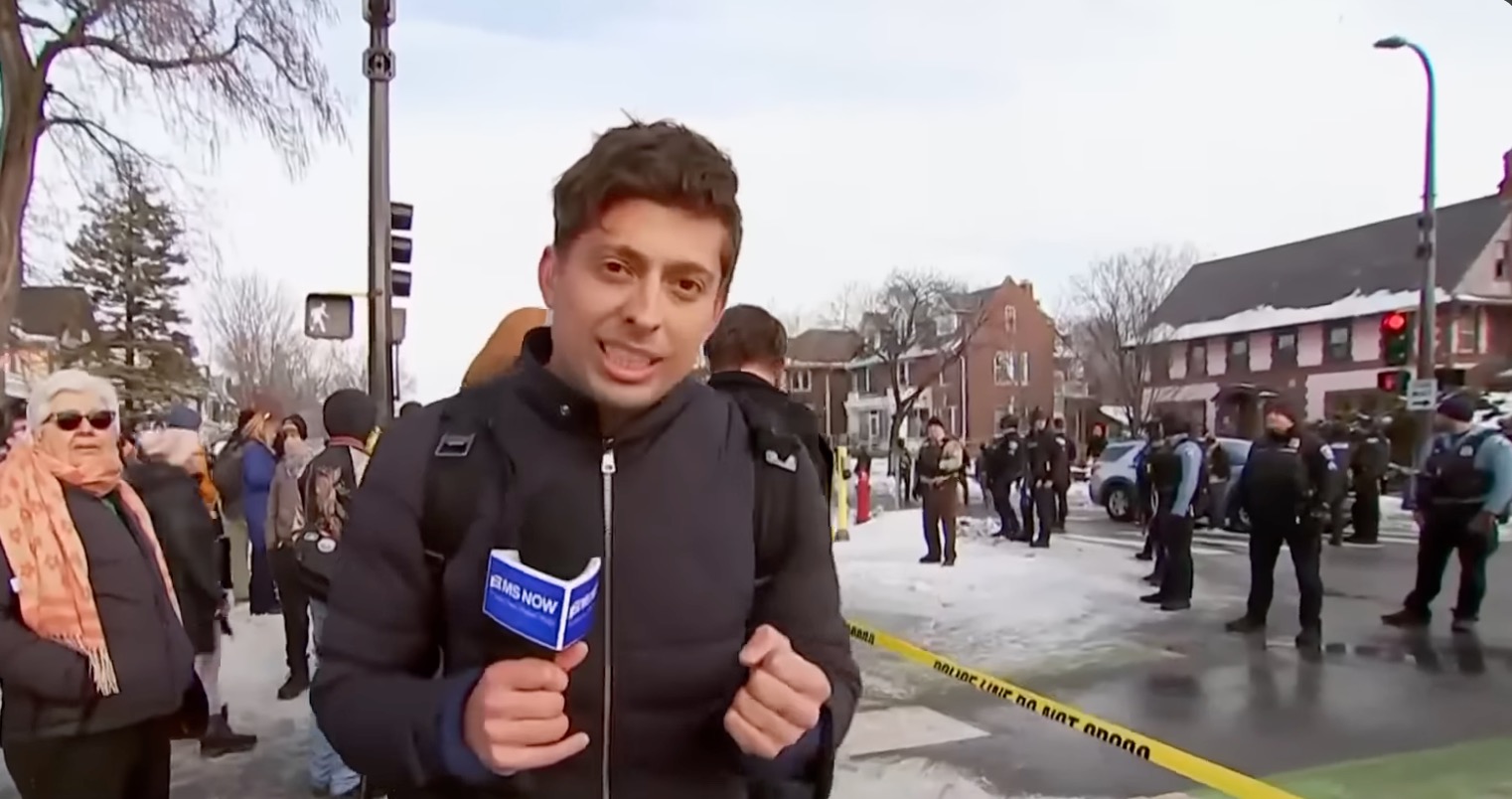
(Screengrab via MS NOW)
When the fatal shooting of Renee Nicole Good by an ICE agent in Minneapolis happened on Wednesday morning, MS NOW reporter Alex Tabet was already on the ground documenting local protests against a fresh push of federal immigration raids in Minnesota.
The shooting, which left the 37-year-old U.S. citizen and mother of three dead, became an immediate and national political firestorm for control of the narrative. Homeland Security Secretary Kristi Noem got out front immediately, blasting Good’s actions as “domestic terrorism” and the officer’s actions as self-defense. Video of the shooting quickly went viral and sparked a fierce debate on what exactly happened – a political Rorschach test for many.
Minnesota Mayor Jacob Frey (D) called Noem’s claims “bullsh*t” and soon President Donald Trump himself was weighing in, alongside lawmakers across both parties, to pitch their take.
Throughout all the high-level noise, Tabet’s coverage from the streets – including interviews with officials, veterans, and Minnesotans – circulated widely online and drew viewers’ attention not just for what it showed, but how it was done.
In an era when protest coverage can often be reduced to viral clips or partisan talking points, the stakes are high: who gets believed, who gets seen, and how quickly facts are established, can shape public trust and define the moment.
Speaking to Mediaite on Monday, Tabet reflected on the rapid trust-building, emotional impact, and ethical calculus that defined his approach to getting the story out. He detailed his front-line view of journalism that seeks to foreground human stories in a flashpoint moment, but not at the expense of context or fact-checking.
MEDIAITE: We saw you comforting a protester who broke down in tears when discussing ICE. How do you build enough trust in minutes, sometimes seconds, to get people to open up on camera?
ALEX TABET: In my experience, the best way to get people comfortable with the notion of opening up on camera is by keeping the camera as far away as possible at first. I ask people about their lives, their professions, their families, their upbringing, and I really listen to what they have to tell me. And after I’ve had that conversation, after I’ve gotten to know them, I ask them if they would feel comfortable with me interviewing them on camera. It’s difficult to build trust instantaneously when people feel like they’re under a microscope. But if you engage with them on a human level first, before introducing the camera, it’s much easier to help people be comfortable. And when you remember the details they told you about their personal life, and integrate those details into your line of questioning, it allows them to tap into their emotions without having to explain the broader context.
MEDIAITE: When you talk to people who have personally been affected or seen others hurt, how do you work to convey their human stories without overshadowing the broader context? What responsibilities do you feel you have in those fraught moments?
TABET: It’s all about leading with empathy during those fraught moments. For some people, being able to have their voice heard, the ability to express their emotions in times of tragedy, can be therapeutic. In a situation like Wednesday’s, their emotions are emblematic of what so many people across the country are feeling in that moment. Just like in life, it’s OK to lead with compassion and empathy in journalism, particularly in moments of tragedy.
MEDIAITE: When protests involve ICE, policing, and federal authority, accusations of bias can come fast. What does good and fair reporting look like to you on the ground when events are moving faster than official narratives can keep up?
TABET: When I first arrived on the scene of the tragedy on Wednesday and started collecting facts, my first calls were to our standards team and editorial leaders, who helped me vet information I was receiving and think through a quickly developing situation. Being first is no good if you’re not right, and here at MS NOW, speed and efficiency are important but must always come after truth and established fact.
MEDIAITE: Covering unrest can be emotionally taxing, especially when you’re witnessing arrests or violence firsthand. How do you process that while staying focused on delivering clear, factual reporting?
TABET: I allow myself to feel those emotions. But I don’t let those emotions inhibit my ability to do the job, but instead fuel my drive to perform to the best of my abilities and bring critical reporting to MS NOW audiences. Someone had just lost their life in a tragedy, and it’s incumbent on me to report the facts on the ground and the human toll it’s taken on the community. I can do that, while simultaneously being disturbed by somebody losing their life.
MEDIAITE: Looking ahead, do you think the way cable and streaming outlets cover protests is evolving? And what lessons from Minneapolis will you take into future breaking-news situations?
TABET: A lesson that I had already known, but this experience has reinforced is keep in constant communication with the people you meet in these moments. Someone on the ground was texting me about an ICE raid happening in Central Minneapolis the morning Renee Good was shot, even before the tragedy unfolded. My team and I were on our way to the general area prior to Good’s death. So, when we got another message moments later from my source that somebody had been killed, we were already on our way. These relationships are critical, and staying in communication with people on the ground is why MS NOW was the first news organization on the scene.
Watch some of Tabet’s on-the-ground reporting from last week above.
New: The Mediaite One-Sheet "Newsletter of Newsletters"
Your daily summary and analysis of what the many, many media newsletters are saying and reporting. Subscribe now!







Comments
↓ Scroll down for comments ↓