Fox News vs. Influencers: Charlie Kirk Conspiracies Ignite a Right-Wing Power Clash

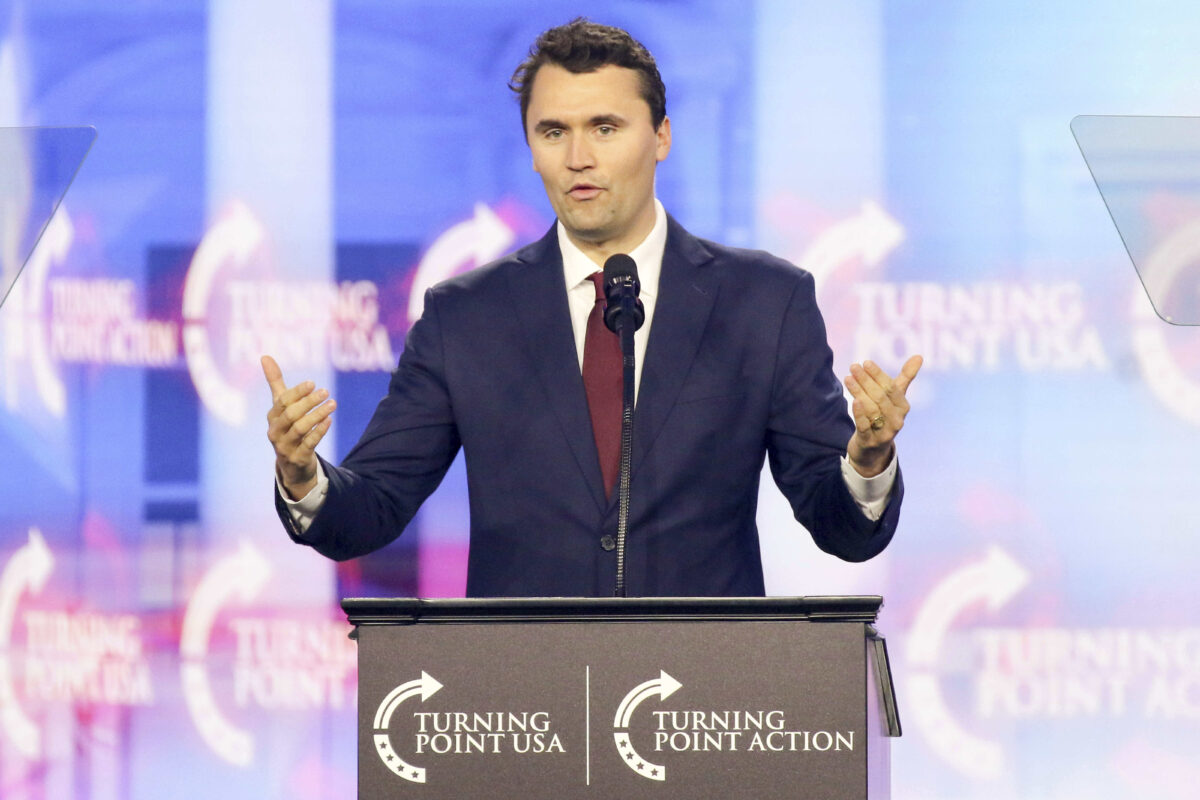
Alexandra Buxbaum/Sipa USA via AP Images
The assassination of Charlie Kirk has done what years of media fractures couldn’t. It forced Fox News to choose between its institutional alliances and the influencer class that increasingly dominates the right — and in doing so, to decide whether it would defend mainstream conservatism or surrender the field entirely to conspiracism.
Fox & Friends made that choice explicit on Thursday morning, lining up behind Erika Kirk and rebuking the conspiracy theories pushed by Tucker Carlson and Candace Owens. It was the clearest public break between Fox and its former primetime star since the 2020 election, when the network first collided with the populist media ecosystem it helped create. And crucially, it happened on Fox News, not in a Bari Weiss town hall or a Substack symposium. Erika Kirk took her stand in the heart of the conservative TV ecosystem, and Fox elevated it. That fact alone signals where the real power still resides.
That collision is no longer rhetorical. Carlson routinely draws millions of views for a monologue on X. His Vladimir Putin interview in February pulled in more viewers in 24 hours than Fox & Friends reaches in a week. Owens commands a younger, digital-first audience legacy media outlets struggle to reach, and she monetizes directly through merch, memberships and platform payouts. Fox, by contrast, remains tied to cable subscriptions and legacy ad structures — still massively profitable, but undeniably shrinking. The business model of right-wing media has bifurcated: influencers chase digital virality while Fox maintains institutional credibility.
While both are profitable, only one translates into political power.
The Kirk assassination accelerated the divide because it forced everyone to choose a lane. Carlson and Owens leaned into conspiracy theories portraying institutions as fundamentally suspect, including TPUSA and the FBI. Fox, linked to both structurally and reputationally, did what it had to do: reinforce the official investigation and support Erika Kirk’s plea for restraint. Thursday’s broadcast made clear that Fox will no longer quietly tolerate narratives that attack its allies or undermine its institutional credibility.
The rise of conspiratorial populism has been years in the making, fueled by algorithms that reward escalation over restraint and by personalities willing to abandon editorial guardrails entirely. Carlson proved he could build a massive platform outside Fox. Owens built an empire by rejecting any boundaries on rhetoric or evidence. The paradox is that their success has repositioned Fox as the voice of mainstream conservatism — a network with editorial standards, institutional partnerships and a still-meaningful claim to credibility. Fox didn’t lose its gatekeeper role. It is now defending it against a conspiratorial fringe that has grown large enough to rival its reach but not large enough to replace its political influence.
Some of the theories circulating online, particularly those suggesting foreign intelligence involvement in Kirk’s death, echo older antisemitic narratives. Fox’s slow response to those insinuations was costly, but its willingness to confront them now marks a decisive reassertion of authority. The vacuum Fox left behind didn’t just empower rivals; it threatened the infrastructure the network spent decades building.
Turning Point USA sits squarely in that infrastructure. TPUSA is a crucial pipeline for Fox: it supplies young activist energy, on-camera talent and access to the next generation of conservative voters. Fox personalities like Sean Hannity, Laura Ingraham and current Secretary of Defense/War Pete Hegseth have been frequent TPUSA speakers.
Supporting TPUSA isn’t just ideological; it’s strategic. So when Owens accuses TPUSA staff of withholding information or participating in a cover-up, she isn’t just attacking Kirk’s friends. She’s challenging Fox’s judgment in aligning with them — and by extension, questioning whether Fox can still distinguish legitimate conservative institutions from compromised ones. That is why the network moved swiftly once Erika Kirk spoke. Defending TPUSA is defending Fox’s broader claim to represent institutional conservatism.
And all of this is unfolding against a political backdrop that once kept these fractures in check. President Donald Trump used to serve as the great unifier of the right’s warring factions, if only because no one wanted to be caught on the wrong side of him. But Trump is now a lame duck in waiting — more mascot than movement driver — and his diminishing gravitational pull has left a vacuum. Without a singular figure capable of enforcing discipline or setting boundaries, this conservative media civil war finally has room to ignite. The Kirk assassination didn’t create the instability; it exposed how little cohesion remains when Trump’s shadow no longer reaches far enough to contain it.
Erika Kirk became the unexpected force capable of triggering this realignment. Her interview with Harris Faulkner was pointed, emotional, and unambiguous. She accused certain podcasters of profiting from conspiracy theories, re-traumatizing staff who witnessed her husband’s killing, and dragging her family into cycles of harassment for clicks. She drew a line that Fox could not draw alone. By calling out the people “making money” from these theories, she gave Fox the moral cover to confront Carlson and Owens while presenting the move as loyalty rather than factional warfare. She forced a reckoning in conservative media.
The next steps will determine how deep the split runs. Carlson will inevitably release a monologue. Whether he escalates, pivots, or pretends Fox didn’t fire a warning shot will determine whether this becomes a permanent rupture or a passing skirmish. Owens is unlikely to retreat. Influencer media has no incentive to slow down; outrage is a business model. Fox’s incentive, meanwhile, is to stabilize the narrative, protect its institutional partners, and reassert that boundaries still exist between mainstream conservative commentary and fringe conspiracism.
The likely outcome is asymmetric. Fox will retain its older cable audience and its claim to institutional legitimacy within Republican politics, positioning itself as the respectable voice of conservatism that campaigns, think tanks and congressional offices can still partner with. But it will remain largely locked out of the digital battlefield where younger conservatives increasingly congregate.
Carlson and Owens will continue to command the conspiratorial digital space, drawing huge audiences but operating outside the institutional structures that translate media attention into actual political power. Both sides will be weaker for the split, and the conservative movement will feel that weakness heading into 2026.
We have been here before. The 2020 break between Fox and the populist wing didn’t completely heal; it created two competing centers of gravity on the right. The Kirk assassination has pushed that divide into its next phase. It didn’t create the structural break in conservative media. It simply forced everyone to choose which version of the movement they belong to — institutional conservatism or conspiratorial populism. Fox made its choice, and in doing so, may have ensured that only one of those versions retains actual power.
This is an opinion piece. The views expressed in this article are those of just the author.
New: The Mediaite One-Sheet "Newsletter of Newsletters"
Your daily summary and analysis of what the many, many media newsletters are saying and reporting. Subscribe now!









Comments
↓ Scroll down for comments ↓