

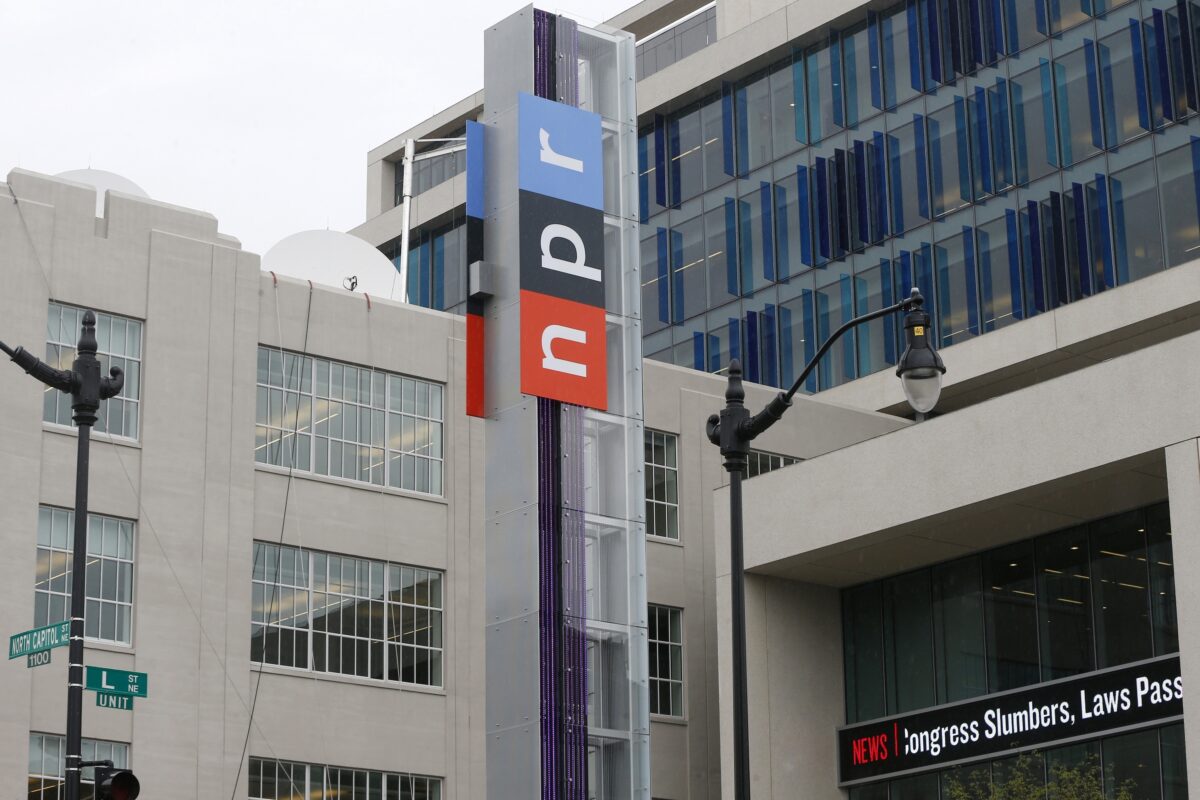
AP Photo/Charles Dharapak, File
A lot of digital ink was spilled over the past 24 hours regarding National Public Radio’s shocking — and swiftly retracted — report Tuesday that Supreme Court Justice Samuel Alito was retiring. The incident has understandably generated a lot of criticism, but there are some very important things that were done right, and that should serve as valuable lessons for a media industry caught between the ethical duties to report fairly and the internet-driven pressure for speed.
The article in question, archived online at the Wayback Machine here, was written by Nina Totenberg and headlined “Justice Samuel Alito, who wrote the opinion overturning Roe v. Wade, retires.”
The report, we would soon learn, was apparently a pre-write, common practice at media outlets to prepare for the death or retirement of prominent people. According to NPR public editor Kelly McBride, Totenberg called NPR executive editor Krishnadev Calamur to report Alito’s retirement and Calamur published her pre-written story, which was shared on the NPR website, social media, member station websites, and the radio broadcast.
Minutes later, Totenberg called Calamur to say “I made a mistake,” and the article was replaced by an editor’s note retracting it in its entirety and stating that it had been “published in error;” this was later updated to add a bit more text to say, “Earlier today we erroneously published a story saying that Supreme Court Justice Samuel Alito was retiring. He has not announced his retirement and we have retracted the story.”
Totenberg issued an apology to Alito calling it “the worst professional mistake” of her career.” The text of this message was shared with reporters.
According to NPR, the article was up for six minutes on its website:
The story was published on NPR’s website at 10:51 a.m. ET and it was live for about 5 minutes. It was up for longer periods on some member station websites. It was taken down and replaced with an editor’s note by 10:57 a.m. The error was corrected on the broadcast at 11:07 a.m. ET.
Totenberg, 82, is a veteran legal affairs correspondent who has been at NPR since 1975. Without question, her longstanding tenure both played a major role in how the erroneous article got published in the first place and shaped the debate about how the incident was handled.
Numerous media reporters and commentators have delved into the various and shifting explanations for how the error happened, including The Atlantic’s Charlie Warzel, Vanity Fair’s Maxwell Adler, and Poynter’s Tom Jones.
CNN’s chief media analyst Brian Stelter declared that the explanation from NPR and Totenberg “just doesn’t add up,” pointing out there were still unexplained questions about “why she automatically believed what she heard secondhand, or why NPR published her report in haste without any other sourcing,” or why she rushed to assume the “retirement” announcement was about Alito.
This was a massive, embarrassing, terrible error that will be a black eye for Totenberg, for the editor Calamur who hit publish, and for NPR’s own editorial processes.
Calamur shared a blunt assessment with his NPR colleague McBride, saying “This sort of sh*t should not happen,” and telling her he would be reviewing their procedures for evaluating and publishing breaking news.
He’s right, this “sort of sh*t” should never have happened, and Stelter was fair to call it “not acceptable.” But there are several critical actions Totenberg and her colleagues at NPR took that were absolutely right, and should be both commended and discussed further as the journalism industry continues to grapple with these types of ethical issues.
First, Totenberg took responsibility herself, immediately and completely. She made no attempt to shift blame to the intern with her, the editor who published the article, Supreme Court staffers, or anyone else. “I made a mistake,” she said. Her mistake, her fault, her responsibility.
The speed of the correction and retraction should also be applauded. The longer an error is left uncorrected, the further it spreads and the harder it is to correct, especially with a bombshell report like a Supreme Court justice retiring during a fraught and divided political period. Totenberg’s article was live for a mere six minutes on NPR’s homepage and corrected soon after on member station websites and the radio broadcast.
Many of the political reporters and media outlets across the country were intently focused on the nation’s highest court that morning as the last round of opinions from the term were released, including the highly-anticipated birthright citizenship case. As a preeminent reporter on the Supreme Court beat, anything Totenberg said, wrote, tweeted, or reported that day was being closely watched and could be expected to be widely shared.
But six minutes was not enough time for the vast majority of other media outlets to see her report and publish their own before the retraction was made. This meant that almost all of the outside reporting on this story was about the retraction, not further amplifying the error itself.
That’s an incredibly essential aspect to all of this, that the correction did not just match but significantly outshone the error.
It’s a longstanding cliché that an error printed on the front page of a newspaper gets corrected on page A21, days later and in a tiny font size. In the modern internet era, that often plays out as online articles being stealth edited, or videos and social media posts continuing to rack up engagement and followers with little to no visible corrections. And the income derived from viral content creates a powerful disincentive to delete an erroneous or misleading post.
Totenberg’s article was deleted in its entirety and replaced with an editor’s note within minutes. That current version noting the retraction has most certainly received substantially more traffic than the original “erroneous” article did. All of NPR’s social media posts incorrectly reporting that Alito was retiring were quickly deleted, and both the retracted article and McBride’s column are listed on the NPR “Corrections” page on its website.
Valid questions remain about what exactly Totenberg heard that triggered her false report, but the responsive actions by her and NPR afterwards — immediately taking full responsibility, making the correction as quickly as possible, and ensuring the correction outshone the error — present a helpful, ethical, and strategic model for journalists to follow.
Thankfully, most journalism errors will not be this major or attract this much press attention. Calamur and the editorial team at NPR are right to reexamine their safeguards and procedures to minimize the risks in the future, but journalists are human, and humans will make mistakes. NPR will make mistakes in the future. It pains me to admit it, but I will make mistakes. All reporters will make mistakes as long as they are still drawing breath and reporting. Expecting perfection is unreasonable. Expecting transparency, accountability, and diligence when errors do happen is not.
This is an opinion piece. The views expressed in this article are those of just the author.
New: The Mediaite One-Sheet "Newsletter of Newsletters"
Your daily summary and analysis of what the many, many media newsletters are saying and reporting. Subscribe now!


Comments
↓ Scroll down for comments ↓