Fox News Barely Covers Dick Cheney Funeral — Clarifying How Trump Now Defines the GOP

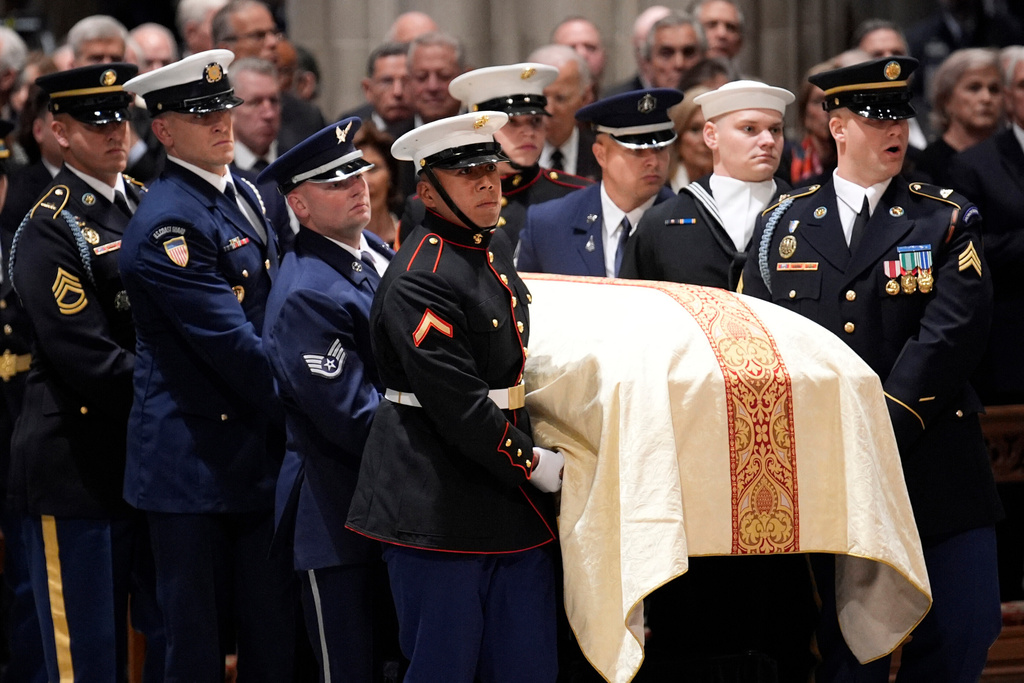
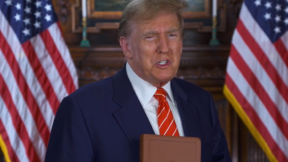
(Yuri Gripas/Abaca/Sipa USA(Sipa via AP Images)
When a party can’t publicly honor its own former vice president without triggering a loyalty crisis, that’s not just symbolic decay—it’s a sign of structural weakness. It means the coalition can no longer process disagreement or negotiate with itself.
Fox News offered a vivid demonstration of that problem when it all but ignored former Vice President Dick Cheney’s funeral.
Every other major network treated the service as the political and historical marker it deserved. Fox gave viewers ten minutes of former President George W. Bush’s eulogy and moved on. In any earlier version of the Republican Party, showcasing the passing of a former vice president would have been automatic. Now it looks like a risk.
With CNN and MS NOW carrying the Cheney funeral wall-to-wall, Fox’s decision not to follow suit didn’t just stand out—it highlighted how far the network has drifted from the basic norms of political coverage. The surface explanation is obvious—but insufficient.
Cheney, once a pillar of the party’s, and Fox News’ worldview, became unwelcome in the Trump era, and his daughter Liz Cheney’s work on the January 6 select committee cemented the family’s estrangement from the GOP so much so that she received a preemptive pardon from former President Joe Biden. While that history matters, it doesn’t explain the near total blackout. Fox didn’t merely skip a funeral—it revealed how thoroughly its editorial instincts now orbit one political figure who’s hands are constantly playing with media dials.
Notably, President Donald Trump was not invited to the funeral of Dick Cheney—even though sitting presidents and former vice presidents almost always secure invitations. The omission isn’t accidental: it reflects not just personal animus, but a breakdown in institutional respect that marks the GOP’s shift away from the establishment to the Trump-centric model.
Fox’s decision for minimal coverage reveals just how the party’s internal power map has warped. Not that long ago, Fox News positioned itself as a co-author of the GOP’s narrative, before Republican members of Congress started to act like they were trying to impress Fox’s on-air talent. But the pendulum seems to have swung back, where it now operates like an institution that avoids provoking its most powerful viewer. The near-blackout wasn’t about Cheney as a historical figure; it was about refusing to elevate a moment that Trump and his base have been taught to reject.
This has consequences that extend far beyond symbolism. When a party’s primary media outlet becomes that reactive, it collapses alternative centers of influence. It shrinks the party’s intellectual bandwidth to whatever can pass through a Trump-aligned media filter.
And that narrowing has practical effects. Consider Ukraine: if Fox won’t air the funeral of a former Republican vice president, how likely is it to give real airtime to a 2026 primary candidate making a case—on the merits—for continued U.S. support? The medium that once tested arguments now preempts them.
As the ability to host internal debate erodes, policy stops being a contest of ideas and becomes a performance of loyalty. Positions aren’t developed or refined; they’re inherited from whatever the audience has been conditioned to accept. Leaders don’t lead—they avoid collisions.
Cheney’s funeral, seen this way, wasn’t about nostalgia for an older GOP. It was a stress test of the current one. Fox revealed a party so brittle it can’t publicly acknowledge its own past without risking Trump’s predictable wrath. A party unwilling to remember itself is a party unable to choose its future.
Far be it from me to tell Fox News what to cover or how to program its lineup. What the network is doing clearly works—its ratings, revenue, and influence make that undeniable.
But what’s the point of winning if the network created to champion a Republican agenda has tethered itself to a cult of personality that, by definition, won’t endure?
And Fox, far from shaping that future, now mirrors it. The message to the next generation of Republican contenders is unmistakable: don’t challenge the frame; don’t complicate the narrative. The safest politics is the smallest politics.
The funeral wasn’t just ignored—it was a preview of how Trump’s iteration of the Republican Party governs: reactively, narrowly, and always glancing over its shoulder.
This is an opinion piece. The views expressed in this article are those of just the author.
New: The Mediaite One-Sheet "Newsletter of Newsletters"
Your daily summary and analysis of what the many, many media newsletters are saying and reporting. Subscribe now!





Comments
↓ Scroll down for comments ↓